

Anna Kasztenny, MSc.
Anna holds a Master’s degree in Bio-Pharmaceutical Science and Business Studies and a Bachelor of Medical Science with an Honors Specialization in Pharmacology. Alongside her academic background, she is a competitive bodybuilder and strength athlete who holds three provincial powerlifting records. As a former competitive gymnast and varsity cheerleader, she is passionate about health, performance, and evidence-based wellness.
Gaining serious muscle relies on three pillars: training, nutrition, and recovery. Consistent hypertrophy can be achieved within 8–12 weeks by following a gym routine centered on compound exercises like squats, bench press, and rows, with beginners training 2–3 times weekly and intermediates 4–6 times. While body recomposition is possible for new or returning lifters, most benefit from alternating bulking and cutting phases. This guide covers the science of muscle growth, effective workouts, a sample 5-day hypertrophy split, nutrition strategies, and recovery practices to help you build size and strength efficiently.
The Science Behind Muscle Growth
Muscular hypertrophy is the enlargement of skeletal muscle fibers in response to resistance training. When you lift weights, you create micro-damage to muscle fibers. During recovery, the body repairs and thickens those fibers, resulting in larger, stronger muscles. Two types of hypertrophy contribute: myofibrillar (growth of contractile proteins that generate force) and sarcoplasmic (increases in glycogen, fluid, and other non-contractile elements that add size).
Mechanical tension is the primary driver. Muscles must be challenged with sufficiently heavy loads - typically anywhere from 30% to 85% of your one-rep max - through controlled reps and a full range of motion. Without adequate tension, muscle fibers have no reason to adapt.
Progressive overload is crucial for muscle growth. It means systematically increasing the demands you place on your muscles over time. Progressive overload can involve increasing weight, reps, or intensity. A practical example: if you hit 3 × 10 on bench press at 185 lb with proper form, add 2.5–5 lb per side next session and build back up. Progressive overload increases exercise difficulty over time, and consistent training without progressive overload leads to plateaus1.
Muscle damage and metabolic stress (the "pump") are secondary contributors. They should be natural by-products of smart programming, not the goal - chasing soreness as your primary metric leads to overtraining, not muscle development.
The critical piece most people underestimate is recovery. Muscle protein synthesis remains elevated for roughly 24-72 hours after a training session2. Muscles grow between workouts when combined with adequate calories, protein, and sleep. Muscle growth occurs when muscles are subjected to progressively heavier loads and given sufficient time to rebuild.
Individual factors - training age, genetics, hormones, biological age - affect the rate of progress. But every reader can gain muscle with consistent application of tension, progressive overload, and recovery.
The Three Pillars of Building Muscle: Training, Nutrition, Recovery
The muscle building equation has three sides: training stimulus, nutrition, and recovery. Remove any one, and the other two can't compensate.
Training: Structured resistance training 3–6 days per week, prioritizing compound movements (squats, bench press, rows, pull ups, overhead press, leg press) with supporting isolation exercises (bicep curls, triceps extensions, leg curls, lateral raises). Training frequency should be 3–6 days per week for optimal muscle growth.
Nutrition: To build muscle mass, most lifters need a small calorie surplus of about 5–15% above maintenance. A diet rich in protein is essential for muscle protein synthesis - aim for roughly 1.6–2.2 g per kg or 0.7-1 g per lb of body weight daily, plus sufficient carbs and healthy fats. Nutrition is crucial for muscle recovery and growth.
Recovery: Muscles actually grow during rest. Target 7–9 hours of sleep per night, schedule deload weeks every 10-12 weeks, and manage stress to keep hormones and performance in an optimal range.

How Supplements Fit Into a Muscle-Building Program
Supplements should support, not replace, a structured training program and balanced diet. Protein powders can help you consistently meet daily protein requirements when whole-food intake falls short, creatine supports high-intensity performance and training volume, and carbohydrate supplements may be useful during longer or higher-volume training sessions. Used strategically alongside proper nutrition and recovery, supplements can help athletes train more consistently and recover more effectively.
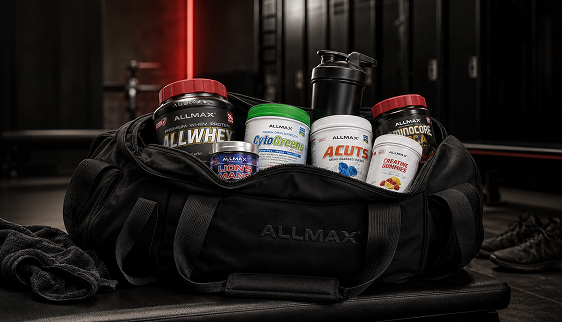
ALLMAX products support each pillar: whey protein isolate for hitting daily protein targets, creatine monohydrate for strength and training volume, and carb formulas for fueling intense sessions.
Workout Variables That Drive Muscle Gain (Sets, Reps, Load, Frequency)
Training volume, intensity, frequency, and rest intervals are the variables you can manipulate to maximize muscle growth within any workout routine.
Sets and reps: 3–4 sets of 8–12 reps are ideal for hypertrophy. That said, lighter weights taken to near failure (up to 20–25 reps) can also stimulate muscle growth. The key is effort, not a rigid rep count.
Load selection: Choose a weight that leaves roughly 1–3 reps in reserve on most working sets. If you could complete 12 reps on a given exercise, stopping at 9–11 generates strong hypertrophy stimulus without accumulating excessive fatigue.
Training frequency: Each muscle group needs to be worked at least twice a week for best results3. Smaller muscles like biceps and rear delts can handle 3 sessions. Rest at least 48 hours before training the same muscle group again to allow recovery.
Rest intervals: Allow 2–3 minutes between heavy compound lifts to maintain force output and total reps. For isolation exercises, 45–90 seconds is sufficient and introduces beneficial metabolic stress.
Weekly volume rule of thumb: Intermediate lifters benefit from roughly 10–20 hard sets per muscle group per week. Beginners need fewer sets; advanced lifters may push higher, adjusting based on recovery capacity and progress. Aim for 3–4 sets of 8–12 reps for hypertrophy with progressive overload on your primary lifts each session.
Compound vs Isolation Exercises: What Builds the Most Muscle?
Compound exercises involve multiple joints and muscle groups - think bench press, deadlift, squat, overhead press, pull ups, and leg press. Isolation exercises target one primary joint and muscle - leg curls, bicep curls, triceps pushdowns, lateral raises.
Compound exercises should be the foundation of muscle-building routines. They allow heavier loads, recruit more muscles per movement, and deliver efficient stimulus for both size and strength. Deadlifts engage multiple muscle groups for effective strength building, making them one of the most productive lifts you can perform.
Isolation exercises help target specific muscles and correct imbalances. After heavy compounds fatigue your major muscle groups, isolation work lets you fully develop lagging areas - rear delts, hamstrings, calves - and improve symmetry and joint health.
Practical example: A push workout might pair bench press and overhead press (compounds) with cable flies and triceps extensions (isolation). A lower body day could pair squats or leg press with leg curls, walking lunges, and standing calf raises.
Both heavy weights and lighter weights build muscle when sets approach failure. However, compound lifts usually benefit from moderate to heavy loads (6–10 reps), while isolation exercises work well with lighter weights and higher rep ranges (12 reps to 20). You don't need to use the same weight across different exercises - match the load to the movement.
As a general rule, allocate roughly 60–80% of your working sets to compound exercises and 20–40% to isolation exercises for balanced overall muscle development.
Best Workouts to Gain Muscle: Lower Body, Push, and Pull
A push/pull/legs split trains muscles by movement type and is one of the most effective structures for building muscle, especially when training 4–6 days per week. Split workouts focus on different muscle groups each session, which lets you train hard while still recovering.
Lower Body Day
Focus on quad-dominant, hinge, and accessory work:
Back squat or front squat - 3–4 × 6–10 reps
Leg press - 3–4 × 8–12 reps
Romanian deadlift - 3–4 × 8–10 reps
Leg curls - 3 × 10–15 reps
Walking lunges - 3 × 10–12 per leg
Standing calf raises - 4 × 12–15 reps
Optional core work - hanging leg raises, 3 × 12–15
Push Day (Chest, Shoulders, Triceps)
Bench press (flat or incline for upper chest emphasis) - 3–4 × 6–10 reps
Overhead press (barbell or dumbbell) - 3–4 × 6–10 reps
Machine chest press or cable flies - 3 × 10–15 reps
Lateral raises - 3 × 12–15 reps
Triceps pushdowns or skull crushers - 3 × 10–15 reps
Pull Day (Back, Biceps)
Pull ups or lat pulldowns - 3–4 × 6–10 reps
Barbell or machine rows - 3–4 × 8–12 reps
Seated cable rows - 3 × 10–12 reps
Face pulls or rear delt flies - 3 × 12–15 reps
Bicep curls - 3 × 10–15 reps
Include both vertical and horizontal pulling to build a complete back and support shoulder health.
Progression: Keep an exercise log. Aim to add a small amount of weight or a rep to key lifts each week. Every 8–12 weeks, rotate minor variations - grip width, implement type, angle - to avoid staleness.
Beginners may prefer full body workouts or an upper/lower split first. Full body workouts are best for training two to three times weekly, and upper/lower splits allow training each muscle group twice weekly. Once technique and recovery habits are solid, transition into push–pull–lower for more volume.
Workout Regimen to Gain Muscle Mass (Sample 5-Day Hypertrophy Split)
This section provides a concrete 5-day muscle building program for intermediate lifters who want to gain muscle and upper body strength alongside lower body development, while managing fatigue through built-in rest days. Training frequency should be at least two to three times weekly at minimum, but this split is designed for lifters ready to push further.
Structure:
Day 1 - Upper Push
Day 2 - Lower Body
Day 3 - Upper Pull
Day 4 - Rest or active recovery
Day 5 - Upper/Lower Hybrid (weak points)
Day 6 - Optional conditioning or rest
Day 7 - Rest
Sample 5-Day Hypertrophy Split
Day |
Focus |
Primary Compound Exercises |
Key Isolation Exercises |
Set × Rep Range |
|---|---|---|---|---|
1 |
Upper Push |
Bench press, incline dumbbell press, overhead press |
Cable flyes, lateral raises, triceps pushdowns |
3–4 × 6–10 (compounds), 3 × 10–15 (isolation) |
2 |
Lower Body |
Back squat, Romanian deadlift, leg press |
Leg curls, standing calf raises, walking lunges |
3–4 × 6–10 (compounds), 3–4 × 10–15 (isolation) |
3 |
Upper Pull |
Barbell rows, lat pulldown, seated cable rows |
Face pulls, bicep curls, hammer curls |
3–4 × 6–10 (compounds), 3 × 10–15 (isolation) |
4 |
Rest / Active Recovery |
- |
- |
Light walking, mobility |
5 |
Hybrid (Weak Points) |
Front squat or leg press, incline press or push ups |
Rear delt flyes, standing calf raises, ab work |
3 × 8–12 (compounds), 3 × 12–15 (isolation) |
This workout plan covers at least one hinge, one squat pattern, one horizontal press, one vertical press, one horizontal pull, and one vertical pull each week, plus isolation work for arms, delts, and calves. Perform 3–4 sets of 8–12 reps for hypertrophy on your main movements.
You don't need just one exercise per muscle - using different exercises and angles across the week helps build more muscles and overall muscle development. Adjust volume up or down based on how you recover: drop a set per exercise if persistently sore, or add a set to compound lifts once you're adapting well.
Training for Muscle While Managing Body Fat (Gain Muscle, Not Just Weight)
Many readers want to gain muscle while keeping excess fat in check - or even lose body fat simultaneously. This requires aligning training intensity with nutrition strategy.
Heavy compound lifts and consistent progressive overload encourage your body to direct more calories toward building muscle rather than storing them as fat, especially when paired with high protein intake. A slight calorie surplus of 5–10% supports muscle growth without excessive fat gain.
For body workouts alongside fat management, maintain the hypertrophy volume from the split above and add 2–3 short sessions of low- to moderate-intensity cardio per week. This supports cardiovascular health and insulin sensitivity without compromising muscle gain.
If your primary goal is losing fat while gaining muscle, consider eating at maintenance calories or a small deficit. Prioritize protein - protein helps preserve muscle during calorie deficits - and keep training intensity high. Monitor strength levels: if your lifts start dropping significantly, you're cutting too aggressively.
Fast recomposition (gaining muscle and losing fat simultaneously) is most realistic for beginners, detrained lifters, or those who previously under-ate protein. Advanced trainees typically need to alternate between phases of slight bulking and cutting.
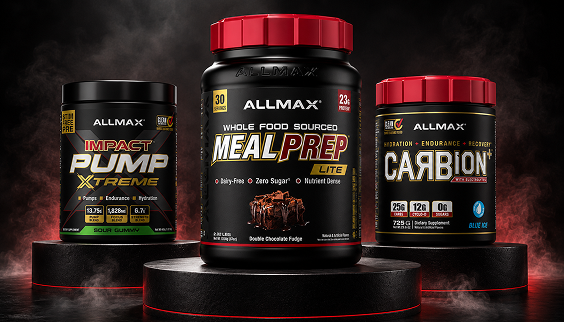
Smart supplement use - whey protein, creatine, and quality intra-workout carbs like ALLMAX Carbion+ - can support muscle gains while keeping energy high enough to train hard, which helps with losing fat over time.
Nutrition to Build Muscle: Calories, Protein, Carbs, Fats, and Fiber
No workout routine will maximize muscle growth without proper nutrition. Diet controls whether you're gaining muscle, losing fat, or spinning your wheels.
Calories
Maintaining a slight energy surplus aids in muscle repair and growth. For most adults, that means eating roughly 200–400 more calories per day above maintenance - enough to support weight training adaptations without piling on body fat. An 80 kg (176 lbs) lifter maintaining on 2,800 calories would target approximately 3,000–3,200 calories during a building phase.
Protein
Aim for at least 1.4 grams of protein per kg (0.7 grams per lb) of bodyweight as a minimum, with research supporting up to 2.2 g/kg (1.0 g/lb) for maximizing muscle protein synthesis4. For that same 80 kg lifter, this means 130–175 g of protein per day. Good sources include lean meats, eggs, dairy, and ALLMAX whey protein for convenient, fast-digesting support. Spacing 20–40 g of high-quality protein across 4–5 meals every 3–4 hours keeps amino acids elevated for continuous repair.
Carbohydrates
Carbohydrates boost energy for effective workouts and replenish glycogen stores depleted during weight training. Target roughly 3–6 g per kg of body weight, or 1.5–3 g per lb, depending on training volume and leanness. Prioritize whole food sources: rice, oats, potatoes, fruit, and bread.
Fats
Consume 0.5–1.0 g of fat per kg (0.25–0.5 g per lb) of bodyweight from sources like olive oil, avocados, nuts, and fatty fish. Dietary fats support hormonal function (including testosterone production) and cell membrane health. Don't let fat intake crowd out the carbs you need for intense upper body workouts and lower body sessions.
Fiber and Micronutrients
Aim for 25–35 g of fiber daily from vegetables, fruits, and whole grains. Good digestion improves nutrient absorption and consistency. Micronutrients like magnesium, vitamin D, and omega-3 fatty acids support inflammation control, hormonal health, and recovery. A balanced diet built around whole foods covers most bases.
Pre-, Intra-, and Post-Workout Nutrition
Nutrient timing doesn't override daily totals, but it can noticeably improve performance, muscle recovery, and overall training quality - especially for lifters following a demanding gym workout routine.
Pre-Workout (60–90 Minutes Before)
Build a simple meal around lean protein (chicken, turkey, Greek yogurt, Isoflex) plus moderate carbs (oats, rice cakes, or a banana) with minimal fat to support digestion. For energy, focus, and blood flow, consider an ALLMAX pre-workout formula to sharpen your session - particularly useful for early morning or post-work training when motivation dips.
Intra-Workout (During Training)
During high-volume hypertrophy sessions lasting 60+ minutes, sipping fluids with electrolytes and fast-digesting carbs helps maintain performance and reduce perceived fatigue. ALLMAX Carbion+ is a premium intra-workout carbohydrate and electrolyte formula that delivers steady energy without a crash.
Carbion+ is most useful on heavy leg days packed with squats, leg press, and leg curls; on high-rep push or pull days; or any session where performance drops in the final third because glycogen is running low. If your last few sets consistently suffer, intra-workout carbs are a simple fix.
Post-Workout (Within 1–2 Hours)
Consume 20–40 g of high-quality protein plus a solid serving of carbs to replenish glycogen and stimulate muscle protein synthesis. Keep fats minimal to promote muscle growth as opposed to fat accumulation. The "anabolic window" isn't as narrow as once believed, but eating within 1–2 hours post-training is still good practice.
For hardgainers who struggle to eat enough calories to gain muscle, ALLMAX QuickMass is a convenient post-workout option delivering 1,010 calories and 64 g of protein per serving. Use it immediately after training or as a between-meal shake to reach calorie and protein targets during a structured muscle-building phase. Utilizing BCAAs and amino acids can further support recovery and performance, especially during demanding training blocks.
Improve Insulin Sensitivity for Better Nutrient Partitioning
Insulin sensitivity determines how effectively your body uses carbs and calories to build muscle versus store body fat. Even during a bulking phase where you're eating more calories than you burn, insulin sensitivity matters. Good sensitivity means carbohydrates get stored as muscle glycogen and fuel training performance. Poor sensitivity means more of those surplus calories end up as excess fat.
Practical strategies to maintain insulin sensitivity while bulking:
Train consistently with compound lifts. Resistance training is the single most powerful tool for improving insulin sensitivity and the body's ability to partition nutrients toward muscle.
Walk daily. Aim for 6,000–10,000 steps. Walking is low-stress, doesn't impair recovery, and meaningfully improves glucose disposal.
Include light cardio on rest days. A 20–30 minute bike ride or incline walk keeps metabolic health in check without cutting into muscle strength or muscular endurance.
Time your carbs strategically. Prioritize most daily carbs around the workout window (pre, intra, and post) when muscles are highly insulin sensitive. Slightly reduce carbs during sedentary hours while keeping protein consistent.
Choose minimally processed carb sources. Oats, potatoes, fruit, and rice most of the time. Limit frequent large intakes of refined sugar and deep-fried foods.
Prioritize sleep and stress management. Quality sleep and controlled stress support hormonal balance. Adequate micronutrient intake - magnesium, chromium, omega-3s - also contributes to better insulin sensitivity and more efficient muscle building with less fat gain.
Common Mistakes That Prevent Muscle Growth
Many lifters believe they need a new workout every few weeks to keep making progress. In reality, the opposite is often true. Constantly changing exercises makes it difficult to measure progress and apply progressive overload consistently.
Instead, keep your primary compound lifts in your program for several weeks, focus on improving your performance over time, and only change exercises when progress stalls or your goals change. Consistency is one of the biggest predictors of long-term muscle growth.
Recovery Is Where Growth Happens
The gym provides the stimulus. Muscles grow while you're resting, sleeping, and recovering. This makes recovery practices as important as the workouts themselves.
Sleep
Get 7–9 hours of sleep each night to support recovery and muscle growth. Deep sleep drives growth hormone and testosterone secretion - two hormones critical for muscle repair. Research shows that both acute and chronic sleep restriction significantly reduce strength performance and blunt muscle protein synthesis5. If you're training hard but sleeping poorly, you're undermining your own results.
Weekly Recovery Structure
Schedule at least 1–2 full rest days per week. Give your muscles time to rebuild by never hammering the same muscle group on consecutive days. Every 10-12 weeks, take a deload week where you reduce volume or intensity by 30–50%. This allows joints, connective tissues, and the nervous system to reset - setting you up for a stronger training block afterward.
Active Recovery
On rest days, light walking, mobility work, low-intensity cycling, or stretching improves blood flow without adding training stress. This aids muscle recovery and reduces soreness, helping you feel ready for your next session.
Lifestyle Factors
Stress management (breathing drills, time outdoors, adequate rest), hydration, and proper nutrition all support hormonal balance and adaptation. Supplementation can support faster recovery when paired with solid sleep and smart programming - they are additions to healthy habits, not replacements.
Choosing and Progressing Your Gym Workout Routine
There is no single "perfect" workout routine. The best muscle building program is one you can follow consistently while progressing key lifts and recovering between sessions.
By training experience:
Beginners: Full body workouts or upper/lower splits, 3–4 days per week. Focus on learning correct form and building a foundation of strength training with bodyweight exercises, resistance bands, and free weights.
Intermediates and advanced: Push–pull–lower or 5-day hypertrophy splits. A personal trainer or personal training consultation can help dial in weak points.
Simple progression model: Once you hit the top of your rep range (e.g., 3 × 12 reps) on a movement like bench press or leg press with correct form, increase weight slightly next session and build reps back up. Never stay at the same weight for more than 2–3 weeks if you're hitting your rep targets - that's a sign you need to progress. You should rarely do as many reps as possible on every set; leave 1–3 in reserve on most working sets.
Track everything. Keep a training log with exercises, sets, reps, and loads. Seeing data-driven improvements reinforces motivation and ensures progressive overload is actually happening - not just assumed. Know how much weight you're using from session to session.
When stalled or fatigued, take a small deload, reduce total weekly sets, or swap variations (barbell to machine press, for example) to reduce joint stress. Lifting weights is a multi-month to multi-year endeavor. Consistent small improvements - in weight lifted, reps, body weight, or measurements - add up to serious muscle and strength over time. Lifting heavy weights week after week only works if your body can keep recovering.
Frequently Asked Questions (FAQs)
What are the best workouts to gain muscle?
The best workouts for muscle gain focus on compound exercises that engage multiple muscle groups, such as squats, deadlifts, bench press, overhead press, and rows. These lifts provide mechanical tension and stimulate hypertrophy effectively. Incorporating isolation exercises like bicep curls and leg curls helps target specific muscles and correct imbalances. Using a push/pull/legs split or upper/lower split with 3–4 sets of 8–12 reps per exercise is ideal for hypertrophy.
How many days per week should I train to build muscle?
Training frequency depends on your experience level and recovery. Beginners should aim for 2–3 days per week with full-body workouts, while intermediates and advanced lifters benefit from 4–6 days per week using split routines like push/pull/legs. Each muscle group should be worked at least twice weekly to maximize growth, with adequate rest between sessions.
What is the best workout regimen to gain muscle mass?
A well-structured hypertrophy program includes progressive overload on compound lifts, balanced isolation work, and sufficient training volume (10–20 sets per muscle group weekly). A sample 5-day hypertrophy split focusing on upper push, lower body, upper pull, rest, and a hybrid day targeting weak points provides balanced development and recovery.
Should I eat before or after my workout?
Both pre- and post-workout nutrition are important. Eating a meal with lean protein and carbohydrates 60–90 minutes before training fuels your workout. Post-workout, consuming protein and carbs within 1–2 hours helps replenish glycogen and stimulates muscle protein synthesis. Intra-workout carbs can sustain energy during long or intense sessions.
Are carbohydrates important for muscle growth?
Yes, carbohydrates provide the energy needed for intense workouts and replenish muscle glycogen stores. Adequate carb intake supports performance, recovery, and muscle growth. Prioritize whole food sources like oats, rice, potatoes, and fruit, and time carbs around your workouts to maximize insulin sensitivity and nutrient partitioning.
How long does it take to build noticeable muscle?
Muscle gain is a gradual process. Beginners often see visible changes within 6–12 weeks due to "newbie gains," while intermediates and advanced lifters may take longer. Consistency with training, nutrition, and recovery is key. Small weekly improvements accumulate into significant size and strength gains over months and years.
Putting It All Together: Training, Supplements, and Long-Term Muscle Gain
The science is clear: mechanical tension from heavy compound movements, consistent progressive overload, and proper recovery form the foundation of effective strength training. Combined with proper nutrition—a slight calorie surplus, adequate protein, carbs, healthy fats, and fiber—and supported by targeted ALLMAX Nutrition supplements like whey protein isolate, QuickMass, Carbion+, creatine, and amino acids, these elements create a complete system for building muscle. No single factor works alone; training, diet, and recovery must align. Commit to a structured plan like the 5-day split for 8–12 weeks, track progress, and embrace muscle building as a long-term investment in strength and health for optimal results.
References:
Bernárdez-Vázquez R, et al. Resistance Training Variables for Optimization of Muscle Hypertrophy: An Umbrella Review. Front Sports Act Living. 2022 Jul 4;4:949021.
MacDougall JD, et al. The time course for elevated muscle protein synthesis following heavy resistance exercise. Can J Appl Physiol. 1995 Dec;20(4):480-6.
Schoenfeld BJ, et al. Effects of Resistance Training Frequency on Measures of Muscle Hypertrophy: A Systematic Review and Meta-Analysis. Sports Med. 2016 Nov;46(11):1689-1697.
Jäger R, et al. International Society of Sports Nutrition Position Stand: protein and exercise. J Int Soc Sports Nutr. 2017 Jun 20;14:20.
Easow J, et al. Implications of sleep loss or sleep deprivation on muscle strength: a systematic review. Sleep Breath. 2025 Jul 15;29(4):242.