
If you have ever struggled to walk downstairs after a heavy leg session or winced reaching for your seatbelt after chest day, you know what muscle soreness feels like. That stiffness and discomfort is usually delayed onset muscle soreness, commonly called DOMS, and it is one of the most universal experiences in athletic training. The good news: you can manage it effectively without sacrificing your gains or your training schedule. This guide covers what DOMS actually is, what causes it, and the best methods to reduce muscle soreness and support long-term muscle recovery.
Quick Answer: How to Relieve Sore Muscles After a Workout
You do not need to suffer through days of debilitating soreness. These strategies may improve comfort and help you stay active while normal soreness resolves over the following days:
Light movement and active recovery - a short walk, leisurely bike ride, easy swimming, or yoga session for 10–30 minutes increases blood flow and eases stiffness.
Gentle stretching and mobility work - dynamic drills and light stretching help restore range of motion without aggravating sore tissue.
Hydration - drinking plenty of water supports muscle function and circulation. Drink regularly according to your individual thirst, training conditions, and sweat losses.
Adequate sleep - 7–9 hours of quality sleep per night is when your muscles recover most effectively.
Adequate protein and nutrition - consuming protein helps repair tiny tears in muscle fibers after exercise. Post-workout nutritional replenishment with protein and carbohydrates supports recovery from training, particularly after demanding or prolonged sessions.
Heat or warm shower - warmth can temporarily relax muscles and improve comfort. Epsom salt baths can support relaxation after exercise.
Foam rolling or massage - 5–15 minutes of moderate pressure from foam rolling or massage may provide short-term improvements in perceived DOMS and range of motion.
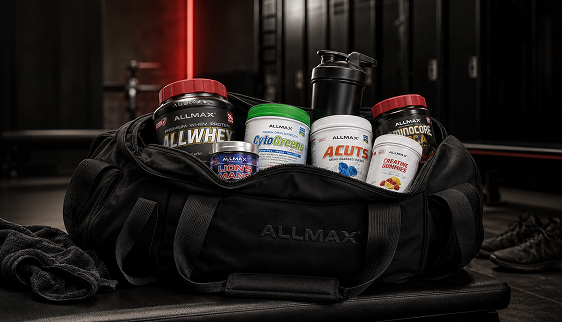
These strategies reduce discomfort and support the recovery process but do not instantly cure delayed onset muscle soreness. Pairing them with consistent nutrition, quality supplements like ALLMAX protein, creatine, and glutamine, and smart programming creates a recovery system that compounds over time.

What Is DOMS (Delayed Onset Muscle Soreness)?
DOMS, sometimes called delayed onset muscle soreness DOMS, is muscle pain, stiffness, and tenderness that develops after unfamiliar or intense exercise [1]. It is not the burning sensation you feel during a set - that is immediate metabolic fatigue. DOMS is a separate, delayed response driven by structural and inflammatory processes within the muscle [2].
DOMS typically starts within 12 hours after exercise, with muscle soreness being the main symptom. Common DOMS symptoms include:
Dull aching in the muscle belly
Tenderness when touching or pressing the affected muscles
Stiffness, especially after sitting or sleeping
Reduced range of motion
Discomfort during eccentric movements like walking downstairs or lowering weights
Occasional mild swelling
DOMS is a natural response to intense or unfamiliar exercise. The repair process that follows helps muscle fibers adapt so they handle similar training better next time. However, more soreness does not automatically mean more muscle growth - that is a critical distinction we will address below.
How Long Does DOMS Last?
DOMS onset is typically noticeable 6–12 hours after training, becomes most obvious at the 12–24 hour mark, and soreness peaks around 48 hours post-activity [3]. Most lifters experience substantial improvement by 72 hours, with full resolution between days 5 and 7.
Several factors influence how long soreness lasts:
Factor |
Effect on DOMS Duration |
Training experience [4] |
Less experienced = longer, more intense DOMS |
Eccentric loading [5] |
Heavy negatives prolong soreness |
Volume and intensity [5] |
More total work = more damage to recover from |
Sleep quality [6] |
Poor sleep extends recovery timelines |
Nutrition and hydration [7] |
Under-eating or dehydration slows repair |
Age [8] |
Older lifters may recover more slowly |
Stress [9] |
High life stress amplifies DOMS symptoms |
If soreness is getting worse after 72 hours instead of improving, or severe pain remains past a week, it may indicate something beyond normal DOMS that warrants rest or medical advice. As you adapt to a program, the same workout causes less soreness over time - but that does not mean it stopped being effective.
What Causes Muscle Soreness and DOMS After a Workout?
Post workout muscle soreness exists on a spectrum. Immediate onset muscle soreness - the burn during or right after a set - comes primarily from metabolic byproducts. Delayed onset muscle soreness shows up hours later as the body's structural and inflammatory response unfolds. Injury pain is distinct: it is typically sudden, sharp, and localized to a tendon or joint.
The modern understanding of DOMS involves multiple mechanisms working together: microdamage to muscle fibers and connective tissue, local inflammation with immune cell infiltration, fluid shifts and edema, and neural sensitization that amplifies pain signals [10]. Lactic acid is no longer considered a primary cause of delayed onset muscle soreness - it clears within an hour of exercise [11].
Key performance factors and training variables that drive exercise-induced muscle soreness include unaccustomed exercise, high total volume, large eccentric components, heavy strength work, plyometrics, and high-impact activities.
The Role of Eccentric Exercise
Eccentric contractions - the lengthening phase of a lift - produce the most mechanical disruption. Think lowering the barbell during a bench press, descending into a squat, running downhill, or controlling the negative on hamstring curls. Eccentric exercises cause more micro-injury than concentric or isometric contractions at the same load.
Eccentric movements are a powerful hypertrophy tool, but they need gradual progression to manage DOMS. The repeated-bout effect is your ally here: once you have performed a specific eccentric stress, subsequent sessions cause significantly less soreness and strength loss, even without reducing the training stimulus.
Is Muscle Damage or Soreness Necessary for Muscle Growth?
No. Severe soreness is not required for muscles to grow. Hypertrophy correlates more strongly with progressive overload, total training volume, proximity to failure, and mechanical tension than with how sore you feel the next day [12].
Chasing extreme DOMS can actually backfire. It reduces training frequency, compromises strength output in following sessions, and increases further injury risk. Some mild to moderate post workout muscle soreness is common when changing programs or exercises, but a lack of soreness does not mean your workout failed.
Track progression through load, reps, and technique improvements - not DOMS intensity.
How to Relieve Sore Muscles and Manage DOMS
Recovery is trainable. The best methods aim to reduce discomfort, maintain muscle function, and support long-term progress - not completely erase normal soreness. Combining several strategies consistently works better than chasing a single hack.
Active recovery and light movement. Light exercise can temporarily alleviate soreness during DOMS [13]. A 10–30 minute low intensity activity like walking, easy cycling, or light cardio increases blood flow to damaged muscles without adding meaningful fatigue. Active recovery includes activities like yoga and swimming. Exercise-induced analgesia - the body's natural pain-dampening response during gentle movement - increases pain tolerance during recovery.
Mobility and gentle stretching. Gentle mobility and range-of-motion exercises can help you maintain comfortable movement while sore. Gentle stretching may temporarily relieve feelings of tightness, but research does not show that stretching significantly reduces DOMS itself [14]. Avoid aggressive deep stretches that increase pain in already sore tissue.
Hydration and electrolytes. Stay hydrated to support muscle function and recovery [15]. Nutrition and hydration play key roles in recovery from physically demanding activities. When sweating heavily, include sodium and potassium to maintain electrolyte balance.
Adequate sleep. Quality sleep is essential for repairing micro-tears in muscle fibers. Sleep quality directly impacts recovery following strenuous exercise [16]. Aim for 7–9 hours per night with a consistent schedule, dark room, and reduced screen time before bed. Good sleep is arguably the single most powerful recovery tool available.
Nutrition and protein intake. Adequate protein supports muscle repair - roughly 1.6–2.2 g per kg bodyweight daily for serious lifters, spread across meals [7]. Healthy fats, sufficient total calories, and micronutrient-dense foods round out the recovery foundation.
Heat, warm baths, or showers. Warmth can temporarily relax muscles, reduce muscle tension, and improve blood flow to sore areas. Heat and ice therapy can reduce soreness after intense exercise [17]. Contrast water therapy - alternating warm and cold water - may help reduce soreness and reduce inflammation.
Massage and foam rolling. A systematic review found foam rolling produced meaningful reductions in DOMS severity [10]. Massage therapy can also relieve muscle soreness and improve comfort. A foam roller session of 5–15 minutes on sore groups is a practical daily strategy. Compression garments can also reduce post-workout muscle soreness.
Short-term pain relievers. Nonsteroidal anti-inflammatory drugs can alleviate DOMS symptoms occasionally, but over-reliance may blunt the adaptation signal. Discuss regular use with a healthcare professional or physical therapist.
Smart training structure. Space out high-intensity workouts to allow muscle recovery. Allow enough recovery (e.g. 48-72 hours) between demanding sessions for the same muscle group, adjusting based on training volume, soreness, performance, and experience. Build your pre and post-workout stack around this schedule.
Can Supplements Help With Muscle Recovery and Sore Muscles?
Supplements are support tools layered onto solid training, nutrition, and sleep - not replacements for those fundamentals and not cures for delayed onset muscle soreness. That said, certain products can improve performance factors like strength output and recovery capacity, which indirectly helps manage DOMS over time.
Protein for Muscle Repair and Recovery
Consuming protein helps repair tiny tears in muscle fibers after exercise. Muscle repair relies on amino acids, making dietary protein essential for recovery and growth. Research shows that high-dose whey protein (roughly 0.9 g/kg/day in split doses) reduced biomarkers of muscle damage in subjects after eccentric exercise [18].
Practical guidance for lifters: aim for 20–40 g of high-quality protein per meal, 3–5 times daily. Protein does not instantly cure DOMS, but consistently meeting daily targets supports muscle protein synthesis and can reduce how long you stay sore.
ALLMAX whey protein isolate delivers fast-digesting amino acids post-workout, while casein protein before bed supports overnight muscle repair during the hours your body repairs most actively.
Creatine and Performance Factors in Recovery
Creatine monohydrate increases phosphocreatine stores in muscle, enhancing high-intensity performance, total training volume, and strength gains. A meta-analysis found creatine may reduce some markers of muscle damage (like CK at 48 hours post-exercise), though its direct effect on subjective DOMS is mixed [19].
Creatine is not a pain reliever. Position it as a performance and muscle-building supplement first - by helping you train harder and produce ATP (energy) between sets, it supports the overall recovery process. ALLMAX Creatine Monohydrate can be taken daily at 3–5 g with water or mixed into a post-workout shake. Staying well-hydrated is important while supplementing creatine.
Glutamine and Recovery Support
Glutamine is a conditionally essential amino acid involved in immune function, gut health, and nitrogen transport - systems that are stressed by heavy training. Many athletes use glutamine to support immune resilience during intense training cycles.
Research on glutamine specifically reducing delayed onset muscle soreness is limited and mixed. ALLMAX Glutamine provides 5 g of free-form L-glutamine per rounded teaspoon. Mix with water or juice once daily; for training sessions, use approximately 30 minutes before and immediately after training. Glutamine is best viewed as part of a comprehensive recovery stack alongside protein, creatine, quality nutrition, and consistent sleep - particularly during phases of high training stress or calorie deficits.
What Doesn't Work for DOMS (and Common Mistakes)
Avoiding common mistakes can be as valuable as adding new recovery tools.
Chasing soreness as a progress marker. Using DOMS intensity as your primary measure of workout quality leads to excessive fatigue, poor programming, and inconsistent training frequency.
Assuming more soreness means more muscle growth. Hypertrophy correlates with total volume, mechanical tension, and progression - not how much you hobble the next day. A systematic review and meta analysis of training variables consistently support this.
Training extremely hard through severe soreness. Lifting heavy on a muscle that is still very tender compromises form, increases further injury risk, and degrades performance factors you need for productive training.
Relying on supplements instead of fundamentals. No supplement stack fixes poor sleep, inadequate calories, or bad programming. Magnesium supplements, Tiger Balm, or any single product cannot replace the basics.
Crash increases in volume or intensity. Suddenly doubling sets or weekly frequency is a recipe for severe soreness and injury. Start slow and build progressively.
Overusing NSAIDs or strong pain relievers. Chronic high-dose use may interfere with adaptation and mask warning signs. Talk to a physical therapist or sports medicine professional if you find yourself relying on them regularly.
DOMS vs. Muscle Injury: When to Be Concerned
Normal delayed onset muscle soreness is uncomfortable but manageable. Injury is different, and knowing the distinction matters.
Typical DOMS characteristics:
Dull, diffuse soreness across the trained muscle group
Gradual onset after 12–24 hours
Stiffness that improves with light activity and gentle movement
No major bruising, deformity, or joint involvement
Warning signs of possible injury:
Sudden sharp pain during exercise or a popping sensation
Immediate loss of strength or muscle function
Visible swelling, significant bruising, or deformity
Pain that localizes to a joint or tendon rather than the muscle belly
Red flags requiring urgent evaluation:
Extreme swelling or dark, cola-colored urine (possible rhabdomyolysis)
Numbness or tingling
Severe pain that worsens after 72 hours
Difficulty bearing weight
If you are unsure whether your pain is normal DOMS or a more serious issue - especially around knees, shoulders, or spine - consult a healthcare or sports medicine professional rather than training through it.
How to Prevent Excessive Muscle Soreness and Manage DOMS Long Term
Prevention is about building a sustainable system, not avoiding hard work.
Gradual progression. Gradual increases in exercise intensity can prevent severe delayed onset muscle soreness while still driving adaptation. Progress volume, load, or exercise novelty using performance and recovery to guide the rate of change.
Program design. Balanced training splits that allow 48–72 hours before hitting the same muscle hard again, with controlled total weekly sets per muscle group.
Warm up properly. Warm up for 5–10 minutes before workouts to reduce soreness and improve performance. Include general movement plus specific lighter ramp-up sets before heavy work.
Repeated-bout effect. Consistently practicing the same lifts at smart volumes reduces delayed onset muscle soreness over time. Muscles grow even as soreness diminishes.
Exercise variation strategy. Rotate key lifts every 6–8 weeks rather than changing everything every session. This manages novelty-induced DOMS without sacrificing progression.
Recovery days. Use low intensity activity - light cardio, mobility, or technique work - on off days to promote circulation and help your body recover.
Consistent nutrition and hydration. Reinforce adequate protein intake, sufficient calories, and staying hydrated to alleviate muscle soreness and reduce extreme post workout soreness long term.
Lifestyle management. High life stress, long work hours, and poor sleep amplify DOMS and slow recovery. Address these as seriously as you address your physical activity programming.
DOMS and Sore Muscle FAQs
What is the fastest way to relieve sore muscles?
Combine light activity like a short walk or leisurely bike ride with heat, gentle foam rolling, hydration, and rest. These are the best methods to reduce soreness quickly, but even the fastest approach means reducing DOMS, not fully erasing it within hours.
How long does DOMS last?
Soreness typically peaks at 24–48 hours and resolves within 3–7 days. If pain worsens past 72 hours or persists beyond a week, consult a professional. The J Strength Cond Res and Sports Med literature consistently supports this timeline.
Should I work out when I'm sore?
Mild soreness is fine to train through - consider targeting different muscles or using lighter active recovery. If you have severe soreness with a reduced range of motion and compromised strength, back off or adjust intensity to prevent DOMS from compounding.
Does muscle soreness mean I had a good workout?
No. Progress is better tracked through strength gains, muscle size, and performance improvements. Soreness is information about novelty and recovery status, not a scoreboard for workout quality.
Does protein help with DOMS?
Protein supports muscle repair and recovery, which can reduce how long you stay sore over time, but it is not an immediate pain reliever. ALLMAX protein products offer a convenient way to hit daily targets.
Does creatine help with muscle soreness?
Creatine primarily supports strength and performance. Any DOMS benefits are indirect - helping you maintain training quality and recover energy faster between sessions - rather than working as a direct soreness treatment.
Does glutamine help with DOMS?
Glutamine may support overall recovery and immune health during hard training phases, but evidence for direct DOMS reduction is limited. It works best as part of a broader recovery strategy with proper nutrition and supplementation.
Recovery is not passive - it is a skill you develop alongside your training. Build it into your program with the same intention you bring to your sets and reps. Focus on sleep, nutrition, hydration, smart programming, and consistent supplementation. Let soreness be useful feedback, not the goal. Explore ALLMAX protein, creatine, and glutamine to support your recovery stack, and keep pushing toward the progress that matters.
References:
Lewis PB, Ruby D, Bush-Joseph CA. Muscle soreness and delayed-onset muscle soreness. Clin Sports Med. 2012 Apr;31(2):255-62. https://pubmed.ncbi.nlm.nih.gov/22341015/
Stožer A, Vodopivc P, Križančić Bombek L. Pathophysiology of exercise-induced muscle damage and its structural, functional, metabolic, and clinical consequences. Physiol Res. 2020 Aug 31;69(4):565-598. https://pmc.ncbi.nlm.nih.gov/articles/PMC8549894/
Hotfiel T, Freiwald J, Hoppe MW, Lutter C, Forst R, Grim C, Bloch W, Hüttel M, Heiss R. Advances in Delayed-Onset Muscle Soreness (DOMS): Part I: Pathogenesis and Diagnostics. Sportverletz Sportschaden. 2018 Dec;32(4):243-250. https://pubmed.ncbi.nlm.nih.gov/30537791/
Armstrong RB. Mechanisms of exercise-induced delayed onset muscular soreness: a brief review. Med Sci Sports Exerc. 1984 Dec;16(6):529-38. https://pubmed.ncbi.nlm.nih.gov/6392811/
Cheung K, Hume P, Maxwell L. Delayed onset muscle soreness : treatment strategies and performance factors. Sports Med. 2003;33(2):145-64. https://pubmed.ncbi.nlm.nih.gov/12617692/
Palsson TS, Rubio-Peirotén A, Doménech-García V. Sleep deprivation increases pain sensitivity following acute muscle soreness. Sleep Med. 2023 Sep;109:75-81. https://pubmed.ncbi.nlm.nih.gov/37423022/
Clifford T. Nutritional and Pharmacological Interventions to Expedite Recovery Following Muscle-Damaging Exercise in Older Adults: A Narrative Review of the Literature. J Aging Phys Act. 2019 Dec 1;27(4):914-928. https://pubmed.ncbi.nlm.nih.gov/30859892/
Hayes EJ, Stevenson E, Sayer AA, Granic A, Hurst C. Recovery from Resistance Exercise in Older Adults: A Systematic Scoping Review. Sports Med Open. 2023 Jul 3;9(1):51. https://pmc.ncbi.nlm.nih.gov/articles/PMC10317890/
Stults-Kolehmainen MA, Bartholomew JB, Sinha R. Chronic psychological stress impairs recovery of muscular function and somatic sensations over a 96-hour period. J Strength Cond Res. 2014 Jul;28(7):2007-17. https://pubmed.ncbi.nlm.nih.gov/24343323/
Jemni, M. M., Quodling, N., Hammami, N., Groves, S., Ijaz, A., Pulyanova, D., Hoffman, N., Bottoms, L., Carrick, F. R., & Gu, Y. (2026). Rethinking neurophysiology of delayed onset muscle soreness (DOMS): Updated concepts and mechanisms for mitigation across endurance, resistance, and plyometric exercise. Frontiers in Sports and Active Living, 8. https://www.frontiersin.org/journals/sports-and-active-living/articles/10.3389/fspor.2026.1709704/abstract
Brooks GA, Osmond AD, Arevalo JA, Duong JJ, Curl CC, Moreno-Santillan DD, Leija RG. Lactate as a myokine and exerkine: drivers and signals of physiology and metabolism. J Appl Physiol (1985). 2023 Mar 1;134(3):529-548. https://pubmed.ncbi.nlm.nih.gov/36633863/
Refalo MC, Helms ER, Trexler ET, Hamilton DL, Fyfe JJ. Influence of Resistance Training Proximity-to-Failure on Skeletal Muscle Hypertrophy: A Systematic Review with Meta-analysis. Sports Med. 2023 Mar;53(3):649-665. https://pubmed.ncbi.nlm.nih.gov/36334240/
Dupuy O, Douzi W, Theurot D, Bosquet L, Dugué B. An Evidence-Based Approach for Choosing Post-exercise Recovery Techniques to Reduce Markers of Muscle Damage, Soreness, Fatigue, and Inflammation: A Systematic Review With Meta-Analysis. Front Physiol. 2018 Apr 26;9:403. https://pubmed.ncbi.nlm.nih.gov/29755363/
Afonso J, Clemente FM, Nakamura FY, Morouço P, Sarmento H, Inman RA, Ramirez-Campillo R. The Effectiveness of Post-exercise Stretching in Short-Term and Delayed Recovery of Strength, Range of Motion and Delayed Onset Muscle Soreness: A Systematic Review and Meta-Analysis of Randomized Controlled Trials. Front Physiol. 2021 May 5;12:677581. https://pubmed.ncbi.nlm.nih.gov/34025459/
López-Torres O, Rodríguez-Longobardo C, Escribano-Tabernero R, Fernández-Elías VE. Hydration, Hyperthermia, Glycogen, and Recovery: Crucial Factors in Exercise Performance-A Systematic Review and Meta-Analysis. Nutrients. 2023 Oct 19;15(20):4442. https://pubmed.ncbi.nlm.nih.gov/37892517/
Bonnar D, Bartel K, Kakoschke N, Lang C. Sleep Interventions Designed to Improve Athletic Performance and Recovery: A Systematic Review of Current Approaches. Sports Med. 2018 Mar;48(3):683-703. https://pubmed.ncbi.nlm.nih.gov/29352373/
Heat and cold therapy reduce pain in patients with delayed onset muscle soreness: A systematic review and meta-analysis of 32 randomized controlled trials. https://pubmed.ncbi.nlm.nih.gov/33493991/
Nieman DC, Zwetsloot KA, Simonson AJ, Hoyle AT, Wang X, Nelson HK, Lefranc-Millot C, Guérin-Deremaux L. Effects of Whey and Pea Protein Supplementation on Post-Eccentric Exercise Muscle Damage: A Randomized Trial. Nutrients. 2020 Aug 9;12(8):2382. https://pmc.ncbi.nlm.nih.gov/articles/PMC7468723/
Doma K, Ramachandran AK, Boullosa D, Connor J. The Paradoxical Effect of Creatine Monohydrate on Muscle Damage Markers: A Systematic Review and Meta-Analysis. Sports Med. 2022 Jul;52(7):1623-1645. https://pmc.ncbi.nlm.nih.gov/articles/PMC9213373/
Bernárdez-Vázquez R, Raya-González J, Castillo D, Beato M. Resistance Training Variables for Optimization of Muscle Hypertrophy: An Umbrella Review. Front Sports Act Living. 2022 Jul 4;4:949021. https://pubmed.ncbi.nlm.nih.gov/35873210/