

Author: Dr. Trevor Kouritzin
Dr. Trevor Kouritzin holds a Doctorate in Medicine, a Master’s degree in Human Nutrition, and a Bachelor’s degree in Chemical Engineering. During his academic career, Trevor actively pursued competitive bodybuilding, ultimately earning a pro card, while also participating in various team sports. He is deeply passionate about the clinical and therapeutic applications of dietary supplements for enhancing health, performance, and overall quality of life.
The best bodybuilding supplements for men are not the same at month three as they are at month thirty. A beginner needs something entirely different from a competitive intermediate athlete, and handing both of them the same 12-supplement stack is one of the most common and expensive mistakes in the gym. The short answer: protein and creatine form the non-negotiable foundation at every stage. What you layer on top depends entirely on where your training is right now. Here is what the science says, broken down by stage.
What Does Your Body Actually Need to Build Muscle?
Before any supplement enters the picture, two things have to be true: you are training with progressive overload, and you are eating enough protein. Supplements do not replace either of those. What they do is fill specific nutritional gaps that are genuinely difficult to close through food alone, gaps in amino acid availability (the building blocks of muscle), energy system capacity (how quickly your muscles can refuel mid-set), and recovery rate.

Why Is Protein the Starting Point for Every Training Stage?
Muscle protein synthesis, the biological process that builds new muscle tissue, requires a continuous supply of essential amino acids, particularly leucine. Research published in Current Opinion in Clinical Nutrition and Metabolic Care has identified leucine as the primary activator of the mTOR signaling pathway, the internal "switch" inside muscle cells that turns on muscle protein synthesis after a meal or workout. Without sufficient leucine at each meal, that switch is only partially flipped, meaning the muscle-building signal never fully fires, regardless of your total daily protein intake.
The Journal of the International Society of Sports Nutrition recommends a daily protein intake of 1.4–2.0 g/kg (0.6–0.9 g/lb) body weight for individuals who exercise to build and maintain muscle mass, with acute doses of 20–40 g of high-quality protein per meal to maximize muscle protein synthesis. Acute doses should also aim to contain 700–3,000 mg of leucine per serving to reliably activate the mTOR pathway.
This is where a pharmaceutical-grade whey protein becomes a practical tool rather than a luxury. Getting 20–40 g of high-leucine protein across multiple meals throughout the day, consistently every day, is genuinely difficult with whole foods alone for most men with active schedules. But protein only solves half of the equation: it supplies the raw materials for muscle repair, not the energy your muscles burn to earn that repair in the first place.
Why Does Creatine Work at a Biochemical Level?
Creatine monohydrate works by increasing the phosphocreatine stores in skeletal muscle. During high-intensity exercise, such as a heavy squat set, a sprint, or a loaded bench press, your muscles rely on the phosphocreatine system to rapidly regenerate adenosine triphosphate (ATP). ATP is the primary energy currency that powers every cell in your body, and it is what your muscles actually "spend" to contract during a lift. When phosphocreatine stores are higher, ATP can be regenerated faster between and during efforts, which translates to more reps, more volume, and a greater training stimulus per session.
A scoping review of 16 randomized controlled trials published in Nutrients found that creatine supplementation consistently improved muscle strength, lean mass, and sport performance in healthy young adults when combined with adequate resistance training. A large-scale safety analysis published in the Journal of the International Society of Sports Nutrition, which reviewed data from 685 human clinical trials, found no significant difference in side-effect rates between the creatine and placebo groups, reinforcing its status as one of the most extensively studied and well-tolerated supplements available. Creatine also pulls a small amount of water into muscle cells, an effect that increases cell volume and may contribute to the body's muscle-building response.
What Are the Essential Supplements for a Male Beginner Bodybuilder?
If you are in your first six months of consistent resistance training, the supplement landscape should be simple. Your body is still adapting neurologically and structurally to training stimulus. The gains at this stage come from consistency, not from stacking a dozen products.
The beginner foundation:
Whey Protein Powder — to help consistently hit daily protein targets in a budget‑friendly way that fits easily into shakes or quick meals between training sessions.
Creatine Monohydrate — to increase phosphocreatine availability for improved training output from session one
ALLMAX Gold AllWhey is an ultra‑premium 100% whey protein source that delivers 24 g of protein in a 32 g scoop (approximately 71 servings per container), with around 130 calories, 1.5–2 g of fat, 4 g of carbohydrates, and 3–4 g of total sugars depending on flavor, making it a practical, great‑tasting option for most beginner men who want an easy way to support daily protein intake and post‑workout recovery without a big price jump.
ALLMAX Classic AllWhey combines whey protein concentrate and whey protein isolate to provide 30 g of protein in a 46 g scoop (approximately 49 servings per container), with about 190 calories, 3 g of fat, 11 g of carbohydrates, and 4–7 g of total sugars depending on flavor, offering a cost‑effective, all‑whey blend that delivers complete protein from 100% whey with no non‑protein aminos or fillers, ideal for budget‑conscious beginners who want maximum protein per scoop.
ALLMAX Creatine Monohydrate Powder is pharmaceutical-grade CreaSyn, 200 mesh ultra-fine, Verified for Sport, and WADA-tested for prohibited substances. At 5 g per serving, it provides the clinically studied dose used across the resistance training literature cited above.
Should a Beginner Take Anything Beyond Protein and Creatine?
Honestly, no, not immediately. Adding more products before the foundation is established creates noise, not results. Focus on consistent training, adequate protein distribution across meals, and 5 g of creatine daily. Once you have been training for six or more months with those basics in place, the picture changes.
Which Supplements Are Best for Muscle Growth in Men at the Intermediate Stage?
At six months to two years of consistent training, the easy newbie gains from neural adaptation have been captured. Progress slows. Recovery demands increase. This is where two additional categories of supplementation begin to pay meaningful dividends: anti-catabolic amino acid support and pre-workout performance.
How Do BCAAs Support Muscle Recovery During Intense Training?
The branched-chain amino acids (BCAAs) leucine, isoleucine, and valine are three of the nine essential amino acids and are present in high concentrations in muscle protein. During high-volume or high-frequency training, muscle protein breakdown accelerates. A meta-analysis of randomized controlled trials published in the International Journal for Vitamin and Nutrition Research reported a moderate, statistically significant reduction in delayed-onset muscle soreness (DOMS) following BCAA supplementation compared with placebo, with leucine identified as the primary driver of anti-catabolic signaling and post-exercise recovery.
It is important to note that BCAAs alone, consumed in isolation without the full complement of essential amino acids, cannot independently drive a net anabolic state. A review published in the Journal of the International Society of Sports Nutrition clarifies that all nine essential amino acids must be present to sustain meaningful muscle protein synthesis. BCAAs are most effective when layered on top of a complete protein source, not as a standalone replacement. This is why the stack's structure matters: ISOFLEX (complete protein) + AMINOCORE BCAAs (anti-catabolic, peri-workout coverage) creates a more effective combination than either alone.
Allmax Aminocore BCAA Supplement Powder delivers 8,180 mg of BCAAs in a 9:6:5 leucine:valine:isoleucine ratio, a leucine-dominant formulation with zero sugar, zero carbs, and highly bioavailable B vitamins. It is designed for peri-workout use as an anti-catabolic support layer over a complete protein base.
What Does Pre-Workout Supplementation Actually Do at This Stage?
At the intermediate stage, training sessions become longer and more demanding. The physiological cost of each session is higher. Three mechanisms drive pre-workout fatigue: adenosine accumulation (central nervous system fatigue), peripheral glycogen availability, and nitric oxide-driven oxygen delivery to working muscle. A well-formulated pre-workout addresses at least the first and third of these simultaneously.
L-citrulline, a key pre-workout ingredient, has been studied for its role in supporting nitric oxide production. A double-blind randomized placebo-controlled crossover study published in the Journal of the International Society of Sports Nutrition found that oral L-citrulline supplementation significantly increased plasma L-arginine levels and reduced cycling time trial completion time by 1.5% compared with placebo, with subjects also reporting reduced feelings of muscle fatigue after exercise.
Beta-alanine, another common pre-workout ingredient, works by raising muscle carnosine levels. Carnosine functions as an intracellular buffer that accepts hydrogen ions during intense exercise, helping to delay the drop in muscle pH that causes fatigue. Research published in Nutrients found that beta-alanine supplementation at 2–6 g/day may increase muscle carnosine concentrations by 20–80% and have meaningful effects on high-intensity intermittent exercise performance.
ALLMAX Impact Igniter Xtreme 2.0 contains 8 g of L-citrulline, a 2.2 g nootropic matrix including Alpha-GPC, and a multi-stage energy matrix. It is formulated for men who train at moderate-to-high intensities and want to address both energy and blood flow aspects of pre-workout performance.
What Is the Best Supplement Stack for Muscle Gain and Fat Loss at the Advanced Stage?
At two or more years of consistent, progressive training, the margin between adequate and optimal narrows considerably. This is the stage where recovery quality and workout-to-workout consistency matter most. A well-structured advanced stack addresses protein, creatine, intra-workout amino acids, pre-workout output, and recovery.
How Should You Build a Supplement Stack for Muscle Gain at the Advanced Level?
The ALLMAX Advanced Muscle Building Stack from the official 2026 catalog addresses each physiological layer:
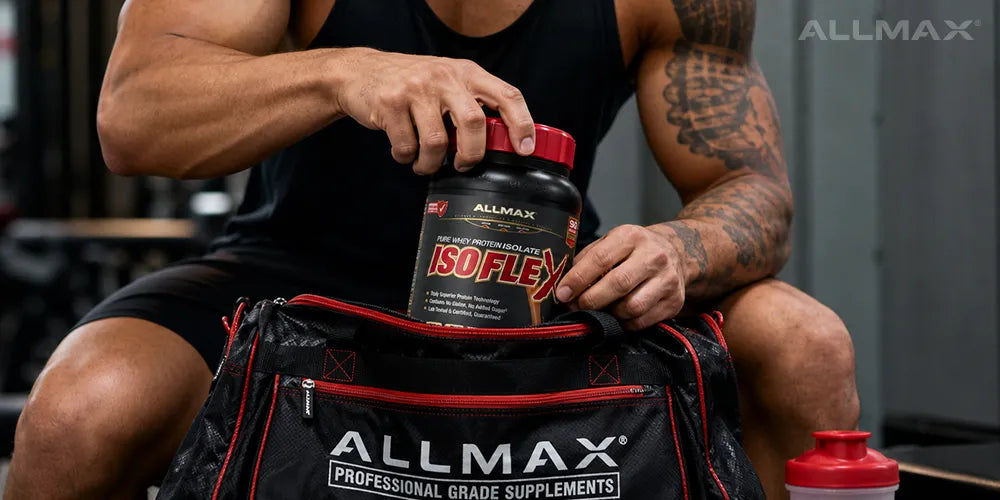
ALLMAX ISOFLEX Whey Protein Isolate — 27 g protein, 90% yield, ion‑exchange processed, and 99%+ lactose‑free, ideal as a fast‑digesting foundation protein to help you hit your leucine threshold at each meal.
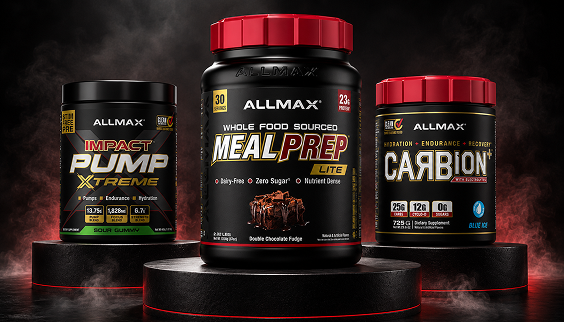
ALLMAX MealPrep Lite — Dairy‑free, whole‑food protein with essential fats, plant‑based omega‑3s, and green superfoods, designed as a high‑protein lean meal option to help keep you satisfied between whole‑food meals or when you need a convenient, non‑dairy shake.
ALLMAX Creatine Monohydrate — 5 g pharmaceutical‑grade CreaSyn daily to support ATP regeneration and intramuscular cellular hydration during high‑intensity training.
ALLMAX Impact Igniter Xtreme 2.0 — Advanced‑grade pre‑workout featuring staged caffeine, 8 g L-citrulline, nitric‑oxide support, and a nootropic focus matrix to help support energy, pumps, and mental focus before intense sessions.
What Is the Best Supplement Stack for Weight Loss and Muscle Gain Simultaneously?
Maintaining muscle mass during a calorie deficit requires specific attention to anti-catabolic amino acid support and fat metabolism. The ALLMAX Intermediate Fat Loss Stack from the official 2026 catalog provides a structured approach:
ALLMAX ISOFLEX — 27g protein with high leucine density to preserve muscle protein synthesis during caloric restriction.
ALLMAX CLA 95 — 95% active CLA isomers from safflower oil, plus Vitamin E, for body composition support.
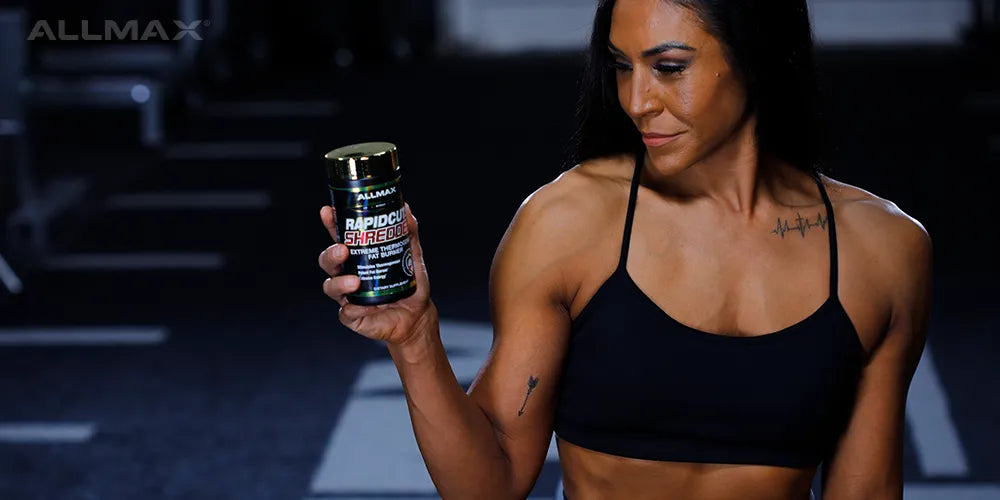
ALLMAX Rapidcuts Shredded — Thermogenic blend containing 190 mg caffeine anhydrous, 63 mg ashwagandha, and 200 mg green coffee extract.
Allmax Aminocore BCAAs — Anti-catabolic peri-workout coverage to protect lean tissue during a deficit.
ALLMAX Liquid L-Carnitine 1500 — 1,500 mg L-carnitine per serving to support fat oxidation as a fuel source.
Are Natural Bodybuilding Supplements Effective Without Stimulants?
For men who prefer to avoid caffeine or train in the evening, several effective stimulant-free options address specific performance and recovery needs.
ALLMAX Impact Pump Xtreme offers a 13.75 g pump blend, a 6.7 g strength blend, and a 1,828 mg focus blend, all stimulant-free, making it a practical choice for afternoon or evening training when caffeine use is not ideal.
For sustained energy and hydration during longer or higher-volume sessions without stimulants, ALLMAX Carbion+ delivers a zero-sugar, phased-delivery carbohydrate blend (Cyclo-D, PER4ORM maltodextrin, and waxy maize) alongside a four-electrolyte hydration matrix of sodium, potassium, magnesium, and calcium. Used intra-workout, it helps maintain blood glucose availability and fluid balance, the two factors most responsible for late-session fatigue once stimulants are off the table.
For men in a structured lean-gaining phase who struggle to hit daily calorie targets through whole foods, ALLMAX QuickMass provides 1,010 calories per full serving with a 3:1 carbohydrate-to-protein ratio, a multi-source protein blend, and complex carbohydrates from sweet potato, rolled oats, quinoa, and maltodextrin, with only 3 g of sugar per scoop. It is positioned for use as a calorie-dense meal supplement rather than a stimulant-driven performance product.
For men seeking a lactose-free bodybuilding protein option, ALLMAX IsoNatural provides 27 g of naturally flavored whey protein isolate at 99% lactose-free, with added prebiotics for digestive comfort and no artificial sweeteners or colors.
How Should You Actually Use These Supplements for Best Results?
The structure of your stack matters as much as the individual products in it.
Creatine — 5 g daily, consistently, with no mandatory loading phase required for most men. Consistency over weeks is what builds phosphocreatine stores.
Protein — 1–2 servings daily, timed to fill meals where your whole-food protein would otherwise fall below the 20–40 g threshold. Post-workout is an ideal time to support recovery.
AMINOCORE BCAAs — Consumed peri-workout (during or immediately before training), not as a replacement for a complete protein meal.
Pre-workout (Impact Igniter Xtreme 2.0) — 20–30 minutes before training, with 10–12 oz (295–355 mL) of water, on an empty or lightly-fed stomach. Do not layer with additional caffeine sources.
Glutamine — Post-workout, alongside your protein shake, during high-volume training blocks.
What Common Mistakes Do Beginners Make With Supplements?
Most early-stage supplement mistakes share the same root cause: trying to substitute a product for an unfinished foundation. The patterns below recur among men in their first 6–12 months of training.
Stacking too many products too early. Five products before you have nailed protein totals, sleep, and training consistency will not produce results that two products with proper basics will.
Using BCAAs as a protein replacement. BCAAs cover three of the nine essential amino acids. They support recovery in addition to complete protein; they do not replace a meal or a shake.
Loading creatine, then quitting after a week. Creatine works by saturating phosphocreatine stores over weeks, not days. A loading phase is not required; consistency at 5 g daily is sufficient to produce the effect.
Stacking multiple caffeine sources. A pre-workout, a fat burner, and a morning coffee easily push intake past 400 mg, which compromises sleep, and sleep is where recovery actually happens.
Taking pre-workout on the wrong days. Pre-workouts are for hard sessions, not every gym visit. Daily use blunts the stimulant response and adds caffeine load without a performance return.
Ignoring food first. A supplement labeled "muscle builder" cannot compensate for under-eating or inconsistent training. Supplements amplify a foundation; they do not create one.
Should You Stack Creatine and Protein Together?
Yes, and the combination is more effective than either alone. Creatine improves training output (more volume, more reps), while protein provides the raw amino acid material to rebuild the muscle tissue that high-volume training breaks down. One handles the energy system side; the other handles structural repair. They do not compete.
Frequently Asked Questions About Bodybuilding Supplements for Men
What are the best bodybuilding supplements for men, regardless of training stage?
Creatine monohydrate and high-quality whey protein isolate are the two supplements with the strongest, most consistent body of evidence for muscle growth and strength gains in men. Creatine increases phosphocreatine availability for ATP regeneration during high-intensity exercise; protein provides the essential amino acids, particularly leucine, required to activate muscle protein synthesis via the mTOR pathway. A scoping review of 16 RCTs in Nutrients confirmed consistent positive effects on strength and lean mass when creatine is combined with resistance training. ALLMAX Creatine Monohydrate provides pharmaceutical-grade CreaSyn at 5 g per serving, Verified for Sport and third-party tested for purity.
Does creatine actually help natural athletes build muscle?
Yes. Creatine monohydrate is one of the most extensively researched ergogenic supplements available. The Nutrients scoping review found consistent positive effects on muscle strength and lean mass in healthy young adults when creatine was combined with resistance training. A large-scale 2025 safety analysis in the Journal of the International Society of Sports Nutrition, which reviewed 685 clinical trials and included 12,839 participants who consumed creatine, found no significant difference in overall side-effect rates compared with placebo, confirming its long-term tolerability. ALLMAX Creatine Monohydrate is pharmaceutical-grade, ultra-fine (200 mesh), and available in both traditional powder and flavored formats.
What is the best protein powder for muscle building?
Whey protein isolate is consistently highlighted in the sports nutrition literature for its complete essential amino acid profile and high leucine content per serving. The ISSN recommends 20–40 g of high-quality protein per serving, with 700–3,000 mg of leucine, to reliably support muscle protein synthesis. ALLMAX IsoFlex Whey Protein Isolate delivers 27 g of protein per serving at a 90% protein yield, processed through ion-exchange ultrafiltration to achieve 99%+ lactose removal, making it one of the more suitable options for men with lactose sensitivity.
What supplement stack works best for muscle gain?
The most evidence-supported foundation stack for muscle gain combines creatine monohydrate (5 g daily) with a high-quality complete protein source (20–40 g per meal), distributed across the day to meet the 1.4–2.0 g/kg/day (0.6–0.9 g/lb/day) protein target recommended by the ISSN. For intermediate and advanced athletes, adding a leucine-rich BCAA supplement peri-workout and a well-formulated pre-workout with L-citrulline and beta-alanine may further support training volume and recovery. The ALLMAX Advanced Muscle Building Stack of ISOFLEX, Creatine, Impact Igniter Xtreme 2.0, Aminocore BCAAs, and Glutamine addresses each of these physiological layers.
Are bodybuilding supplements safe for long-term use?
Creatine monohydrate has been studied extensively for safety and is recognized as Generally Recognized as Safe (GRAS) by the FDA. A 2025 analysis published in Frontiers in Nutrition confirms creatine supplementation is safe and beneficial across the lifespan for healthy individuals. Whey protein isolate, consumed within reasonable daily protein targets, presents no safety concerns for healthy men without pre-existing kidney conditions. Choosing products from brands that manufacture in pharmaceutical-grade, GMP-certified, government-inspected facilities and that submit to third-party Verified for Sport testing reduces the risk of contamination or label inaccuracy. All ALLMAX products are produced under these standards.