

Anna Kasztenny, MSc.
Anna holds a Master’s degree in Bio-Pharmaceutical Science and Business Studies and a Bachelor of Medical Science with an Honors Specialization in Pharmacology. Alongside her academic background, she is a competitive bodybuilder and strength athlete who holds three provincial powerlifting records. As a former competitive gymnast and varsity cheerleader, she is passionate about health, performance, and evidence-based wellness.
If you've spent any time reading supplement labels or browsing fitness forums, you've probably seen the word "peptides" everywhere. So what are peptides, exactly? In the simplest terms, peptides are short chains of amino acids-smaller than full proteins but larger than single amino acids. Think of the relationship like this: amino acids are the building blocks, peptides are small assemblies of those blocks, and proteins are the large, complex structures built from many of them.
This article focuses on food and protein-related peptides: the kind you encounter in whey protein, collagen supplements, and hydrolyzed protein formulas, not cosmetic or injectable peptides. Our goal here is to explain the science first, then show how peptides appear in real products athletes actually use.
This article is informational and not medical advice. If you have health conditions or questions about peptide-based medications, weight loss drugs, or long term safety, speak with a healthcare provider.
What Are Peptides?
Peptides are short chains of amino acids linked together by covalent connections called peptide bonds [1]. Peptides typically contain between two and 100 amino acids, though most nutrition science references a practical range of roughly 2–50. Anything significantly longer is usually classified as a protein molecule.
Here's a simple analogy: amino acids are like individual letters of the alphabet, peptides are short words, and proteins are full sentences or paragraphs. Just as words are built from letters, peptides are built from amino acid chains connected end-to-end through peptide bonds.
It's worth knowing that "peptide" is a broad chemistry term, not a synonym for any single supplement or performance drug. The body produces numerous important peptides naturally. Many of these peptides function as signaling molecules; insulin, for example, is a well-known peptide produced by the pancreas that regulates blood sugar levels. Hormonal peptides regulate important processes like blood sugar, and peptides can assist in signaling hormone production and metabolism regulation [2].
Some naturally occurring peptides act as signaling molecules in the body. This article, however, focuses only on food-derived protein protein peptides, collagen peptides, and their role in sports nutrition.

Peptides vs. Proteins vs. Amino Acids
Understanding the difference between these three terms helps you make smarter choices when selecting protein powders, amino acid supplements, or peptide supplements.
Component |
What It Is |
Role in Nutrition |
Amino acids |
Individual building blocks of proteins |
Used to build and repair tissues, support physiological processes |
Peptides |
Short chains of amino acids (2–50+) |
Intermediate products of protein digestion; components of some protein ingredients |
Proteins |
Larger structures made from many amino acids |
Major dietary source of amino acids; structural and functional roles in the body |
There's no universal cutoff between a "large peptide" and a "small protein." In nutrition, what matters most is how these molecules digest into individual amino acids and support muscle protein synthesis. Amino acids, especially essential amino acids and leucine, are the direct drivers of muscle protein synthesis [3]. Dietary proteins are digested primarily into free amino acids and small peptides, including dipeptides and tripeptides, before absorption [4].
What Are Protein Peptides in Sports Nutrition?
In supplement language, "protein peptides" refers to small fragments of dietary proteins, like whey or collagen, produced either during normal digestion or through manufacturing steps like enzymatic hydrolysis.
Here's how the process works naturally:
You eat protein (chicken, beef, whey shake, animal products, etc.)
Digestive enzymes cut those proteins into progressively smaller peptides
Those peptides are broken into individual amino acids and absorbed
Ingredient manufacturers can pre-create some of these smaller fragments during production, so certain protein powders, collagen peptides, or dietary supplements already contain shorter amino acid chains before you consume them.
The presence of peptides in a formula does not automatically make it superior for muscle growth, weight loss, or anti aging. What matters most is the total dose of high-quality protein, its essential amino acid content, and how it fits your overall diet.
What Is Hydrolyzed Protein?
Hydrolyzed protein is intact protein that has been partially broken down into shorter peptides and free amino acids by enzymes during manufacturing. Think of it as pre-digestion in the factory rather than in your gut.
Hydrolysis breaks some peptide bonds in the protein molecule, producing a mix of small peptides and free amino acids. This doesn't change the total amino acid content per gram of protein; it changes the size of the fragments you're consuming.
Using whey protein as an example: whey protein isolate is a highly purified form of whey with most fat and lactose removed. Hydrolyzed whey protein takes that a step further by enzymatically breaking some of the protein into smaller pieces. The difference is in processing, not in total protein delivered.
Common reasons to choose hydrolyzed protein include potentially easier digestion for some people, smoother mixing, and formulation flexibility. However, research in healthy athletes shows that total daily protein, amino acid profile, and consistent training remain more important than whether your protein is hydrolyzed or not [5].
How Does Your Body Digest Protein Into Peptides and Amino Acids?
When you eat protein, whether from food or a shake, your body runs a systematic breakdown process [6]. Chewing and stomach acid first denature (unfold) the protein. Gastric enzymes like pepsin begin breaking it into large peptides. In the small intestine, pancreatic enzymes (trypsin, chymotrypsin) further cut these into small peptides and amino acids.
Specialized transporters in the small intestine-including a transporter called PepT1-absorb both small peptides and single amino acids [7]. Inside intestinal cells, remaining peptides are broken into free amino acids before entering circulation. The absorption and efficacy of peptides can be affected by their size and structure: larger peptides must be cut further before transport.
Once amino acids (including leucine and other essential amino acids) reach the bloodstream, they become available to support muscle protein synthesis after training. Peptides are a normal, unavoidable intermediate in protein digestion, whether you eat chicken, drink whey, or use a hydrolyzed protein powder.
Do Peptides Get Absorbed Faster Than Regular Protein?
There's an important difference between digestion rate, absorption speed, and actual outcomes like muscle growth and recovery. In one study, whey hydrolysate produced roughly 93% greater muscle protein synthesis than casein at rest, and even more post-exercise [8]. But much of that difference reflects the inherent speed of whey versus casein, not just hydrolysis.
Research suggests that for most lifters, the key factors are:
Total daily protein intake (hitting your target consistently)
Per-meal protein dose (roughly 20–40 g depending on body size)
Leucine content of the protein source
Timing around workouts
Consistent resistance training
When choosing protein powders, evaluate the whole product (ingredients, amino acid profile, cost) and discuss any food allergies, digestive issues, or safety concerns with your healthcare provider.
What Are the Potential Benefits of Peptides in Protein Supplements?
Here, "peptides" refers to food-derived protein peptides in whey, collagen, or peptide-enriched formulas.
Realistic, evidence-aligned potential benefits include:
Supporting normal protein digestion and the delivery of amino acids and small peptides following protein consumption [9]
Contributing amino acids to the overall nutritional profile of a protein supplement when derived from high-quality protein sources [10]
Providing formulation flexibility by influencing properties such as solubility, emulsification, foaming, and texture [11]
Certain bioactive peptides have been investigated for roles in inflammatory signaling, pain pathways, and tissue repair, although these effects are specific to particular peptides and should not be generalized to all dietary peptides [12]
Peptide-containing protein powders should complement, not replace, basics like a balanced diet, sufficient protein, resistance training, sleep, and healthy weight management. Peptides in sports nutrition formulas are considered safe for healthy adults when used as labeled food ingredients, but people with health conditions or those taking other medications should discuss new supplements with a healthcare provider.
Protein Isolate vs. Hydrolyzed Protein: What's the Difference?
"Isolate" and "hydrolyzed" describe different characteristics: purification versus breakdown into smaller fragments.
A protein isolate (e.g., whey protein isolate, milk protein isolate, or beef protein isolate) is a highly filtered ingredient typically containing 85–90%+ protein with reduced fat, lactose, and carbohydrates. A concentrate retains more residual carbs and fats. Both isolates and concentrates can be non-hydrolyzed or hydrolyzed.
Hydrolyzed protein, as covered earlier, has undergone enzymatic breakdown into smaller fragments. A whey protein isolate can be hydrolyzed or non-hydrolyzed, and hydrolyzed protein can come from whey, casein, collagen, or other sources.
For athletes choosing between them: isolates may be preferred for lower lactose and leaner macros, while hydrolyzed protein may suit those wanting rapid mixing or gentler digestion. Both support muscle protein synthesis when total protein and essential amino acids are adequate.
Why Combine Multiple Protein Sources (and Where Peptides Fit In)
Multi-source protein formulas combine different protein isolates and concentrates to diversify digestion rates and amino acid profiles. Whey tends to be faster-digesting and rich in leucine, while casein and some milk proteins digest more slowly, potentially providing sustained amino acid release [13].
Adding peptide ingredients such as whey protein peptides or collagen peptides contributes extra small fragments alongside the main intact protein, potentially influencing texture, solubility, or early amino acid appearance.
Peptides in Sports Nutrition: How Athletes Actually Use Them
For lifters, bodybuilders, and active individuals, peptides appear in everyday products in several practical ways:
As natural intermediates when digesting whey or milk protein
As hydrolyzed protein ingredients in advanced formulas
In collagen peptide powders for joint health and tissue repair
As labeled "peptide" blends in multi-source protein formulas
Peptides in supplements can support recovery and athletic performance by providing amino acids needed for muscle protein synthesis and other physiological processes, and may support muscle growth and metabolism when paired with resistance training, sufficient total protein intake, and a nutrient-dense diet.
Introducing IsoLyft™: Multi-Source Protein Isolate + Peptide Formula
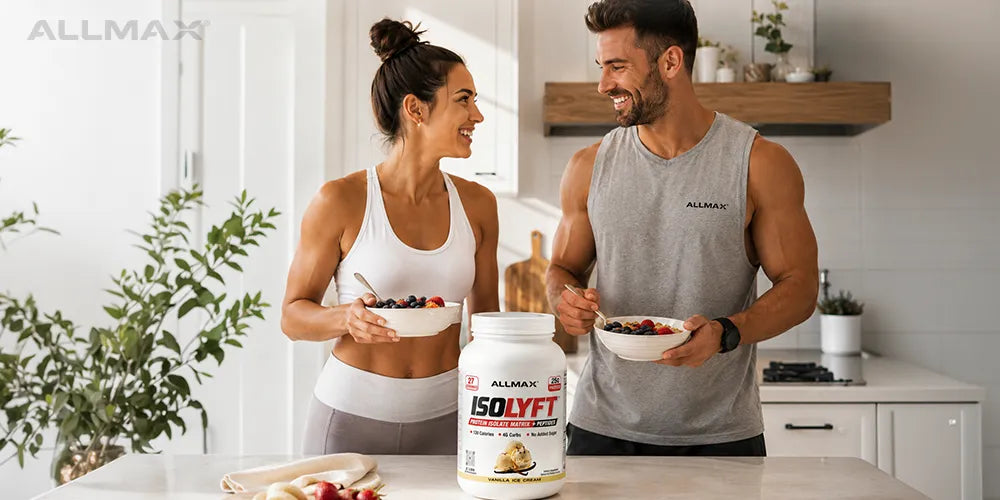
Now that we've covered the science, here's a concrete example. ALLMAX Nutrition's IsoLyft™ is built around the concepts discussed above: high-quality protein sources plus a small 3-Peptide Amino Matrix.
IsoLyft™ delivers 25 g of protein per serving from a 6-Protein Isolate Matrix:
Milk Protein Isolate (MPI)
Milk Protein Concentrate (MPC)
Whey Protein Concentrate (WPC)
Whey Protein Isolate (WPI)
Micellar Casein
Beef Protein
The formula includes both isolates and concentrates. On top of the 25 g of intact protein, IsoLyft adds a Peptide Amino Matrix (470 mg) containing whey protein hydrolysate, glutamine, and L-leucine as leucine HCl. ALLMAX does not practice amino spiking: the peptide matrix does not replace or inflate the 25 g of protein on the label.
IsoLyft Nutrition Profile & Practical Use
Per serving, IsoLyft provides:
Nutrition Facts |
Vanilla Ice Cream |
Double Chocolate |
Protein |
25 g |
25 g |
Calories |
120 |
130 |
Carbohydrates |
4 g |
5 g |
Fat |
0.5 g |
1 g |
Added Sugar |
0 g |
0 g |
Available in Vanilla Ice Cream and Double Chocolate. Use it as a post-workout shake, between-meal protein boost, or part of a high-protein breakfast.
IsoLyft contains milk and soy. It is gluten-free and contains no trans fat. Every lot is lab tested for purity and potency under ALLMAX’s five-stage quality-testing protocol. Explore IsoLyft alongside other ALLMAX protein powders as part of a broader sports nutrition strategy.
Who Can Benefit From a Protein + Peptide Formula?
No one strictly "needs" peptides to be healthy or fit. But a well-designed protein + peptide powder can serve many scenarios:
Strength athletes and bodybuilders aiming for muscle growth
Active individuals focused on recovery and maintaining a healthy weight
Busy professionals who struggle to meet protein targets from whole food alone
People looking for a convenient, multi-source protein powder to help meet daily protein targets
Budget-conscious shoppers who want multiple protein sources in one product
Protein powders are supplements to, not replacements for, whole-food nutrition and a balanced diet. Individuals with kidney disease, bone density concerns, irritable bowel syndrome, or other medical conditions should consult a healthcare provider, family medicine physician, or sports dietitian before dramatically increasing protein intake.
How to Choose a Protein Powder (With or Without Peptides)
An informed choice matters more than chasing buzzwords. Match the product to your goals, diet, and budget.
Evaluate these factors:
Grams of protein per serving and type (whey, casein, milk, beef, plant)
Presence of essential amino acids and leucine content
Total calories, carbs, fats, and added sugar
Whether you need low-lactose, gluten-free, or allergen-friendly options
Transparent labeling of all protein sources, absence of amino spiking
Third-party or in-house lab testing
Cost per serving and cost per gram of protein
Consider hydrolyzed protein or peptide-enriched formulas if you have digestive sensitivity or are an advanced athlete fine-tuning your stack. But they're not mandatory for progress. The general public benefits most from consistency-hitting daily protein targets with quality sources. When in doubt, discuss major dietary changes with a qualified healthcare provider.
Frequently Asked Questions About Peptides, Hydrolyzed Protein & Safety
What are peptides?
Peptides are short chains of amino acids linked by peptide bonds. They are smaller than proteins and serve as natural intermediates during protein digestion and as signaling molecules in the body.
What is a peptide made of?
A peptide is made of amino acids connected end-to-end by peptide bonds. The sequence and number of amino acids determine the peptide's properties. Peptides typically range from 2 to about 100 amino acids.
Are peptides the same as proteins or amino acids?
No. Amino acids are single building blocks of proteins. Peptides are short amino acid chains. Proteins are much larger structures. During digestion, proteins break into peptides and then into individual amino acids.
What is hydrolyzed protein?
Hydrolyzed protein is protein that has been partially broken down into smaller peptides and free amino acids through enzymatic processing before you consume it.
Is hydrolyzed protein better than regular whey protein isolate?
Not necessarily. Hydrolyzed protein may digest slightly faster in some contexts, but when total protein dose and essential amino acids are matched, the practical differences for muscle growth are often modest. Such benefits depend on individual circumstances.
Do protein peptides help with muscle growth and recovery?
Protein peptides deliver amino acids that support muscle protein synthesis. However, total daily protein, leucine content, and resistance training are the primary drivers of muscle growth and recovery. GLP-1 peptides help regulate appetite and improve blood sugar control but serve a completely different function.
Can collagen peptides support joint health or skin elasticity?
Some human studies suggest collagen peptides may improve joint comfort, skin elasticity, and hydration over several months of consistent use. However, collagen is an incomplete protein and should supplement-not replace-complete protein sources. Collagen supplements are not proven solutions for weight loss or efficacy against serious health conditions.
Are peptides safe in protein powder?
Food-derived peptides in protein powder are generally considered safe for healthy adults. Many peptide supplements lack strong scientific evidence beyond basic safety, however. Synthetic versions of peptides sold online as peptide supplements often lack FDA regulation and oversight. Over 100 peptide-based drugs have been approved by the FDA after undergoing large clinical trials for safety, but those are distinct from unregulated peptides available on the gray market, which may contain harmful impurities.
Does IsoLyft contain peptides?
Yes. IsoLyft includes a Peptide Amino Matrix (470 mg) containing whey protein hydrolysate, glutamine, and L-leucine as leucine HCl. This matrix sits on top of 25 g of intact protein per serving. ALLMAX's no-amino-spiking commitment means the peptide matrix is clearly listed and does not inflate the protein count. The product is manufactured in facilities with strict quality control and is lab-tested for purity. Peptides are safe as part of this formula for healthy adults when used as directed.
References:
Forbes Kaprive J, Krishnamurthy K. Biochemistry, Peptide. [Updated 2023 Aug 28]. In: StatPearls [Internet]. Treasure Island (FL): StatPearls Publishing. https://www.ncbi.nlm.nih.gov/books/NBK562260/
White PJ, Wewer Albrechtsen NJ, Campbell JE. Islet hormones at the intersection of glucose and amino acid metabolism. Nat Rev Endocrinol. 2025 Jul;21(7):397-412. https://pubmed.ncbi.nlm.nih.gov/40055529/
Ely IA, Phillips BE, Smith K, Wilkinson DJ, Piasecki M, Breen L, Larsen MS, Atherton PJ. A focus on leucine in the nutritional regulation of human skeletal muscle metabolism in ageing, exercise and unloading states. Clin Nutr. 2023 Oct;42(10):1849-1865. https://pubmed.ncbi.nlm.nih.gov/37625315/
Miner-Williams WM, Stevens BR, Moughan PJ. Are intact peptides absorbed from the healthy gut in the adult human? Nutr Res Rev. 2014 Dec;27(2):308-29. https://pubmed.ncbi.nlm.nih.gov/25623084/
Manninen AH. Protein hydrolysates in sports nutrition. Nutr Metab (Lond). 2009 Sep 28;6:38. https://pmc.ncbi.nlm.nih.gov/articles/PMC2761917/
Dallas DC, Sanctuary MR, Qu Y, Khajavi SH, Van Zandt AE, Dyandra M, Frese SA, Barile D, German JB. Personalizing protein nourishment. Crit Rev Food Sci Nutr. 2017 Oct 13;57(15):3313-3331. https://pmc.ncbi.nlm.nih.gov/articles/PMC4927412/
Bhutia, Y. D., & Ganapathy, V. (2018). Protein digestion and absorption. In Physiology of the Gastrointestinal Tract (6th ed., Vol. 2, Chapter 47). https://www.sciencedirect.com/science/article/pii/B9780128099544000475
Tang JE, Moore DR, Kujbida GW, Tarnopolsky MA, Phillips SM. Ingestion of whey hydrolysate, casein, or soy protein isolate: effects on mixed muscle protein synthesis at rest and following resistance exercise in young men. J Appl Physiol (1985). 2009 Sep;107(3):987-92. https://pubmed.ncbi.nlm.nih.gov/19589961/
Xu C, Liu Y, Li K, Zhang J, Wei B, Wang H. Absorption of food-derived peptides: Mechanisms, influencing factors, and enhancement strategies. Food Res Int. 2024 Dec;197(Pt 1):115190. https://pubmed.ncbi.nlm.nih.gov/39593400/
Nasri M. Protein Hydrolysates and Biopeptides: Production, Biological Activities, and Applications in Foods and Health Benefits. A Review. Adv Food Nutr Res. 2017;81:109-159. https://pubmed.ncbi.nlm.nih.gov/28317603/
Asaithambi N, Singha P, Singh SK. Recent application of protein hydrolysates in food texture modification. Crit Rev Food Sci Nutr. 2023;63(30):10412-10443. https://pubmed.ncbi.nlm.nih.gov/35653113/
Hao ZW, Zhang ZY, Wang ZP, Wang Y, Chen JY, Chen TH, Shi G, Li HK, Wang JW, Dong MC, Hong L, Li JF. Bioactive peptides and proteins for tissue repair: microenvironment modulation, rational delivery, and clinical potential. Mil Med Res. 2024 Dec 5;11(1):75. https://pubmed.ncbi.nlm.nih.gov/39639374/
Boirie Y, Dangin M, Gachon P, Vasson MP, Maubois JL, Beaufrère B. Slow and fast dietary proteins differently modulate postprandial protein accretion. Proc Natl Acad Sci U S A. 1997 Dec 23;94(26):14930-5. https://pubmed.ncbi.nlm.nih.gov/9405716/