

Anna Kasztenny, MSc.
Anna holds a Master’s degree in Bio-Pharmaceutical Science and Business Studies and a Bachelor of Medical Science with an Honors Specialization in Pharmacology. Alongside her academic background, she is a competitive bodybuilder and strength athlete who holds three provincial powerlifting records. As a former competitive gymnast and varsity cheerleader, she is passionate about health, performance, and evidence-based wellness.
As you get older, everyday tasks like climbing stairs, carrying groceries, or getting up from a low chair start to demand more effort. That shift happens because muscle strength, power, and mass gradually decline from midlife onward. Maintaining those capacities is central to staying independent, active, and confident well into your 70s, 80s, and beyond.
So is a creatine supplement for seniors worth considering? Research suggests yes, particularly when paired with resistance training. Multiple studies and meta-analyses show that creatine monohydrate can enhance strength gains and lean tissue mass in older adults who train consistently. Evidence for bone health and cognitive function is more mixed but emerging. This article covers how creatine works, the realistic benefits of creatine for aging adults, dosage and creatine ingestion strategies, safety considerations including kidney health and water retention, and how creatine fits into broader healthy aging habits.

What Is Creatine and How Does It Work?
Creatine is a naturally occurring compound your body produces creatine from three amino acids: arginine, glycine, and methionine. It is synthesized primarily in the liver and kidneys and also obtained from foods like beef, pork, poultry, and fish. Omnivorous diets typically supply about 1–2 grams per day.
Roughly 95% of the body's creatine is stored in skeletal muscle as phosphocreatine, with smaller amounts in the brain, heart, and other tissues [1].
Phosphocreatine donates a phosphate group to ADP to rapidly regenerate adenosine triphosphate, the molecule that fuels muscle contractions. This system is especially important during short term energy demands like rising from a seated position, climbing stairs, or lifting something heavy.
Creatine enhances energy production during high-intensity activities by keeping the ATP supply available for repeated efforts.
Creatine monohydrate is the most studied and effective form. The International Society of Sports Nutrition position stand identifies it as the benchmark supplement for improving high-intensity exercise capacity [2].
Creatine is not a steroid, not a stimulant, and not a hormone. It does not replace exercise or adequate protein intake. It supports energy availability so you can do more productive work during training.
Why Muscle Health Matters as We Age
From around age 30, most adults experience gradual declines in muscle mass, muscle strength, and power. Seniors lose about 3–5% of muscle mass per decade after age 30, and those losses can accelerate after about 60 [3]. However, there is enormous individual variation driven by activity level, nutrition, health conditions, and genetics.
Getting out of low chairs, carrying laundry upstairs, gardening, recreational sports like pickleball or golf, and maintaining travel and social activity all depend heavily on muscle function.
Age related muscle loss is not inevitable at any fixed rate. Lifestyle factors strongly influence outcomes.
Maintaining muscle health ties into bone health, balance, reaction time, and the ability to recover from illness or injury.
Structured resistance training is the primary tool to slow age related muscle loss. Creatine is a potential support, not a replacement.
Muscle Mass, Strength, and Sarcopenia
Sarcopenia is a clinically recognized syndrome involving low muscular strength and low muscle quantity or quality. It is typically identified in older adults using standardized criteria such as grip strength, walking speed, and chair-rise tests.
Muscle mass and muscle strength are related but distinct. Strength usually predicts physical function (walking speed, chair rise time) better than muscle size alone.
Contributors include reduced activity, inadequate protein or energy intake, hormonal shifts, chronic inflammation, disease states, and certain medications.
Creatine on its own does not diagnose, treat, or cure sarcopenia. Management requires medical assessment plus lifestyle strategies.
Research on creatine for sarcopenia is promising. A 2025 meta-analysis of 8 clinical trials (482 participants aged ~60+) found that combining creatine with resistance training produced significant improvements in lower-limb strength and lean mass compared with training alone [4].
The Importance of Physical Function and Independence
Physical function means concrete abilities: walking speed, getting off the floor, climbing stairs, carrying groceries, and participating in hobbies like cycling or playing with grandchildren.
Independence depends on integrated systems: muscles, bones, joints, balance, cardiovascular health, brain function, vision, and even home environment.
Research shows that improvements in tests like chair-rise time, 6-minute walk distance, or Timed Up-and-Go are more meaningful than changes on a bathroom scale [5].
Creatine helps reduce the risk of falls by improving muscle function, and creatine helps maintain balance and reduces fall risk in seniors, but these outcomes depend on consistent training.
If you notice marked declines in function, recent falls, or rapid unintentional weight loss, seek evaluation from a physician or physical therapist.
Potential Benefits of Creatine for Seniors
Much of the research on creatine supplementation in older adults uses creatine monohydrate at about 3–5 g/day, often combined with 2–3 sessions per week of resistance training for 8–24 weeks.
The physical benefits have been studied across several domains: muscle strength, lean mass, physical function, bone density, and cognitive function. The strongest and most consistent evidence supports strength outcomes.
Individual responses vary. Some older adults experience significant improvements; others see modest or minimal changes depending on training adherence, diet, health conditions, and baseline creatine status.
Each section below addresses a specific outcome, distinguishing well-supported findings from emerging evidence.
Bench V-Up 3 x 10
Step-by-step:
- Sit on the edge of a flat bench with your hands gripping the bench for support.
- Extend your legs straight out, parallel to the floor.
- Lean your torso back at about a 45-degree angle.
- Engage your core and simultaneously bring your knees toward your chest while curling your upper body forward.
- Pause and squeeze your abs at the top.
- Slowly extend your legs and lean back to the starting position.
- Repeat for 10 reps.
What to watch out for:
- Don’t swing your legs — control the lift and the descent.
- Keep your back straight; don’t hunch your shoulders.
- Avoid holding your breath — exhale during the crunch.
Pro tips:
- For more difficulty, straighten your legs during the movement.
- Keep your movements smooth and steady to fully engage your core.
Supplement Support for Core Strength
To maximize your core training, consider adding targeted supplements to support energy, recovery, and muscle function. Here are some options:
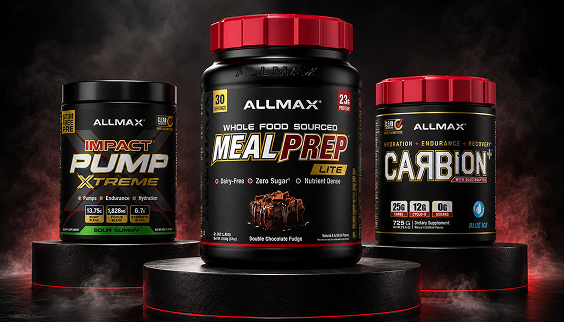
- RAPIDCUTS SHREDDED: Powered by botanical extracts, RAPIDCUTS supports energy and mental focus during challenging workouts, helping you stay dialed in when training your core.
- CLA95: A pure form of conjugated linoleic acid, CLA95 supports metabolic balance and can be part of your daily wellness routine.
- AMINOCORE: Loaded with BCAAs, AMINOCORE fuels your muscles during workouts and supports recovery afterward — ideal for maintaining strength and endurance through your ab circuits.
- IMPACT IGNITER: A powerful pre-workout formula to elevate your energy and intensity before training sessions. Perfect when you need that extra push for hardcore ab workouts.
- CYTOGREENS: Packed with antioxidant-rich greens and enzymes, CYTOGREENS supports overall health and recovery, helping your body stay balanced during intense training phases.
- ZMX2: A combination of zinc, magnesium, and vitamin B6 that supports muscle recovery, sleep quality, and hormonal balance — all essential for rebuilding stronger muscles after workouts.


How to Build Stronger Core Muscles
Building a strong core is about much more than just doing endless crunches. Your core includes not only your abs but also your lower back, obliques, hips, and deep stabilizing muscles. A powerful core improves your athletic performance, posture, and balance while protecting you from injuries.
Supporting Muscle Strength
Creatine supplementation improves muscle mass and strength in older adults, and combining creatine with resistance training enhances muscle growth in seniors. Multiple studies confirm this pattern.
In a clinical trial with 103 community-dwelling older adults (mean age ~68), a daily dose of 3 g creatine combined with resistance training 3 times per week produced greater gains in 30-second chair stand, Timed Up-and-Go, and 6-minute walk performance than placebo plus training [6].
Creatine improves strength and exercise performance in seniors by enabling more total work per session: extra reps, better technique maintenance, and slightly heavier loads over time.
Strength training remains the primary driver. Creatine acts as a helper by supporting repeated high-effort sets.
Some studies show limited added benefit when programs are very low volume, shorter than 8 weeks, or adherence is poor. Set realistic expectations.
Supporting Muscle Mass and Age-Related Muscle Loss
Several trials report greater increases in lean body mass or muscle cross-sectional area in older adults who combine creatine with exercise training compared with training alone [4]. Creatine enhances protein synthesis and muscle hydration in seniors, contributing to these gains.
Creatine may cause temporary weight gain due to water retention. Early water weight of 1–2 kg frequently reflects increased water stored inside muscle cells rather than pure new tissue, particularly in the first 1–2 weeks. This muscle hydration effect is normal and not harmful.
Over weeks to months, modest increases in lean mass tied to strength and function gains may help counter some aspects of age related muscle loss, though creatine does not "reverse" aging.
Creatine without resistance training has smaller and more inconsistent effects on lean mass. Supplementation cannot substitute for moving and lifting.
What you might notice: slightly fuller muscles, easier repeated sit-to-stands, and gradual improvements over 8–24 weeks of consistent training.
Exercise Performance, Training Capacity, and Recovery
Creatine supplementation reduces fatigue in older adults during physical tasks and may help you perform more total work in a session, whether that means an extra set of chair squats or maintaining form through a full workout.
Some studies suggest creatine can enhance muscular endurance and power in repeated tasks like stair climbing, though not all results are consistent.
Creatine supplementation without physical activity offers minimal benefits for seniors. The performance boost matters most as an enabler of more consistent, progressive training.
Evidence for reduced muscle soreness or faster recovery in older adults is mixed. Creatine is not a cure for delayed-onset soreness or joint pain.
Bone Health
Creatine can support bone health when combined with resistance exercise. Resistance training loads bones mechanically, and creatine may enhance the training stimulus.
However, current research does not establish creatine as a stand-alone method for increasing bone mass or bone density. A Mayo Clinic summary notes that research shows no clear benefit for total bone mineral density from creatine alone [7].
Trials are often too short and underpowered for bone outcomes, which require at least 6–12 months to measure meaningful change. Appropriate medical management, calcium, vitamin D, and strength training remain the foundation for bone health.
Brain Health and Cognitive Function
Creatine supports brain energy metabolism, aiding cognitive function. The brain uses a significant amount of ATP, and creatine may help maintain cellular energy reserves.
Creatine improves memory in adults aged 66–76 according to a systematic review that found positive associations for memory and attention in 5 of 6 studies [8].
Research shows creatine improves processing speeds in seniors and creatine supplementation boosts mental clarity in older adults, although study quality varies and sample sizes are often small [8].
Creatine enhances cognitive performance under stress or sleep deprivation. This is relevant for older adults experiencing disrupted sleep patterns.
Evidence is promising but preliminary. No large, well-powered trial has confirmed that creatine prevents dementia, Alzheimer's disease, or age-related cognitive decline. Improving cognitive function with creatine remains an active research area.
Creatine Dosage for Seniors: How Much Is Appropriate?
The recommended creatine dosage for seniors is 3–5 grams daily of creatine monohydrate. This daily dose aligns with the protocols used in most adult research, including trials in active older adults.
A loading phase of 20 grams per day (divided into four servings) for 5–7 days is optional. It saturates muscle creatine stores faster but can increase gastrointestinal discomfort. A steady low dose of 3–5 g daily reaches similar levels over 3–4 weeks. Creatine loading is a personal choice, not a requirement.
Cycling creatine is unnecessary for effectiveness. You can take creatine continuously.
Creatine dosing does not differ dramatically for seniors versus younger adults, but review the product label and discuss with your healthcare provider if you have relevant medical conditions.
For a practical reference on creatine timing, consistency outweighs optimization.
Is Creatine Safe for Seniors?
Creatine is safe for long-term use in older adults when used at recommended doses. The International Society of Sports Nutrition reports that creatine monohydrate at 3–5 g/day is generally well tolerated [9]. Studies up to two years in healthy individuals show no adverse effects on kidney or liver function.
Creatine does not cause kidney damage in healthy individuals. Creatine supplementation may raise serum creatinine by about 0.10–0.15 mg/dL, but this reflects normal creatine metabolism, not renal damage. Clinicians should know you are taking creatine when interpreting lab results.
Consultation with a healthcare provider is essential before starting creatine supplementation for older adults with pre-existing kidney disease or reduced kidney function. Consult a doctor if taking medications that affect kidney function or fluid balance before starting creatine, as potential interactions should be evaluated.
Older adults should stay hydrated while supplementing with creatine to support kidney function and general health.
Some seniors may experience gastrointestinal issues with creatine, especially during high doses or a loading phase. Splitting doses and taking creatine with food usually helps.
Water weight gain of 1–2 kg is common early on and is not fat gain. For people monitoring weight due to heart failure or edema, discuss water retention with your physician.
Creatine may assist with glycemic control and metabolic health in older individuals; one trial showed improvements in HbA1c markers alongside exercise training [10].
How to Choose a Creatine Supplement for Seniors
When evaluating creatine supplements, prioritize simplicity, ingredient transparency, and evidence.
Look for creatine monohydrate as the primary form, which remains the sports nutrition and sports medicine gold standard.
Check that the label clearly states grams per serving and lists minimal unnecessary ingredients.
More expensive or complex formulations are not necessarily more effective.
For older adults considering creatine, a straightforward creatine monohydrate product is a practical starting point. ALLMAX Creatine Monohydrate Powder provides 5 g of 99.9% pure CreaSyn creatine monohydrate per serving with no fillers, sugar, or additives. Review the label, verify it meets your needs, and discuss suitability with a healthcare provider if you have relevant medical conditions. You can also explore the full creatine supplements collection for other formats like capsules.
Other Habits That Support Healthy Aging
Taking creatine supplements is one piece of a much larger puzzle. Creatine cannot compensate for inadequate nutrition, inactivity, or untreated medical conditions.
Aim for adequate protein intake (often 1.2–1.6 g/kg/day for active older adults) alongside a varied, nutrient-dense diet.
Prioritize regular strength training 2–3 times per week plus aerobic, balance, and mobility work.
Protect sleep quality. Sleep deprivation impairs recovery, cognitive function, and mood.
Stay socially active and engaged in activities you enjoy.
Seek medical assessment when strength, mobility, appetite, or weight changes unexpectedly. A therapeutic intervention may be needed beyond lifestyle changes alone.
For a broader look at evidence-based options, see this guide on supplements for healthy aging.
Frequently Asked Questions About Creatine for Seniors
Is a creatine supplement for seniors worth considering?
For most adults engaged in resistance training, yes. Incorporating creatine may enhance strength gains and support lean mass when combined with consistent exercise.
What are the benefits of creatine for older adults?
The beneficial effects include improved upper body strength, lower-body strength, lean tissue mass, and some measures of physical function. Brain health benefits are emerging but not yet established.
Is creatine safe for seniors?
Creatine is generally safe for healthy individuals at recommended doses of 3–5 g/day. People with kidney disease should consult their healthcare provider first.
How much creatine should an older adult take daily?
Seniors should take 3–5 grams of creatine daily. This matches most clinical trial protocols.
Should seniors take creatine every day?
Yes. Consistent daily intake maintains elevated muscle creatine stores. Cycling is unnecessary.
Does creatine help prevent age-related muscle loss?
Creatine combined with exercise training can help slow muscle loss, but it does not prevent all age-related decline.
Is creatine effective without exercise?
Creatine supplementation without physical activity offers minimal benefits for seniors. Exercise is the primary stimulus.
Can creatine improve strength in older adults?
Yes. A systematic review and multiple studies show significant improvements in muscular strength when creatine is paired with resistance training.
Does creatine affect kidney function?
It raises serum creatinine slightly but does not impair kidney function in healthy individuals.
Can creatine increase blood creatinine levels?
Yes, by about 0.10–0.15 mg/dL. This is a metabolic byproduct, not kidney damage. Inform your doctor.
Does creatine help with bone health?
Evidence is limited. Creatine may support bone health indirectly through enhanced strength training but is not a treatment for osteoporosis.
Can creatine improve memory or cognitive function?
Preliminary evidence suggests cognitive benefits for short term memory and processing speed in older adults, but larger trials are needed.
Is creatine monohydrate the best form for seniors?
Yes. It has the most evidence from the International Society of Sports Nutrition and Medical Science Sports Exercise literature, as well as multiple studies including Journal of Geriatric Physical Therapy publications.
Can seniors get enough creatine from food?
Dietary creatine from meat and fish provides about 1–2 g/day. Supplementation offers a consistent, measured amount on top of dietary intake. Those on plant-based diets may particularly benefit from maintaining strength through supplementation.
The Bottom Line on Creatine and Healthy Aging
Creatine monohydrate is one of the most well-researched supplements in sports nutrition, and the evidence increasingly supports its use beyond young athletes. For older adults committed to resistance training and adequate nutrition, creatine can offer an added benefit for mass and strength gains, exercise capacity, and potentially brain function.
It is not a magic pill. It works best as a complement to consistent effort in the gym, enough protein on your plate, quality sleep, and regular medical check-ups. Product quality matters: look for clean labeling, a verified dose, and creatine monohydrate as the sole active ingredient. ALLMAX Creatine Monohydrate Powder is one example worth evaluating.
The real priority is maintaining strength and staying active on your own terms. Start where you are, train consistently, eat well, and let human performance research guide your choices rather than hype.
References
Balsom PD, Söderlund K, Ekblom B. Creatine in humans with special reference to creatine supplementation. Sports Med. 1994 Oct;18(4):268-80. https://pubmed.ncbi.nlm.nih.gov/7817065/
Kreider, R. B., Kalman, D. S., Antonio, J., Ziegenfuss, T. N., Wildman, R., Collins, R., … Lopez, H. L. (2017). International Society of Sports Nutrition position stand: safety and efficacy of creatine supplementation in exercise, sport, and medicine. Journal of the International Society of Sports Nutrition, 14(1). https://doi.org/10.1186/s12970-017-0173-z
Mitchell WK, Williams J, Atherton P, Larvin M, Lund J, Narici M. Sarcopenia, dynapenia, and the impact of advancing age on human skeletal muscle size and strength; a quantitative review. Front Physiol. 2012 Jul 11;3:260. https://pubmed.ncbi.nlm.nih.gov/22934016/
Liu S, Huang N, Wu W, OuYang X, Luo Y, Zhong Y, Wang M, Xiao L. The impact of creatine supplementation associated with resistance training on muscular strength and lean tissue mass in the aged: a systematic review and meta-analysis. Eur Rev Aging Phys Act. 2025 Dec 13;22(1):26.https://pubmed.ncbi.nlm.nih.gov/41388441/
Shen Y, Shi Q, Nong K, Li S, Yue J, Huang J, Dong B, Beauchamp M, Hao Q. Exercise for sarcopenia in older people: A systematic review and network meta-analysis. J Cachexia Sarcopenia Muscle. 2023 Jun;14(3):1199-1211. https://pmc.ncbi.nlm.nih.gov/articles/PMC10235889/
Fernandez-Garrido J, Martin EG, Saez-Berlanga A, Gargallo-Bayo P, Gene-Morales J, Alix-Fages C, Jiménez-Martínez P, Caballero O, Salvador-Palmer R, Colado JC. Effects of high-load, velocity-intentional variable resistance training combined with creatine supplementation on neuroplasticity, oxidative stress, inflammation, physical function, cognitive performance and quality of life in older adults: A randomized, double-blind, placebo-controlled trial. Exp Gerontol. 2026 Jun 1;218:113122. https://pubmed.ncbi.nlm.nih.gov/41941966/
https://www.mayoclinic.org/drugs-supplements-creatine/art-20347591
Marshall S, Kitzan A, Wright J, Bocicariu L, Nagamatsu LS. Creatine and Cognition in Aging: A Systematic Review of Evidence in Older Adults. Nutr Rev. 2026 Feb 1;84(2):333-344. https://pmc.ncbi.nlm.nih.gov/articles/PMC12793482
Antonio J, Candow DG, Forbes SC, Gualano B, Jagim AR, Kreider RB, Rawson ES, Smith-Ryan AE, VanDusseldorp TA, Willoughby DS, Ziegenfuss TN. Common questions and misconceptions about creatine supplementation: what does the scientific evidence really show? J Int Soc Sports Nutr. 2021 Feb 8;18(1):13. https://pmc.ncbi.nlm.nih.gov/articles/PMC7871530/
Gualano B, DE Salles Painneli V, Roschel H, Artioli GG, Neves M Jr, De Sá Pinto AL, Da Silva ME, Cunha MR, Otaduy MC, Leite Cda C, Ferreira JC, Pereira RM, Brum PC, Bonfá E, Lancha AH Jr. Creatine in type 2 diabetes: a randomized, double-blind, placebo-controlled trial. Med Sci Sports Exerc. 2011 May;43(5):770-8. https://pubmed.ncbi.nlm.nih.gov/20881878/