

Author: Dr. Trevor Kouritzin
Dr. Trevor Kouritzin holds a Doctorate in Medicine, a Master’s degree in Human Nutrition, and a Bachelor’s degree in Chemical Engineering. During his academic career, Trevor actively pursued competitive bodybuilding, ultimately earning a pro card, while also participating in various team sports. He is deeply passionate about the clinical and therapeutic applications of dietary supplements for enhancing health, performance, and overall quality of life.
Protein for gaining muscle mass is the single most under-dosed nutrient in a hard gainer's diet. Your muscles are made of protein. Every training session creates small tears in muscle fibers. Your body repairs those tears and builds them back a little thicker, but only if it has enough raw material to do the job. Without enough protein at the right times, the repair process stalls. Your muscles stay the same size or shrink.
Fast Reps:
Hard gainers typically need 0.7–1.0 g of protein per pound of body weight daily, spread across at least three to four meals, to consistently support muscle repair and growth.
Protein quality matters as much as quantity. Fast-absorbing, leucine-rich sources like whey protein may help the muscle-building switch in your cells turn on more reliably after each meal.
Hitting your daily protein target is harder than it sounds on whole foods alone; a high-yield protein supplement like ALLMAX Gold AllWhey or ALLMAX Classic AllWhey gives hard gainers a practical, calorie-efficient way to close the gap.
Why Are You Not Building Muscle Even Though You Train Hard?
You train four or five days a week. You eat until you're full. But the muscle still won't come. If that sounds familiar, the problem likely isn't your work ethic; it's your protein intake.
Here is why the repair cycle breaks down for hard gainers:
Total daily protein is too low. Most hard gainers eat far less protein than they think. A chicken breast at dinner and a scoop of peanut butter at lunch will not get the job done.
Protein is clustered in one or two meals. Your body can only process so much protein for muscle repair at one time. Big protein at dinner, nothing at breakfast, and your muscles go hours without the building blocks they need.
Protein quality is inconsistent. Not all protein sources trigger muscle repair equally. Sources low in leucine (a key building block): the minimum amount of leucine your body needs in one meal to start building muscle may fall short of the signal needed to switch on muscle repair.
Calories are not high enough overall. Protein cannot do its job in a calorie deficit. If your body is under-fueled, it uses protein for energy instead of muscle repair.

What Is Actually Stopping Your Muscles from Growing?
The root cause is a gap between protein consumed and protein actually used for muscle repair and growth.
Every time you eat protein, your body breaks it down into amino acids. Those amino acids travel through your bloodstream to your muscles. There, they flip the muscle-building switch in your cells, triggering muscle repair and growth (the process by which your body rebuilds and adds to muscle tissue). The problem is that this switch needs a specific amount of leucine to turn on, and if your meal falls short of that minimum, the switch stays off.
Here is how the gap opens up for most hard gainers:
Too few grams per meal. Research published in the Journal of the International Society of Sports Nutrition suggests that a dose of 20–40 g of high-quality protein per meal may be needed to meaningfully support muscle repair and growth in most training adults.
Too few meals with protein. Spacing protein intake evenly, roughly every 3 to 4 hours, may help maintain a more consistent supply of amino acids for muscle repair throughout the day.
Fast metabolism and high calorie burn. Hard gainers often burn through calories quickly. This means protein that could go toward muscle repair gets used for energy instead.
Protein absorption differences. Animal proteins have a higher Biological Value (BV) and are absorbed at roughly 95% efficiency. Plant proteins score lower in BV and average 75–80% efficiency, meaning a hard gainer relying mostly on plant foods may need a higher total intake to achieve the same usable amino acid supply.
The fix is not complicated. But it does require knowing your actual target number, not a vague "eat more protein" recommendation.
Why Does the Standard Protein Advice Fall Short for Hard Gainers?
The standard recommended daily allowance for protein is set for basic health, not for building muscle. It was never designed for someone who trains regularly and is trying to add mass.
Common advice like "eat more chicken" or "just drink a shake" misses two critical factors: total daily grams and meal-by-meal distribution. You can keep hitting the wrong number and still see no progress.
Here is where standard advice falls short:
Generic targets are too low. The standard dietary recommendation is around 0.36 g of protein per pound of body weight per day. For a 175-pound hard gainer, that is only about 63 g total, far below what research suggests is useful for muscle building.
It ignores protein timing. Dumping all your protein into one or two meals may not give your muscles a consistent signal to repair and grow throughout the day.
It ignores protein source quality. A gram of protein from a low-leucine source does not have the same effect on the muscle-building switch as a gram of protein from whey.
It does not account for calorie needs. Hard gainers need more total calories to ensure protein is being used for muscle, not fuel. Protein supplements can add protein without adding excessive fat or sugar.
How Much Protein Should a Hard Gainer Actually Eat Per Day?
The specific daily protein target that research suggests for active individuals looking to build muscle is 0.7–1.0 g of protein per pound of body weight per day (or 1.4–2.0 g per kilogram). For a 175-pound person, that works out to roughly 120–175 g of protein daily.
The Journal of the International Society of Sports Nutrition position stand on protein and exercise indicates that:
Daily protein intake in the range of 0.7-1.0 g of protein per pound of body weight per day (or 1.4-2.0 g per kilogram) may be sufficient for most exercising individuals seeking to build or maintain muscle.
Spreading protein into 20-40 g doses per meal may help support muscle repair and growth more consistently across the day.
Fast-absorbing protein sources, especially those with high leucine content, may be more effective at activating muscle repair after exercise.
Here is a simple daily protein roadmap for a 175-pound hard gainer targeting around 150 g per day:
Breakfast: 35-40 g protein (eggs, Greek yogurt, or a protein shake)
Lunch: 35-40 g protein (chicken, fish, cottage cheese, or a shake)
Post-workout: 25-30 g protein (a fast-absorbing whey protein shake works well here)
Dinner: 35-40 g protein (lean meat, fish, or legumes)
Before bed: 25 g protein (a slow-release source like Casein-FX may support overnight muscle repair)
Whole food alone can get you there, but it is hard, especially on a busy schedule. This is where a high-quality protein supplement becomes a practical tool, not just a convenience.
What Makes ALLMAX Protein Formulas Different for Hard Gainers?
Not every protein powder is built the same. The yield of usable protein from what you scoop varies widely across brands and formulas. ALLMAX approaches protein formulation with that gap in mind.
How ALLMAX tests and verifies its protein:
ALLMAX protein products are third-party tested for purity and potency. Every lot and every ingredient is laboratory-tested to verify that what is on the label is actually in the product. ALLMAX manufactures under cGMP (a government-standard production process that ensures product quality and safety) in registered, government-inspected facilities. ALLMAX Gold AllWhey and ALLMAX Classic AllWhey are also Verified for Sport, meaning they have been third-party tested for banned substances, giving competitive athletes additional assurance.
Why ALLMAX chose these specific protein sources:
Gold AllWhey is whey isolate-enhanced, delivering 24 g of protein per 32 g serving and a 75% protein yield. It digests rapidly, which makes it useful around training when you want amino acids in your bloodstream quickly. It contains only naturally occurring sugar (2-4 g per serving) and zero non-protein amino acids, so every gram of protein you see on the label is doing real work.
Classic AllWhey blends whey protein concentrate with whey protein isolate to deliver 30 g of protein per 46 g serving, with a 65% protein yield. It contains zero trans fat, zero gluten, and zero non-protein amino acids. For hard gainers who want the highest gram count per serving without unnecessary fillers, Classic AllWhey delivers exactly that.
How these products are different from general-market protein powders:
Many protein powders on the market add non-protein amino acids to inflate their label numbers (also known as ‘amino spiking’). ALLMAX does not. Both Gold AllWhey and Classic AllWhey are formulated with zero non-protein amino acids, meaning the protein count you see reflects actual, complete, usable protein. That distinction matters for hard gainers who are counting on every gram.
Who Should Use a Protein Supplement to Support Muscle Gain?
Protein supplements are a practical tool, not a shortcut. They work best when used to bridge the gap between what your whole-food diet provides and what your muscles actually need.
A protein supplement may be especially useful for you if:
You are a hard gainer who struggles to consistently hit 0.7–1.0 g of protein per pound of body weight through whole food alone.
You train regularly and find it difficult to plan and prepare enough high-protein meals around a busy schedule.
You skip breakfast or often go three or more hours between meals without a quality protein source.
You are in your late teens to early thirties, male, and naturally lean, a profile where higher protein intake may support faster muscle development in response to training.
You are newer to structured resistance training and want to make sure nutrition is not the limiting factor in your progress.
Protein supplementation is not a replacement for real food, a solid training program, or adequate sleep. Research consistently shows that protein works best when paired with progressive resistance training and overall calorie sufficiency. If you are already eating 150+ grams of protein per day from whole foods, adding more may not create additional benefit. Talk with a registered dietitian or your doctor if you have any underlying health concerns before making significant changes to your protein intake.
Which ALLMAX Protein Is Right for Hard Gainers Trying to Build Muscle?
For hard gainers who are new to structured muscle-building or in the early phases of building their base, ALLMAX recommends starting with ALLMAX Gold AllWhey or ALLMAX Classic AllWhey. Both are clean, complete whey protein sources with zero non-protein amino acids, meaning every gram counts toward your daily muscle-building target.
ALLMAX Gold AllWhey for those who want rapid absorption and a lean protein profile:
24 g of protein per serving at a 75% protein yield
Whey isolate-enhanced for fast amino acid delivery
0 g added sugar per serving, zero non-protein aminos
Laboratory-tested, Verified for Sport, certified gluten-free
Available in: Chocolate, Strawberry, Cookies & Cream, Vanilla, Chocolate Peanut Butter
Mix one scoop (32 g) with 8–10 oz (237–295 mL) of cold water or your preferred milk after training or between meals to help close your daily protein gap.
ALLMAX Classic AllWhey for those who want the highest gram count per serving and superior value:
30 g of protein per serving at a 65% protein yield
100% whey protein blend concentrate plus isolate with zero trans fat, zero gluten, zero non-protein aminos
Laboratory-tested, Verified for Sport, certified gluten-free
Available in: Chocolate, Strawberry, Cookies & Cream, Vanilla, Chocolate Peanut Butter
Mix one scoop (46 g) with 10–12 oz (295–355 mL) of cold water or preferred milk. Classic AllWhey works well at breakfast, post-workout, or as a between-meal protein top-up.
Adding overnight support with ALLMAX Casein-FX:
Hard gainers lose muscle repair time every night if they go to bed without a slow-release protein source. Casein-FX uses micellar casein, a form of protein that slows digestion and creates a trickle-feeding effect of amino acids over a sustained 8-10 hour period. Each serving delivers 25 g of slow-release protein, zero non-protein amino acids, and only 1 g of naturally occurring sugar.
Taking one serving of Casein-FX before bed adds a final protein window that many hard gainers are missing entirely.
Available in: Chocolate, Vanilla.
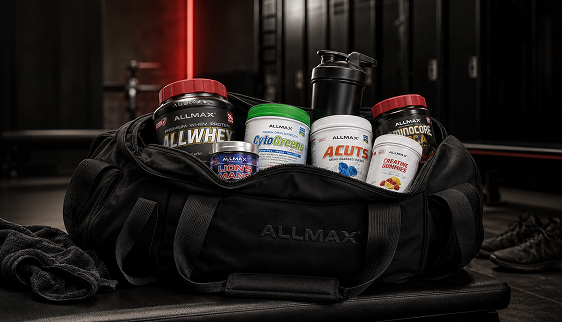
For hard gainers ready to build out their full stack, pairing ALLMAX Gold AllWhey or ALLMAX Classic AllWhey with ALLMAX Casein-FX and ALLMAX Creatine forms the core of the Starter Muscle Building Stack available at allmaxnutrition.com.
Your Hard Gainer Protein Game Plan
If you have been training hard and wondering why the muscle still won't stick, the answer is most likely a protein gap, not a motivation gap. Research suggests most hard gainers need 0.7–1.0 g of protein per pound of body weight per day, split into 20-40 g meals spaced every three to four hours. Whole food is the foundation. A high-yield, zero-filler protein supplement closes the gap on days and meals when whole food falls short.
ALLMAX Gold AllWhey and ALLMAX Classic AllWhey are built for exactly that purpose: clean, complete, third-party tested protein with no non-protein amino acids, no unnecessary fillers, and a protein yield that actually shows up in your muscles. If you are ready to stop guessing and start building, explore the full ALLMAX protein lineup at allmaxnutrition.com.