

Anna Kasztenny, MSc.
Anna holds a Master’s degree in Bio-Pharmaceutical Science and Business Studies and a Bachelor of Medical Science with an Honors Specialization in Pharmacology. Alongside her academic background, she is a competitive bodybuilder and strength athlete who holds three provincial powerlifting records. As a former competitive gymnast and varsity cheerleader, she is passionate about health, performance, and evidence-based wellness.
Introduction: Why Whey Protein Isolate Matters
Not all protein is created equal. The grams listed on a nutrition label tell you quantity, but they say nothing about digestibility, amino acid composition, or how fast those nutrients reach your muscles. For athletes, lifters, and active adults chasing real results, those details matter.
Whey protein isolate is a highly purified form of dairy protein powder derived from milk whey. It delivers at least 90% protein by weight, contains all nine essential amino acids, and digests rapidly, making it one of the most efficient ways to support lean muscle and post-workout recovery. It is also significantly lower in lactose than standard whey protein, which is why people with mild lactose sensitivity often prefer it over whey concentrate.
Millions search for whey protein isolate because it offers a fast-digesting, high-quality protein ideal for muscle building, with lower lactose than concentrate, making it suitable for mild lactose intolerance. This article explains what whey protein isolate is, compares it to other protein types, addresses lactose content, protein needs, timing, and how to select a quality supplement. ALLMAX Nutrition provides evidence-based guidance to help consumers make informed protein choices without hype.

What Is Whey Protein Isolate?
Whey protein isolate is a dairy protein that contains at least 90% protein by dry weight after advanced filtration processing. It is one of the purest commercially available forms of whey protein.
Whey itself is the liquid whey byproduct of the cheese-making process. When milk separates into curds (which become cheese) and liquid, that liquid fraction is whey. Roughly 20% of the total protein in cow's milk is whey, with the remaining 80% being casein. This liquid whey is then dried and processed into different forms of protein powder.
What separates whey protein isolate from standard whey concentrate is the level of filtration. Processing methods like cross-flow microfiltration and ion-exchange chromatography strip away most of the fat, carbohydrates, and lactose. The result is a leaner, purer protein isolate with a superior protein-to-calorie ratio. One advanced technique used in some high-quality isolates, like ALLMAX Isoflex, is Hybrid-Ratio Ion-Filtration, which combines these filtration methods to optimize for protein purity while preserving beneficial bioactive fractions.
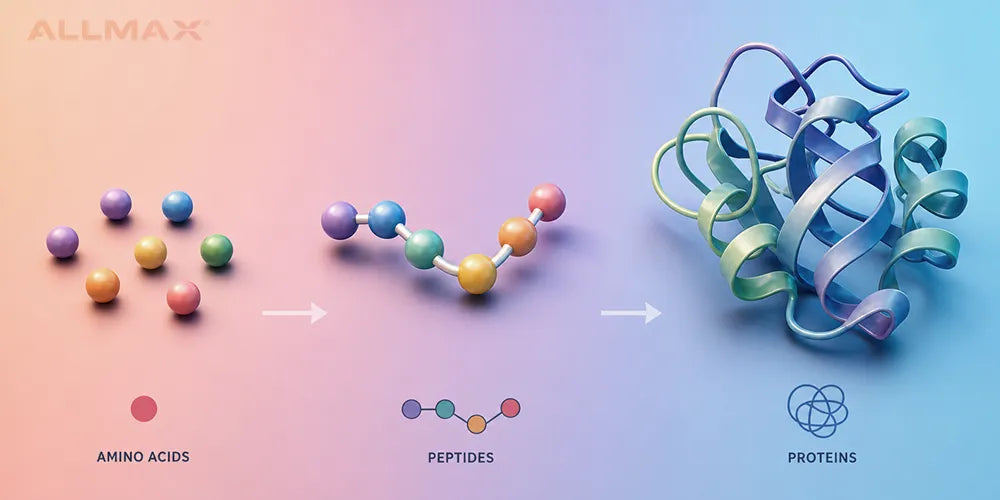
Whey protein isolate is a complete protein, meaning it contains all nine essential amino acids required for muscle repair and growth. It is especially rich in branched-chain amino acids (BCAAs), including leucine, isoleucine, and valine. Its relatively rapid digestion can make whey isolate a convenient option after training or whenever a high-protein serving is needed.
Key technical features of whey protein isolate:
90%+ protein content by dry weight
Very low fat, carbohydrates, and lactose content
Contains all essential amino acids with high leucine levels
Rapid absorption compared to casein or most plant proteins
Lower fat and carbohydrates than whey concentrate
Protein Quality 101: Why the Type of Protein Matters
Two scoops of powder from different sources can list identical grams of protein on the label and still perform very differently in your body. The difference comes down to digestibility, amino acid profile, and absorption speed.
Scientists measure protein quality using scoring systems like PDCAAS (Protein Digestibility Corrected Amino Acid Score) and the newer DIAAS (Digestible Indispensable Amino Acid Score). DIAAS is considered more accurate because it measures digestibility of each individual amino acid at the end of the small intestine. Whey protein isolate scores approximately 1.09 on the DIAAS scale, placing it among the highest-quality dietary proteins available, well above most plant proteins, soy, and even some animal sources [1].
Leucine plays a central role in why whey isolate outperforms many other protein sources. This single amino acid acts as a trigger for muscle protein synthesis, the process by which your body repairs and builds new muscle tissue. Whey protein isolate delivers a higher concentration of leucine per serving than casein protein, egg white protein, or pea protein isolate.
Research by Tang, Moore, Kujbida, Tarnopolsky, and Phillips (2009) demonstrated that whey stimulated mixed muscle protein synthesis approximately 122% more than casein and about 31% more than soy after resistance exercise [2]. The speed at which whey delivers amino acids to the bloodstream appears to be a key driver of this advantage.
Why protein quality matters for your results:
Faster recovery between training sessions
More efficient muscle growth and repair
Better appetite regulation and satiety
Stronger adaptive response to resistance training
How Whey Protein Isolate Supports Muscle Recovery and Performance
Resistance training creates adaptations and micro-tears in muscle fibers. This is a normal and necessary part of the muscle building process, but recovery depends on having the right building blocks available at the right time. Whey protein aids in muscle recovery after workouts by a rapidly absorbable form of amino acids that muscles need for repair.
Because whey protein isolate digests faster than casein or whole-food protein sources, it elevates plasma amino acid levels within roughly 30 to 60 minutes of consumption. This rapid delivery is especially valuable in the post-workout window, when muscles are primed to absorb nutrients. The high leucine content, typically around 2.5 to 3 grams per 25–30 gram serving, meets the threshold researchers associate with maximal stimulation of muscle protein synthesis.
Whey protein can also help increase stamina during workouts when daily protein intake is consistently adequate. It is worth noting, however, that whey protein isolate supports recovery and performance but does not replace a well-structured training program, sufficient calories, or adequate sleep.
Typical use cases where whey isolate shines:
Post-workout shakes for rapid muscle recovery
Morning protein when appetite is low after an overnight fast
Between-meal supplementation when whole foods are not convenient
Travel days or busy schedules where cooking is impractical
Whey Protein Isolate vs Whey Protein Concentrate
Both whey concentrate and whey isolate originate from the same dairy protein source, but they differ meaningfully in processing methods and macronutrient composition.
Whey protein concentrate typically contains 70–80% protein by weight. The remaining portion includes fat, carbohydrates, and lactose. Whey concentrate has roughly 1.5–2.4 grams of lactose per 30-gram scoop. It tends to taste creamier due to its higher fat content and is generally less expensive.
Whey protein isolate undergoes additional filtration to reach 90%+ protein content. A 30-gram scoop of whey isolate has about 0.15–0.3 grams of lactose, making it a far better option for those who are lactose intolerant, however lactose content varies by isolate product and flavor. Check the product label or contact the manufacturer if lactose content is important to you. Whey protein isolate is lower in calories than whey concentrate, which matters for anyone on a low carb or calorie-controlled diet. However, whey isolate is more expensive due to extra processing steps.
Both forms provide a complete protein with all essential amino acids and BCAAs. The right choice depends on your budget, calorie goals, taste preference, and digestive tolerance. For a deeper breakdown, see this whey protein isolate vs concentrate guide.
| Feature | Whey Concentrate | Whey Isolate |
|---|---|---|
| Protein % | 70–80% | 90%+ |
| Lactose per Scoop | 1.5–2.4 g | 0.15–0.3 g |
| Fat / Carbs | Higher | Minimal |
| Calories per Serving | Higher | Lower |
| Digestion Speed | Moderate | Fast |
| Taste / Texture | Creamier, richer | Lighter, cleaner |
| Typical User | Budget-conscious individuals without lactose concerns | Lean dieters and individuals with mild lactose sensitivity |
| Cost | Lower | Higher |
Whey Protein Isolate vs Casein and Other Protein Sources
Whey protein isolate is not the only game in town. Understanding where it fits relative to casein, plant proteins, and other animal-based options helps you make informed choices.
Casein protein is the other major milk protein. While whey is fast-digesting and ideal around workouts, casein forms a gel in the stomach and releases amino acids slowly over several hours. This makes casein a popular choice before bed. Both whey and casein are dairy proteins and contain some lactose, so neither qualifies as completely dairy free.
Plant based protein powders like pea protein, rice protein, and blended formulas have improved dramatically in recent years. However, most plant proteins score lower on DIAAS than whey because they tend to be lower in leucine and may lack one or more essential amino acids in sufficient quantity. A pea protein isolate, for instance, is lower in methionine and leucine compared to whey isolate. Blending rice protein with pea protein helps create a more complete amino acid profile, though the earthy taste of some plant based protein products can be a drawback.
For people avoiding dairy but wanting complete protein powders, egg white protein and beef protein isolate are viable alternatives. Egg white protein has a strong amino acid profile and is naturally lactose free, while beef protein provides a different forms of animal-derived protein for those with dairy sensitivities. For more dairy free options, explore this guide on dairy free protein shakes.
When to choose each type:
Whey isolate: post-workout, fast absorption needed, mild lactose sensitivity
Casein: before bed, sustained amino acid release
Plant-based blends: vegan or vegetarian needs, environmental preference
Egg white or beef protein: dairy avoidance with complete protein needs
Is Whey Protein Isolate Lactose Free?
Most whey protein isolates contain very little lactose because additional filtration removes much of the milk sugar found in whey. However, whey protein isolate is not always completely lactose free, and individuals with lactose intolerance may respond differently depending on their level of sensitivity.
Here is the data: whey isolate may contain 0.5–1% lactose by weight. In practical terms, a 30-gram scoop of whey isolate contains about 0.15–0.3 grams of lactose. Compare that to whey concentrate, which delivers 1.5–2.4 grams of lactose per 30-gram scoop. Because of this significant reduction, some people with mild lactose intolerance may tolerate it better.
Approximately 68% of adults worldwide have some degree of lactose malabsorption, which is the reduced ability to digest lactose after infancy [3]. For most people with mild to moderate lactose intolerance, the trace amounts in a quality whey isolate cause no symptoms. However, those with severe intolerance may still react to even small quantities.
It is also critical to distinguish between lactose intolerance, which is an enzyme deficiency causing digestive discomfort, and a true milk allergy, which is an immune response to dairy proteins themselves. Whey protein isolate is not suitable for individuals with a milk allergy, regardless of how thoroughly the lactose has been removed. The allergenic proteins (whey and casein fractions) are still present.
Key takeaway: Is whey protein isolate lactose free? Not technically, but the lactose content is drastically reduced compared to concentrate. Most people with mild lactose intolerance tolerate it well. Always check product labels for specific lactose content claims, and consult a healthcare professional if you are uncertain about your tolerance.
How Much Protein Do You Really Need Each Day?
Evidence-based research supports a daily protein intake of approximately 1.6 to 2.2 grams per kilogram of body weight for strength athletes and active individuals [4]. This aligns with the traditional bodybuilding guideline of roughly 1 gram of protein per pound of lean mass.
Total daily protein intake and distribution across meals matter more than any single shake. Research suggests that spreading protein across 3–5 meals, with each providing approximately 20–40 grams, helps maintain a positive muscle protein balance throughout the day [5]. Each of these meals should ideally deliver at least 2.5 to 3 grams of leucine, a threshold easily met by a serving of whey protein isolate.
Whole foods should anchor your nutrition. Lean meats, fish, eggs, beans, lentils, yogurt, and other muscle building foods provide not only protein but also essential vitamins, minerals, and fiber. Whey protein powders serve best as supplements that fill gaps in busy schedules.
Example daily protein distribution for a 180-lb active adult (~82 kg, targeting ~2 g/kg = ~164 g):
Breakfast: 30 g from eggs and yogurt
Post-workout shake: 27 g from whey protein isolate
Lunch: 35 g from chicken or fish
Afternoon snack: 20 g from cottage cheese or a protein bar
Dinner: 35 g from lean meat, beans, or lentils
Protein needs vary with age, sex, body size, training volume, and goals such as weight loss or muscle building. Older adults may need higher per-meal doses to overcome age-related anabolic resistance.
How and When to Use Whey Protein Isolate
Strategic timing can help you get more from each scoop, though total daily intake always trumps timing alone.
The most impactful window is immediately post-workout, when your muscles are sensitized to amino acids and primed for repair. A serving of approximately 25–30 grams of whey protein isolate delivers around 2.5–3 grams of leucine, meeting the threshold for maximal muscle protein synthesis stimulation. First thing in the morning is another valuable time, especially after the overnight fast when muscle protein breakdown rates are elevated.
Common ways to use whey protein isolate include simple protein shakes with water or milk, blended smoothies with fruit and oats, or recipes like protein pancakes and baked snacks. Flavors like chocolate, vanilla, chocolate peanut butter, cookies and cream, caramel macchiato, strawberry and more are available from ALLMAX. Some people prefer formulations made with stevia or other sweeteners over those containing artificial sweeteners or sugar alcohols.
Best times to take whey protein isolate:
Within 30–60 minutes after resistance training
Upon waking, before or alongside breakfast
Between meals when your protein intake from whole foods falls short
On busy or travel days when cooking is not an option
If digestion is a concern, start with one scoop mixed with plenty of water, and adjust from there. Most people tolerate whey isolate well given its minimal lactose and fat content.
How to Choose a High-Quality Whey Protein Isolate
Not every tub labeled "isolate" delivers the same quality. Knowing what to look for on the label helps you avoid overpaying for underpowered powder.
The first thing to check is whether whey protein isolate is listed as the primary ingredient, not buried behind whey concentrate in a blend. Next, compare grams of protein per serving to total serving size. A high-quality isolate should deliver roughly 25–30 grams of protein per 30-gram scoop, reflecting a protein content above 85–90%. Watch for added sugar, excessive fat, and unnecessary fillers.
Third-party testing or certification may provide additional assurance when the brand clearly discloses the testing scope and results. Transparent labeling of the full amino acid profile, including leucine content, helps you confirm you are getting a protein source that supports muscle protein synthesis.
Flavoring is another factor. Some powders rely heavily on artificial flavors, while others pursue a cleaner label approach. Neither is inherently wrong, but your preference and gut health may guide the choice.
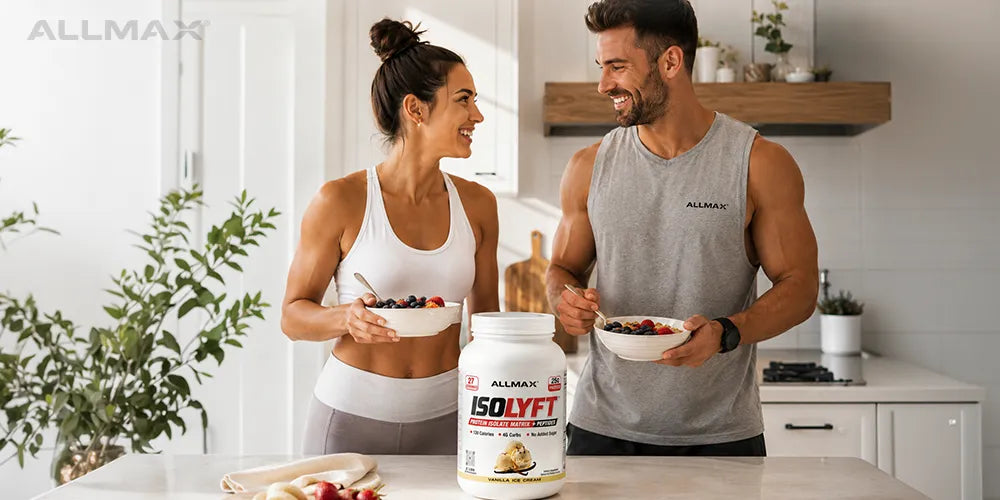
ALLMAX Isoflex Whey Protein Isolate is one example of a premium whey isolate that checks these boxes: 27 grams of protein in a 30-gram scoop, no whey concentrate, no added sugar, virtually all lactose removed, and 0 grams of fat per label. Isoflex uses Hybrid-Ratio Ion-Filtration (HRI) technology, a combination of cross-flow microfiltration and ion-exchange filtering that achieves over 90% protein yield while retaining bioactive whey fractions like alpha-lactalbumin and immunoglobulins.
Checklist for choosing a whey protein isolate:
Whey protein isolate listed as first ingredient (not a concentrate blend)
25–30 g protein per 30 g scoop (85–90%+ protein by weight)
Minimal added sugar, fat, and carbohydrates
Transparent amino acid profile with leucine content disclosed
Third-party tested or certified for purity
No unnecessary fillers or proprietary blends
Flavor and sweetener approach that suits your tolerance and preference
Common Myths and Misconceptions About Whey Protein Isolate
Misinformation about dietary supplements is everywhere. Here are the most persistent myths about whey protein isolate and what the evidence actually says.
Myth: Whey protein isolate is only for bodybuilders. Reality: Anyone engaged in regular physical activity, older adults working to preserve lean mass, or people recovering from injury can benefit from high-quality protein supplementation. It is not exclusive to bodybuilding.
Myth: Protein powder damages kidneys in healthy people. Reality: In healthy individuals without pre-existing kidney disease, higher protein intakes within recommended ranges have not been shown to cause kidney damage in peer-reviewed research. If you have a kidney condition, consult your doctor.
Myth: More powder automatically means more muscle. Reality: There is a ceiling to how much protein your body can use for muscle growth in a given period. Beyond a certain threshold, extra protein does not translate to extra gains. Training stimulus, total daily calories, and consistency drive results.
Myth: Protein shakes replace meals. Reality: Protein supplements are designed to supplement whole foods, not replace them. Foods like lean meats, fish, eggs, beans, and lentils offer micronutrients, fiber, and other potential health benefits that a powder cannot replicate.
Myth: Whey protein isolate will help you lose weight on its own. Reality: While higher protein intake can support satiety and help preserve lean mass during a caloric deficit, whey protein isolate is not a fat burner. Weight loss requires a sustained calorie deficit alongside smart training and nutrition.
FAQ: Whey Protein Isolate and Lactose – Quick Answers
What is whey protein isolate?
Whey protein isolate is a highly purified form of whey protein derived from milk during cheese production. It undergoes advanced filtration to achieve at least 90% protein by weight, with very low lactose, fat, and carbohydrates. It is a complete protein containing all nine essential amino acids and is rapidly absorbed, making it one of the most popular protein powders among athletes and active adults.
Is whey protein isolate lactose free?
Most whey protein isolates are very low in lactose but are not always completely lactose free. A typical 30-gram scoop of whey isolate contains about 0.15–0.3 grams of lactose, compared to 1.5–2.4 grams in whey concentrate. Most people with mild lactose intolerance tolerate whey isolate without issues. However, those with severe sensitivity or a milk allergy should exercise caution and consult a healthcare provider.
Is whey protein isolate better than whey concentrate?
It depends on your priorities. Whey protein isolate offers higher protein content per serving, lower lactose, fewer calories, and less fat and carbohydrates. Whey protein concentrate is more affordable, may taste creamier, and still delivers a complete protein with all essential amino acids. Neither is universally "better." Isolate is more expensive due to extra processing steps, but it is the stronger choice for lean diets or lactose sensitivity.
When is the best time to take whey protein isolate?
The most effective times are immediately after resistance training, when muscles are primed for nutrient uptake, and first thing in the morning after an overnight fast. It also works well between meals on days when your protein intake from whole foods falls short. Ultimately, total daily protein intake matters more than precise timing, but post-workout remains the highest-impact window.
Does whey protein isolate help build muscle?
Yes. Whey protein isolate supports muscle growth and recovery when combined with consistent resistance training, adequate total protein intake, and sufficient calories. Its high leucine content triggers muscle protein synthesis more effectively than many other protein sources. Research shows whey stimulates post-exercise muscle protein synthesis significantly more than casein or soy, making it a well-supported choice for muscle growth goals.
References:
Tang JE, Moore DR, Kujbida GW, Tarnopolsky MA, Phillips SM. Ingestion of whey hydrolysate, casein, or soy protein isolate: effects on mixed muscle protein synthesis at rest and following resistance exercise in young men. J Appl Physiol. 2009 Sep ;107(3):987-992. https://journals.physiology.org/doi/full/10.1152/japplphysiol.00076.2009
Gallo A, Marzetti E, Pellegrino S, Montalto M. Lactose malabsorption and intolerance in older adults. Curr Opin Clin Nutr Metab Care. 2024 Jul 1;27(4):333-337. https://pmc.ncbi.nlm.nih.gov/articles/PMC11155274/
Jäger R, Kerksick CM, Campbell BI, Cribb PJ, Wells SD, Skwiat TM, Purpura M, Ziegenfuss TN, Ferrando AA, Arent SM, Smith-Ryan AE, Stout JR, Arciero PJ, Ormsbee MJ, Taylor LW, Wilborn CD, Kalman DS, Kreider RB, Willoughby DS, Hoffman JR, Krzykowski JL, Antonio J. International Society of Sports Nutrition Position Stand: protein and exercise. J Int Soc Sports Nutr. 2017 Jun 20;14:20. https://pubmed.ncbi.nlm.nih.gov/28642676/
Schoenfeld BJ, Aragon AA. How much protein can the body use in a single meal for muscle-building? Implications for daily protein distribution. J Int Soc Sports Nutr. 2018 Feb 27;15:10. https://pubmed.ncbi.nlm.nih.gov/29497353/