
Quick answer: Should you drink a protein shake before bed?
A protein shake before bed can be a useful strategy for building muscle and supporting recovery, particularly if it helps you reach your daily protein intake alongside resistance training. Research suggests that consuming protein before sleep, in the range of 20–40 g of a high-quality source like casein protein or a multi-protein blend, can increase overnight muscle protein synthesis under certain conditions [1].
That said, bedtime protein is optional. If you already hit your daily protein targets through whole foods and well-spaced meals, an extra shake is not required. Total daily protein consumption and overall diet quality matter more than exact protein timing, but a bedtime protein shake remains a convenient tool for people who need it.

What happens to your muscles while you sleep?
Sleep is a prolonged period without food intake, but your body does not enter some dramatic "muscle starvation" mode the moment you close your eyes. Here is what actually happens to muscle tissue overnight:
Muscle protein turnover, the continuous cycle of muscle protein breakdown and muscle protein synthesis, keeps running during sleep [2]. Your body is always building and breaking down muscle proteins, even at rest.
If you performed resistance training earlier in the day, your muscle fibers remain sensitized to dietary protein for many hours afterward. This means amino acids from evening or pre-sleep protein are more efficiently directed toward muscle repair and the skeletal muscle adaptive response to training [3].
Pre-sleep protein can increase overnight amino acid availability and muscle protein synthesis, particularly following exercise. Without incoming amino acids, overnight protein balance tends to shift toward net breakdown rather than net gain.
How much this matters for you depends on your total protein intake, training volume, and meal schedule. Someone who eats dinner at 6 PM and sleeps until 7 AM faces a 13-hour gap without protein. A bedtime protein shake narrows that window.
Does a protein shake before bed help build muscle?
The short answer: it can help, but it is not a magic switch. Multiple randomized controlled trials have demonstrated that consuming approximately 30–40 grams of protein before bed can increase overnight muscle protein synthesis in young, resistance-trained adults. A landmark study showed that 40 grams of casein protein before bed can stimulate muscle synthesis during post-exercise recovery [4]. Protein intake is more beneficial when combined with regular exercise, as training amplifies the body's response to dietary amino acids.
However, acute increases in muscle protein synthesis rates do not automatically translate into greater long-term muscle mass. They represent one snapshot of a continuous process. A 2021 systematic review by Reis et al. concluded that pre sleep protein ingestion can support gains in muscle size and strength over 10–12 weeks when paired with resistance training and adequate daily protein, though the effect is modest and additive rather than transformative [1].
Longer-term data, including a 10-week trial by Joy et al. (2018), found that both nighttime and daytime casein groups gained lean muscle and strength with no significant difference between them, as long as total daily protein was around 1.8 g/kg/day [5]. The ISSN's 2017 position stand on protein and exercise supports pre-sleep protein as a viable strategy for enhancing overnight muscle protein synthesis, while noting that total daily protein remains the primary driver of muscle growth [6]. Protein before bed increases muscle protein synthesis overnight, but muscle building primarily depends on progressive resistance training, sufficient calories, sleep quality, and consistency.
How much protein should you have before bed?
A practical target is roughly 20–40 g of high-quality protein before bed, based on the doses used in most pre-sleep nutrition research. Within that range, how much protein you personally need depends on several factors:
Larger individuals with more skeletal muscle mass generally benefit from the higher end. Consume 30–40 grams of protein before bed for muscle growth if you weigh over 80 kg or train intensely.
Older adults (over 50) often face anabolic resistance. Research in men averaging 72 years old found that 40 g of casein before sleep was superior to 20 g for stimulating overnight muscle protein synthesis [7].
If you already eat a high protein diet that exceeds 1.6 g per kg body weight per day, the incremental benefit of a large bedtime dose shrinks. For many lifters, a daily range of about 1.6–2.2 g protein per kg body weight supports muscle gain effectively.
Think of a bedtime protein shake as one of several protein feedings across the day. Most sports nutrition guidelines recommend 3–5 meals or snacks, each providing roughly 0.3–0.5 g protein per kg body weight. Your pre-sleep serving simply fills one of those slots.
30 grams of protein before sleep supports muscle growth in most healthy adults and is a reasonable starting point if you are unsure.
Do not stress over hitting an exact gram count. Consistency in your total daily protein intake matters far more than a perfect bedtime number.
What is the best protein to take before bed?
There is no single best protein for everyone before bed. The right choice depends on your digestion, preference, and how the protein fits your overall food intake. Here is how the main options compare:
Casein protein: Casein protein digests slowly, providing a steady amino acid release that can last several hours. It is the most studied protein source for pre sleep protein research and is recommended for pre-bed consumption due to slow digestion [3]. If overnight amino acid availability is your priority, casein is a well-supported choice.
Whey protein: Whey protein is the fastest digesting protein type available, delivering a rapid spike in essential amino acids and leucine. It is the gold standard for post-workout protein supplementation. Recent research also shows that whey before bed can stimulate overnight muscle protein synthesis comparably to casein and may even improve sleep quality and reduce muscle soreness in resistance-trained individuals [8].
Milk protein: Cow's milk naturally contains both whey and casein in roughly a 20:80 ratio, providing a blend of faster and slower digestion. Whole-food sources like Greek yogurt, cottage cheese, or a glass of milk can serve as effective bedtime protein for people who prefer eating protein over drinking protein shakes.
Protein blends: Products combining fast-, medium-, and slow digesting protein sources aim to provide staggered amino acid delivery. This makes them practical as a bedtime protein shake, covering both the early postprandial amino acid spike and prolonged overnight supply. Plant based protein powders and plant based protein sources like pea protein also digest slower than whey, aiding overnight recovery, though they have less direct pre-sleep research behind them.
Casein vs whey before bed (comparison table)
Below is a side-by-side look at how whey, casein, and multi-protein blends stack up for pre-sleep use. No single type guarantees superior results for everyone. The best protein is the one that supports your daily protein goals, sits well in your stomach, and fits your preference.
Feature |
Whey Protein |
Casein Protein |
Multi-Protein Blend |
Digestion speed |
Faster |
Slower |
Multiple digestion rates |
Amino acid availability |
Rapid spike |
More prolonged overnight |
Fast + medium + slow windows |
Leucine content |
High |
Moderate to high |
Depends on formulation |
Common use |
Post-workout, daytime |
Pre-sleep, bedtime protein |
Anytime, including before bed |
Evidence base |
Extensive for muscle building generally |
Extensive for pre-sleep protein studies |
Growing; mechanistic rationale is strong |
Main advantage |
Rapid amino acid delivery |
Prolonged amino acid availability |
Convenience and mixed digestion coverage |
Complete proteins from any of these categories can contribute meaningfully to your overnight nutrition. If you are unsure where to start, this guide to choosing the right protein powder can help.
Why choose a protein shake before bed? (and where Hexapro fits)
A bedtime protein shake offers several practical advantages. You get precise control over how much protein you consume, preparation takes under a minute, and tracking calories and macros is straightforward whether you are cutting or bulking. For many athletes, a shake is easier to digest late at night than a full plate of chicken or eggs, reducing the risk of stomach discomfort before lying down, although preference varies by person and recipe.
Shakes are especially useful for late-evening lifters who need protein prior to sleep after training, people with long gaps between dinner and breakfast, and anyone struggling to reach their protein goals from whole foods alone. Drinking protein shakes at night is also a simple way to maintain a positive protein balance during the overnight fast.
ALLMAX Hexapro Lean Body Protein Powder is a multi-protein blend that provides 25 g protein per 44 g scoop, with 170 calories, 12-13 g carbohydrate (depending on flavor), 2 g fat, and 0 g added sugar. It is formulated with a 6 protein matrix: whey protein concentrate, milk protein concentrate, milk protein isolate, whey protein isolate, micellar casein, and whey protein hydrolysate. ALLMAX Hexapro provides 8 hours of sustained amino acid release, making it a convenient option as a bedtime protein shake, between meals, or post-workout.
What makes Hexapro different from a standard whey protein?
Hexapro is not a typical single-source whey protein. Here is what sets it apart:
It combines three forms of whey (concentrate, isolate, and hydrolyzed whey) with milk protein concentrate, milk protein isolate, and micellar casein, creating a six-protein matrix designed for staggered digestion from fast to slow.
Standard whey protein isolate delivers very fast digestion and a sharp leucine spike, which is ideal for post-workout use but may not sustain amino acid availability as long as blends that include casein protein.
Each scoop provides 25 g protein, 44 g serving size, and about 170 calories with zero added sugar, making it a lean body protein suitable for use before bed, after workouts, or between meals.
The product is available in Chocolate, Chocolate Peanut Butter, Cookies & Cream, and Vanilla in 2 lb and 5 lb sizes. A satisfying taste matters: if your bedtime protein shake tastes like a milkshake, you are more likely to stick with the routine.
An important distinction: while research supports the concept of pre-sleep protein ingestion and slow or mixed digesting protein for overnight muscle support, Hexapro's specific six-protein combination has not been tested head-to-head in long-term clinical trials versus single-source whey or casein. The evidence applies to the protein strategy, not to one branded formula.
For a deeper look at the product's formulation, see Hexapro: 7 Reasons to Upgrade Your Muscle Gains. Note: HexaPro contains milk, soy, and coconut, and is produced in a facility that also handles wheat, egg, peanuts, tree nuts, sesame, fish, crustaceans, and shellfish.
Can protein before bed improve overnight recovery?
Muscle recovery requires adequate energy and dietary protein throughout the day. Pre-sleep protein primarily adds another opportunity to provide amino acids during the overnight period, when the body is actively repairing training-induced damage to muscle fibers. Protein consumed before bed can enhance overnight muscle recovery by keeping plasma amino acid levels elevated while you sleep and may reduce soreness, particularly after demanding training sessions.
Some studies report increased overnight muscle protein synthesis and improved net protein balance with 30–40 g of bedtime protein, especially after evening resistance training [4]. Recent research has also found that pre-sleep protein can increase mitochondrial protein synthesis after endurance exercise, supporting recovery beyond just strength and hypertrophy [8].
That said, results on next-day exercise performance are mixed. Some trials show modest benefits in reduced muscle soreness, while others show little effect on performance tests. Here is practical guidance:
View a bedtime protein shake as a useful tool during heavy training blocks, not a guaranteed cure for soreness.
It does not replace adequate sleep, programmed deloads, or a complete recovery supplement stack.
If you train in the evening, consuming protein before sleep is an especially logical strategy to support muscle repair and the skeletal muscle adaptive response.
Can you drink a protein shake before bed while cutting or trying to lose weight?
The fear that eating protein before bed automatically causes weight gain is one of the most persistent myths in fitness nutrition. Body weight and body fat change are driven mainly by overall calorie balance across the day and week, not by the clock. Eating protein at 10 PM does not inherently lead to higher body fat compared to eating it at 2 PM.
In fact, protein helps preserve lean muscle during weight loss, which is critical for maintaining your metabolism and body composition during a calorie deficit. Protein intake before bed can help manage hunger, and a protein shake before bed can help reduce late-night cravings for high-calorie, high saturated fat snacks. The digestion of protein has a higher thermic effect than carbs or fat, supporting metabolic health. Protein intake can increase metabolism during sleep due to this thermic effect.
However, excess liquid calories from a shake can contribute to daily caloric intake, so the calories from bedtime protein still count. To lose weight, the shake must fit inside an appropriate calorie budget, potentially replacing other nighttime snacks rather than adding to them. At 170 calories and 25 g protein per scoop, a leaner formula like HexaPro can fit into a calorie-controlled eating plan when accounted for within the day’s overall intake. For more on using whey protein strategically for weight loss, the principles of caloric control and protein supplementation apply equally to pre-sleep nutrition. Hexapro is not a fat-loss drug; it is a tool to support weight loss goals within a balanced diet.
When should you drink a protein shake before bed?
Drinking a protein shake 30–60 minutes before bed is ideal for most people, leaving enough time for digestion to begin without causing discomfort. Individuals with reflux or sensitive digestion may feel better finishing their shake 60–90 minutes before lying down. Choose a timing that is comfortable for your individual preferences.
Moderate amounts of protein do not disrupt normal sleep architecture. In fact, protein before bed may improve sleep quality, and tryptophan in protein supports melatonin production for sleep [9]. Improving nighttime nutrition may provide the underappreciated benefit of improved sleep quality. If a shake causes fullness, reflux, or disrupted sleep, use a smaller serving, adjust the timing, or choose a different food or protein source.
The bottom line on timing: nailing overall daily protein and a consistent routine matters far more than hitting an exact minute-by-minute window. Do not overthink this.
Do you actually need a protein shake before bed?
You do not need a bedtime protein shake if you already hit your daily protein target through well-distributed meals and snacks. Whole food options such as Greek yogurt, cottage cheese, eggs, or lean meat can work just as well for bedtime protein as a shake, assuming similar protein content and enough protein overall.
Supplements like ALLMAX Hexapro are tools for convenience, precision, and adherence, not replacements for a balanced, whole-food-based diet. Some lifters, shift workers, or very busy athletes rely on shakes because they struggle to prepare or digest solid food late at night, making a protein supplement a practical solution rather than a mandatory one.
Who benefits most from a protein shake before bed?
Not everyone needs a bedtime protein shake, but certain groups stand to gain the most:
Athletes, bodybuilders, and resistance-trained adults: Especially those chasing muscle gain or strength improvements, training in the afternoon or evening, or with high daily protein targets. A pre-sleep feeding supports the skeletal muscle adaptive response to training.
People with long gaps between dinner and breakfast: If you eat an early dinner and sleep 7–9 hours, a bedtime protein shake fills an otherwise extended fast and helps maintain a positive protein balance.
Adults dieting to lose weight: A controlled-calorie serving of 20–30 g protein before bed can help someone meet protein needs and replace a less filling snack while staying within their calorie target, supporting both weight loss and body composition goals.
Older adults (over 50): Anabolic resistance means higher per-meal protein doses may be needed. A pre-sleep feeding of 30–40 g can help, if tolerated and cleared by a doctor.
Busy professionals and students: The speed, portability, and consistency of mixing a scoop of protein with water or milk before bed makes it easy to stay on track even on hectic days.
Protein before bed myths and misconceptions
Misinformation about nighttime eating and protein timing runs deep. Here are five common myths and what the evidence actually shows:
Myth 1: "Eating protein before bed makes you gain fat." Reality: Weight gain depends on total caloric intake, not the time on the clock. Bedtime protein within your calorie target does not inherently cause higher body fat.
Myth 2: "Your muscles stop getting nutrients while you sleep." Reality: Digestion and amino acid absorption continue during sleep. Muscle proteins are still being built and broken down throughout the night.
Myth 3: "Only casein protein works before bed." Reality: A casein protein shake is well studied for pre-sleep use, but whey, milk protein, and blends like Hexapro also support daily protein intake and muscle building.
Myth 4: "You must drink a protein shake immediately before falling asleep." Reality: A 30–60 minute window is more than sufficient. Exact timing is flexible and individual.
Myth 5: "A bedtime protein shake is mandatory to build muscle." Reality: Muscle growth is achievable without pre-sleep protein as long as you train consistently and meet daily protein needs. Bedtime protein is a useful option, not a requirement.
What does the research say about protein before bed?
Here is a summary of the current evidence on pre sleep protein ingestion:
Question |
Evidence |
Practical Takeaway |
Does pre-sleep protein stimulate muscle protein synthesis? |
Strong/Moderate |
Yes, acute studies consistently show increased overnight muscle protein synthesis rates with 30–40 g protein 1
|
Does it automatically increase muscle mass? |
Moderate |
Long-term outcomes depend heavily on total protein intake plus resistance training 10
|
Is casein useful before bed? |
Strong |
Slow-digesting protein provides prolonged amino acid availability overnight 3
|
Is whey ineffective before bed? |
No |
Whey is a high-quality complete protein that also stimulates overnight MPS 8
|
Is 20–40 g appropriate? |
Moderate |
This is the commonly studied range, though individual needs vary by body weight and goals 1
|
Does timing matter more than total protein? |
No |
Daily protein consumption is the larger priority for muscle growth 11
|
Does everyone need protein before bed? |
No |
It is a convenient strategy, not a universal requirement |
Evidence is strongest in young, resistance-trained healthy adults using approximately 30–40 g of casein or milk protein at night. Less research exists in older adults, females, and non-athletic populations. Pre-sleep protein is effective for increasing overnight muscle protein synthesis, but its long-term impact on muscle size depends heavily on training and overall nutrition.
How to use ALLMAX Hexapro as a bedtime protein shake
Using Hexapro before bed is straightforward:
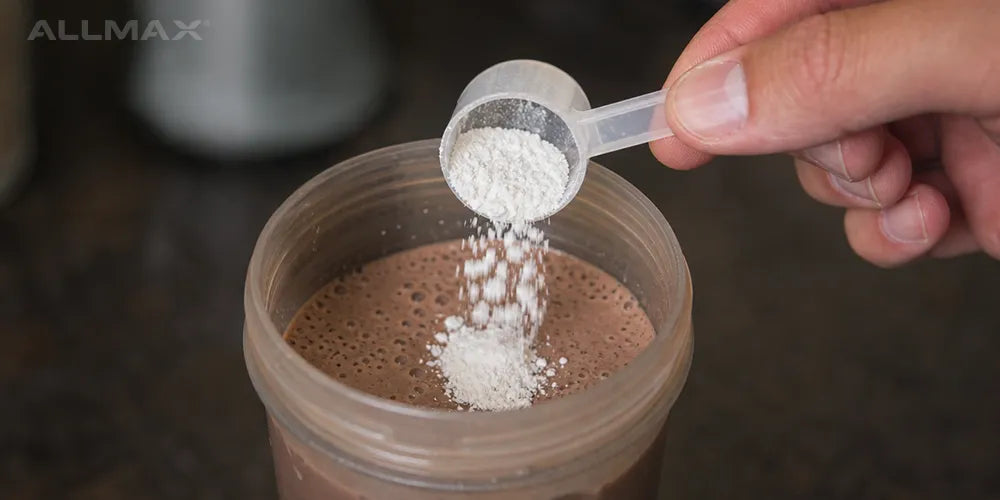
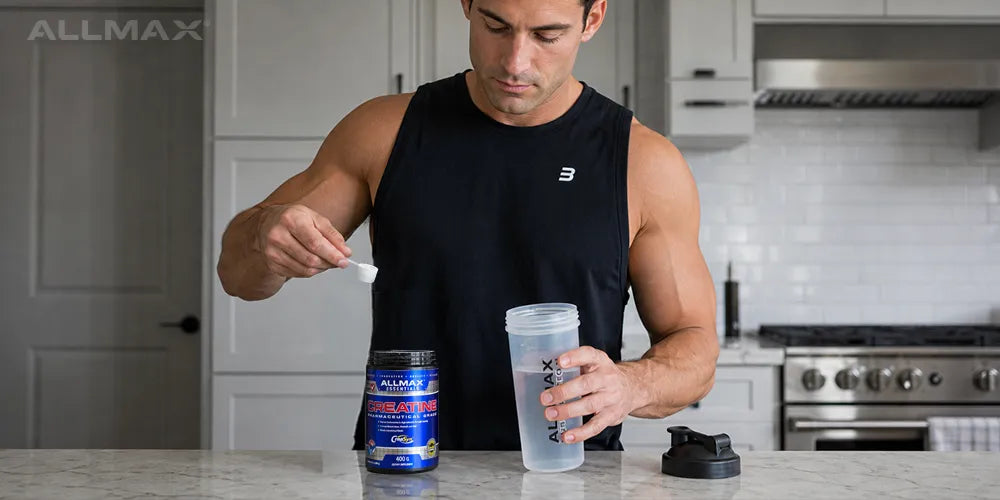
Suggested use: Blend, mix, or shake 1 heaping scoop with 5–8 oz (150–240 mL) of cold water or low-fat milk, depending on desired taste and consistency.
1–2 servings per day can be taken as needed to meet protein goals, with one serving commonly used as a bedtime protein shake for overnight muscle support.
Hexapro is designed for versatile use: suitable before bed, between meals as a lean meal, or after workouts. Adjust servings according to your daily protein and calorie needs.
If you are looking for a multi-protein bedtime shake with sustained amino acid release, explore ALLMAX Hexapro.
Frequently asked questions about a protein shake before bed
Does protein before bed help build muscle? I
It can. Studies show that 30 grams of protein before bed is effective for muscle growth when combined with regular resistance training and adequate total daily protein. Protein ingestion before sleep provides the amino acid building blocks needed for muscle repair and growth.
What is the best protein shake before bed?
There is no single best option. Casein, whey, milk protein, and blends all provide complete proteins. A multi-source blend like Hexapro offers staggered digestion. Choose based on your digestion comfort, calorie needs, and preference.
How much protein should I have before bed?
Most research uses 20–40 g. A dose of 30 grams of protein before sleep may supports muscle growth in most adults. Larger or more active individuals may benefit from closer to 40 g. Adjust based on total daily protein intake, training, and individual needs.
Is whey or casein better before bed?
Both work. Casein provides a more prolonged amino acid release. Whey delivers a faster spike in essential amino acids. Recent research shows similar overnight muscle protein synthesis outcomes for both, so personal preference and digestive comfort should guide your choice.
Can I drink Hexapro before bed?
Yes. ALLMAX specifically recommends Hexapro before bed as one of its suggested uses. Its six-protein blend is designed for sustained amino acid delivery, making it a practical bedtime protein shake.
What makes Hexapro different from whey protein?
Hexapro combines six protein sources (three forms of whey plus milk protein concentrate, milk protein isolate, and micellar casein) for staggered digestion. Standard whey is a single, fast-digesting source. Hexapro is designed to provide amino acid availability over a longer window.
The bottom line on drinking a protein shake before bed
A protein shake before bed can support overnight muscle protein synthesis and help you meet your daily protein targets, especially when combined with regular resistance training. It is a practical strategy, not a mandatory one. Total daily protein intake, smart training, energy balance, and sleep quality all matter more than any single pre-sleep shake.
ALLMAX Hexapro offers a convenient, multi-protein option for those who want a sustained-release bedtime protein shake, with 25 g of protein from six sources, approximately 170 calories, and zero added sugar. It is designed for overnight use, but it is not a substitute for a solid training program and a balanced diet.
Take a look at your current protein distribution. If there is a gap between your last meal and breakfast, or if you are falling short on daily protein, a structured bedtime protein routine with a product like Hexapro may be a simple upgrade worth trying.
References:
Reis CEG, Loureiro LMR, Roschel H, da Costa THM. Effects of pre-sleep protein consumption on muscle-related outcomes - A systematic review. J Sci Med Sport. 2021 Feb;24(2):177-182. https://pubmed.ncbi.nlm.nih.gov/32811763/
McKendry J, Stokes T, Mcleod JC, Phillips SM. Resistance Exercise, Aging, Disuse, and Muscle Protein Metabolism. Compr Physiol. 2021 Jun 30;11(3):2249-2278. https://pubmed.ncbi.nlm.nih.gov/34190341/
Trommelen J, van Loon LJ. Pre-Sleep Protein Ingestion to Improve the Skeletal Muscle Adaptive Response to Exercise Training. Nutrients. 2016 Nov 28;8(12):763. https://pmc.ncbi.nlm.nih.gov/articles/PMC5188418/
Res PT, Groen B, Pennings B, Beelen M, Wallis GA, Gijsen AP, Senden JM, VAN Loon LJ. Protein ingestion before sleep improves postexercise overnight recovery. Med Sci Sports Exerc. 2012 Aug;44(8):1560-9. https://pubmed.ncbi.nlm.nih.gov/22330017/
Joy JM, Vogel RM, Shane Broughton K, Kudla U, Kerr NY, Davison JM, Wildman REC, DiMarco NM. Daytime and nighttime casein supplements similarly increase muscle size and strength in response to resistance training earlier in the day: a preliminary investigation. J Int Soc Sports Nutr. 2018 May 15;15(1):24. https://pubmed.ncbi.nlm.nih.gov/29764464/
Jäger R, Kerksick CM, Campbell BI, Cribb PJ, Wells SD, Skwiat TM, Purpura M, Ziegenfuss TN, Ferrando AA, Arent SM, Smith-Ryan AE, Stout JR, Arciero PJ, Ormsbee MJ, Taylor LW, Wilborn CD, Kalman DS, Kreider RB, Willoughby DS, Hoffman JR, Krzykowski JL, Antonio J. International Society of Sports Nutrition Position Stand: protein and exercise. J Int Soc Sports Nutr. 2017 Jun 20;14:20. https://pmc.ncbi.nlm.nih.gov/articles/PMC5477153/
Kouw IW, Holwerda AM, Trommelen J, Kramer IF, Bastiaanse J, Halson SL, Wodzig WK, Verdijk LB, van Loon LJ. Protein Ingestion before Sleep Increases Overnight Muscle Protein Synthesis Rates in Healthy Older Men: A Randomized Controlled Trial. J Nutr. 2017 Dec;147(12):2252-2261. https://pubmed.ncbi.nlm.nih.gov/28855419/
Trommelen J, van Lieshout GAA, Pabla P, Nyakayiru J, Hendriks FK, Senden JM, Goessens JPB, van Kranenburg JMX, Gijsen AP, Verdijk LB, de Groot LCPGM, van Loon LJC. Pre-sleep Protein Ingestion Increases Mitochondrial Protein Synthesis Rates During Overnight Recovery from Endurance Exercise: A Randomized Controlled Trial. Sports Med. 2023 Jul;53(7):1445-1455. https://pmc.ncbi.nlm.nih.gov/articles/PMC10289916/
Li J, Bian X. Optimizing Sleep in Athletes: The Potential of α-Lactalbumin in Nutrition Intervention. Protein Pept Lett. 2025;32(6):402-413. https://pmc.ncbi.nlm.nih.gov/articles/PMC12678987/
Snijders T, Res PT, Smeets JS, van Vliet S, van Kranenburg J, Maase K, Kies AK, Verdijk LB, van Loon LJ. Protein Ingestion before Sleep Increases Muscle Mass and Strength Gains during Prolonged Resistance-Type Exercise Training in Healthy Young Men. J Nutr. 2015 Jun;145(6):1178-84. https://pubmed.ncbi.nlm.nih.gov/25926415/
Zhou HH, Liao Y, Zhou X, Peng Z, Xu S, Shi S, Liu L, Hao L, Yang W. Effects of Timing and Types of Protein Supplementation on Improving Muscle Mass, Strength, and Physical Performance in Adults Undergoing Resistance Training: A Network Meta-Analysis. Int J Sport Nutr Exerc Metab. 2023 Dec 1;34(1):54-64. https://pubmed.ncbi.nlm.nih.gov/38039960/