

Author: Dr. Trevor Kouritzin
Dr. Trevor Kouritzin holds a Doctorate in Medicine, a Master’s degree in Human Nutrition, and a Bachelor’s degree in Chemical Engineering. During his academic career, Trevor actively pursued competitive bodybuilding, ultimately earning a pro card, while also participating in various team sports. He is deeply passionate about the clinical and therapeutic applications of dietary supplements for enhancing health, performance, and overall quality of life.
Whey protein is one of the most popular protein supplements for supporting muscle growth, recovery, and daily protein intake. But can whey protein help with weight loss, and how can it fit into a balanced weight-management plan?
Research suggests that increasing protein intake may support muscle retention, satiety, and body composition when combined with appropriate calorie intake and resistance training. Whey protein can be a convenient way to help meet daily protein needs, particularly when whole-food sources are not enough.
In this guide, we'll explore whey protein benefits, the different types of whey protein, how whey can support muscle growth, and how to use whey protein for weight loss without adding unnecessary calories.
What Is Whey Protein?
Whey protein is a high-quality protein derived from milk during the cheesemaking process. When milk is separated into curds and liquid whey, the whey portion can be processed and filtered to create different types of whey protein supplements.
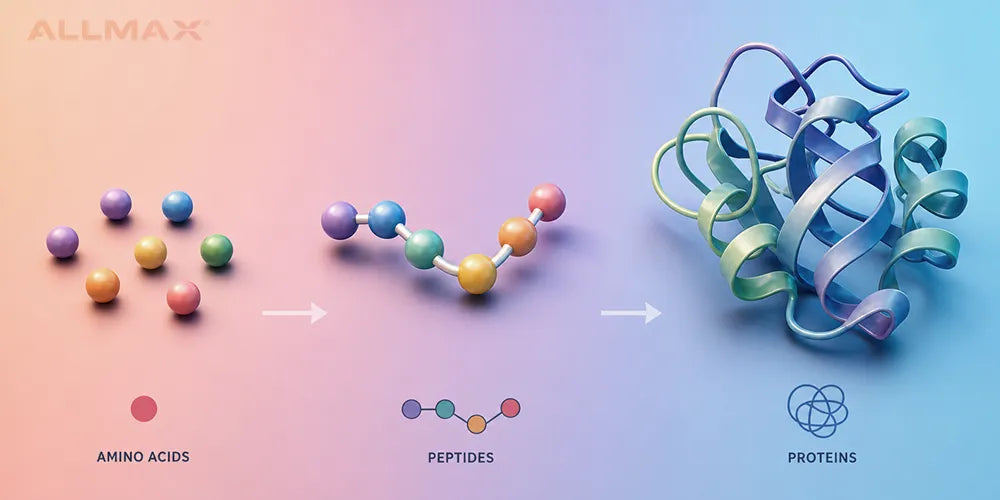
Whey contains all nine essential amino acids, which the body cannot produce on its own and must obtain through food. It is also rich in branched-chain amino acids (BCAAs), including leucine, isoleucine, and valine.
Leucine is particularly important for stimulating muscle protein synthesis (MPS), the process involved in repairing and building muscle tissue. For people who exercise regularly, consuming enough high-quality protein can therefore help support muscle recovery and growth.

Types of Whey Protein
Whey protein supplements generally fall into three main categories: whey protein concentrate, whey protein isolate, and whey protein hydrolysate. The primary differences are related to processing, protein concentration, and the amount of other nutrients such as carbohydrates and fat.
Whey Protein Concentrate (WPC)
Whey protein concentrate undergoes less processing than whey protein isolate and generally contains more lactose, carbohydrates, and fat. The exact protein concentration varies depending on the product.
Because WPC retains more of the components naturally found in whey, it can be a practical option for people who want a versatile protein supplement and are not specifically trying to minimize carbohydrates, fat, or lactose.
Whey Protein Isolate (WPI)
Whey protein isolate undergoes additional filtration to remove more of the non-protein components. High-quality whey isolates can provide around 90% or more protein by weight and generally contain less fat and lactose than whey protein concentrate. For example, ALLMAX Isoflex is 90% pure whey protein isolate and provides 27 g of protein per serving.
This makes whey isolate a convenient option for people looking for a high-protein supplement with relatively few calories from carbohydrates and fat. For someone using whey protein as part of a weight-loss plan, choosing an isolate may provide a way to increase protein intake while keeping calories from the supplement relatively low. For example, ALLMAX Isoflex provides 27 g of protein per serving with approximately 110–120 calories, depending on the flavour.
Whey Protein Hydrolysate (WPH)
Whey protein hydrolysate is whey that has been partially broken down into smaller protein fragments called peptides. Hydrolyzed whey contains smaller protein fragments and may be preferred by some users.
The best type of whey protein ultimately depends on your dietary needs, preferences, tolerance, and overall nutrition goals.
Can Whey Protein Help With Weight Loss?
Whey protein does not directly cause weight loss. Weight loss occurs when you consistently maintain a calorie deficit, meaning you consume fewer calories than your body uses over time.
However, Whey protein may be useful as part of a weight-loss plan because increasing protein intake may help support satiety and preserve lean mass during calorie restriction, particularly when combined with resistance training.
In one small 8-week trial of resistance-trained men following a calorie-restricted diet and resistance-training program, the whey-protein group maintained lean mass while the carbohydrate-supplement group lost lean mass.
When to Take Whey Protein for Weight Gain
Your most important meals of the day start with these two: a high-protein breakfast (your first meal after a night-long fast) and the meal that immediately follows your training session, as that’s when your body is depleted of energy stores (sugars, namely muscle glycogen and blood glucose that provided the energy for your training session). Because replacing those sugars causes an insulin response, which effectively drives those sugars into depleted muscle cells, it’s a great time to include a large serving of amino acids (specifically, fast-absorbing amino acids like WPH and WPI) that will likewise be more quickly absorbed.
Most lifters eat whole-food meals three times daily, and that’s a good way to build your nutrition plan to ensure you’re also meeting your daily macro- and micro-nutrient needs. High-protein snacks work especially well between meals, and that’s where a whey-protein supplement can be especially helpful for a fast and easy snack. A post-workout whey-based shake with a carbohydrate source is universally appealing to those seeking to add lean muscle mass.
Taking a serving of whey pre-workout kickstarts muscle-protein synthesis, getting it going before you even leave the gym.
How to Use Whey Protein for Weight Loss
If you're consuming whey protein to support weight management, consider how it fits into your total daily calorie and protein intake.
A whey shake can be used as:
A convenient high-protein breakfast or snack
A post-workout protein source
An addition to smoothies
A way to increase protein when meals fall short
A higher-protein alternative to some calorie-dense snacks
The key is to use whey as a supplement to your diet rather than an automatic addition to it. Adding a shake on top of your existing calorie intake could make it harder to maintain a calorie deficit.
For example, taking whey protein in place of a lower-protein snack may help increase protein intake without significantly increasing daily calories. Getting more protein is useful when it helps control hunger and supports training recovery, not when it pushes calories too high.
How Much Whey Protein Should You Take?
Your total daily protein requirement is more important than the amount of whey protein you consume specifically.
For people who exercise regularly, protein needs are generally higher than those of sedentary individuals. Active individuals may benefit from approximately 1.4–2.0 g/kg of protein per day, depending on body size, training, goals, and total calorie intake.
Whey protein can help fill gaps when it is difficult to reach your protein target through food alone. It can be a practical form of protein supplementation when meals alone do not fully cover your needs.
Rather than relying exclusively on protein shakes, aim to get most of your nutrition from a balanced diet containing sources such as meat, fish, eggs, dairy, legumes, and other protein-rich foods. Even within a high protein diet, too much protein from supplements is unnecessary for most people and should still fit your total daily needs.
When Should You Take Whey Protein?
There is no single time of day when you must consume whey protein.
What matters most is meeting your overall daily protein needs and distributing protein throughout the day.
That said, whey protein can be particularly convenient around workouts. A post-workout shake provides a practical source of high-quality protein when you want something quick and easy.
You can also consume whey before training, between meals, or as part of breakfast. Choose the timing that best fits your schedule and overall nutrition plan.
Whey Protein for Muscle Growth
One of the major whey protein benefits is its ability to provide high-quality protein and essential amino acids that support muscle protein synthesis and help promote muscle growth.
Resistance training provides the stimulus for muscle growth, while adequate protein provides the amino acids needed to support muscle repair and adaptation.
This is particularly important when trying to lose weight. Maintaining resistance training and adequate protein intake can help support lean muscle mass and lean body mass while you reduce body fat.
For this reason, combining whey protein, resistance training, and an appropriate calorie deficit can be a practical strategy for improving body composition.
Can Whey Protein Make You Gain Weight?
Yes, but not because whey protein itself automatically causes fat gain.
Whey protein contains calories, and consistently consuming more total calories than your body uses can contribute to weight gain over time. This applies to protein just as it does to carbohydrates and fat, since all three macronutrients provide energy.
If your goal is weight loss, account for the calories in your protein shake as part of your daily intake.
On the other hand, someone intentionally trying to gain muscle may use whey protein to help increase their total calorie and protein intake.
The important factor is overall calorie balance, not simply whether the protein comes from a supplement.
ALLMAX Isoflex Whey Protein Isolate
ALLMAX Isoflex is a 100% whey protein isolate delivering 27 grams of protein per 30-gram scoop, with no added sugar or fat. It features advanced Hybrid-Ratio Ion-Filtration (HRI) Technology, combining microfiltration and ion-exchange to produce a pure, fast-absorbing protein ideal for muscle growth and post-workout recovery.
Unlike typical blends, Isoflex contains only pure whey isolate, resulting in higher protein content, reduced lactose, and minimal carbs, making it suitable for those with mild lactose sensitivity and calorie-controlled diets.
Whey protein isolate is a complete protein that provides all essential amino acids. It can be a convenient protein option after training or between meals when dietary protein intake falls short.
Suggested use: Mix one scoop with 4–5 oz of liquid post-workout or between meals. For higher protein needs, use two scoops.
Isoflex may suit athletes and active adults looking for a convenient whey protein isolate.
Whey Protein and Overall Health
Whey protein is primarily useful as a convenient source of high-quality protein, but the broader health implications of regular use can vary by person.
Some people may experience digestive discomfort, including bloating or nausea, particularly when consuming large amounts or if they have difficulty tolerating lactose. For people who are sensitive to lactose, whey protein isolate may be a preferable option because it generally contains much less lactose than whey protein concentrate.
People with existing medical conditions or specific dietary restrictions should speak with a qualified healthcare professional before making significant changes to their protein intake.
Conclusion: Is Whey Protein Good for Weight Loss?
Whey protein can be a useful tool for people working toward weight loss, muscle growth, and improved body composition. Whey protein can be an effective way to increase protein intake when used alongside resistance training, adequate calories, and a balanced diet.
However, whey protein is not a weight-loss supplement on its own. Sustainable results depend on the bigger picture: maintaining an appropriate calorie intake, consuming enough protein, performing resistance training, staying active, and following a balanced diet.
For people who struggle to get enough protein from whole foods, a whey protein supplement—particularly a lower-calorie whey isolate—may be a convenient way to support their nutrition goals while working toward a leaner, stronger physique.
Frequently Asked Questions About Whey Protein for Weight Loss
Does whey protein help you lose belly fat?
Whey protein does not specifically target belly fat. However, increasing protein intake while maintaining a calorie deficit and performing resistance training may help support overall fat loss and lean muscle retention.
Is whey protein good for weight loss?
Whey protein can be a convenient addition to a weight-loss diet because it provides high-quality protein and can help you meet your daily protein needs. However, it does not cause weight loss on its own. Your overall calorie intake and dietary pattern are more important.
Can I drink whey protein every day?
For most healthy adults, whey protein can be used regularly as part of a balanced diet. However, it should complement rather than replace a varied diet that includes whole-food protein sources and other essential nutrients.
Is whey protein isolate better for weight loss?
Whey protein isolate may be a convenient choice for weight management because it generally contains a higher percentage of protein and less lactose, carbohydrate, and fat than whey concentrate. However, the best option depends on the individual product and your dietary needs.
Does whey protein make you fat?
Whey protein does not inherently make you fat. However, consuming more calories than your body needs can lead to weight gain, regardless of whether those calories come from protein, carbohydrates, or fat.
When is the best time to take whey protein?
There is no required time to take whey protein. The most important factor is meeting your daily protein needs. A shake can be convenient after exercise, between meals, or whenever you need an easy source of protein.
How much whey protein should I take for weight loss?
The amount of whey protein you need depends on your total daily protein target, body weight, activity level, and diet. Instead of focusing only on whey, determine your overall protein needs and use a supplement to help fill nutritional gaps.
References:
1: Nunes, E. A., Colenso-Semple, L., McKellar, S. R., Yau, T., Ali, M. U., Fitzpatrick-Lewis, D., Sherifali, D., Gaudichon, C., Tomé, D., Atherton, P. J., Camprubi-Robles, M., Naranjo-Modad, S., Braun, M., Landi, F., & Phillips, S. M. (2022). Systematic review and meta-analysis of protein intake to support muscle mass and function in healthy adults. Journal of Cachexia, Sarcopenia and Muscle, 13(2), 795–810. https://doi.org/10.1002/jcsm.12922
2: Iacone, R., Scanzano, C., D’Elia, F., Pagano, M. C., D’Isanto, A., Frangipane, I., Vitalone, A., D’Angeli, M., Alfonsi, L., Marra, M., Contaldo, F., & Pasanisi, F. (2018). Essential amino acid profile in parenteral nutrition mixtures: Does it meet needs? Nutrients, 10(12), 1937. https://doi.org/10.3390/nu10121937
3: Tinsley, G. (2018, September 7). Whey protein isolate vs. concentrate: What’s the difference? Healthline. https://www.healthline.com/nutrition/whey-protein-isolate-vs-concentrate
4: Mestawet, A. T., France, T. C., Mulcahy, P. G. J., & O’Mahony, J. A. (2024). Component partitioning during microfiltration and diafiltration of whey protein concentrate in the production of whey protein isolate. International Dairy Journal, 157, 106006. https://doi.org/10.1016/j.idairyj.2024.106006
5: Cava, E., Padua, E., Campaci, D., Bernardi, M., Muthanna, F. M. S. M., Caprio, M., & Lombardo, M. (2024). Investigating the health implications of whey protein consumption: A narrative review of risks, adverse effects, and associated health issues. Healthcare, 12(2), 246. https://doi.org/10.3390/healthcare12020246
6: Vandenplas, Y., Ksiażyk, J., Sanchez Luna, M., Migacheva, N., Picaud, J.-C., Rigo, L. A., Singhal, A., & Wabitsch, M. (2022). Partial hydrolyzed protein as a protein source for infant feeding: Do or don’t? Nutrients, 14(9), 1720. https://doi.org/10.3390/nu14091720
7: Ramage, S., Farmer, A., Apps Eccles, K., & McCargar, L. (2014). Healthy strategies for successful weight loss and weight maintenance: A systematic review. Applied Physiology, Nutrition, and Metabolism, 39(1), 1–20. https://doi.org/10.1139/apnm-2013-0026
8: Dudgeon, W. D., Kelley, E. P., & Scheett, T. P. (2017). Effect of whey protein in conjunction with a caloric-restricted diet and resistance training. Journal of Strength and Conditioning Research, 31(5), 1353–1361. https://doi.org/10.1519/JSC.0000000000001688
9: Jäger, R., Kerksick, C. M., Campbell, B. I., Cribb, P. J., Wells, S. D., Skwiat, T. M., Purpura, M., Ziegenfuss, T. N., Ferrando, A. A., Arent, S. M., Smith-Ryan, A. E., Stout, J. R., Arciero, P. J., Ormsbee, M. J., Taylor, L. W., Wilborn, C. D., Kalman, D. S., Kreider, R. B., Willoughby, D. S., Hoffman, J. R., Krzykowski, J. L., & Antonio, J. (2017). International Society of Sports Nutrition position stand: Protein and exercise. Journal of the International Society of Sports Nutrition, 14, 20. https://doi.org/10.1186/s12970-017-0177-8
10: Devries, M. C., & Phillips, S. M. (2015). Supplemental protein in support of muscle mass and health: Advantage whey. Journal of Food Science, 80(S1), A8–A15. https://doi.org/10.1111/1750-3841.12802
11: Damas, F., Phillips, S. M., Vechin, F. C., & Ugrinowitsch, C. (2015). A review of resistance training-induced changes in skeletal muscle protein synthesis and their contribution to hypertrophy. Sports Medicine, 45(6), 801–807. https://doi.org/10.1007/s40279-015-0320-0
12: Hudson, J. L., Wang, Y., Bergia, R. E., III, & Campbell, W. W. (2020). Protein intake greater than the RDA differentially influences whole-body lean mass responses to purposeful catabolic and anabolic stressors: A systematic review and meta-analysis. Advances in Nutrition, 11(3), 548–558. https://doi.org/10.1093/advances/nmz106
13: Hall, K. D., Heymsfield, S. B., Kemnitz, J. W., Klein, S., Schoeller, D. A., & Speakman, J. R. (2012). Energy balance and its components: Implications for body weight regulation. The American Journal of Clinical Nutrition, 95(4), 989–994. https://doi.org/10.3945/ajcn.112.036350
14: Kroplewski, B., Przybyłowicz, K. E., Sawicki, T., & Przemieniecki, S. W. (2026). Supplementation with animal- and plant-derived proteins modulates the structure and predicted metabolic potential of the gut microbiota in elite football players. Nutrients, 18(5), 768. https://doi.org/10.3390/nu18050768
15: Hoffman, J. R., & Falvo, M. J. (2004). Protein—Which is best? Journal of Sports Science & Medicine, 3(3), 118–130. https://pmc.ncbi.nlm.nih.gov/articles/PMC3905294/