

Anna Kasztenny, MSc.
Anna holds a Master’s degree in Bio-Pharmaceutical Science and Business Studies and a Bachelor of Medical Science with an Honors Specialization in Pharmacology. Alongside her academic background, she is a competitive bodybuilder and strength athlete who holds three provincial powerlifting records. As a former competitive gymnast and varsity cheerleader, she is passionate about health, performance, and evidence-based wellness.
Is fast digesting protein automatically better for muscle growth? Walk into any gym and you will hear someone insist that slamming a whey protein shake within minutes of your last set is non-negotiable. Meanwhile, casein loyalists argue that a slow, sustained amino acid drip is the real key to gains.
The truth is less dramatic. Proteins digest at different speeds, from fast options like whey to slow proteins like micellar casein, with medium digesting protein sources (mixed whole-food meals) falling in between. That speed affects how quickly amino acids appear in your blood and can stimulate muscle protein synthesis, but it does not single-handedly determine how much muscle you build over months of training.
Both fast and slow digesting protein sources support muscle recovery and growth. The best choice depends on your total daily protein, resistance training program, meal timing, and personal preference. This article breaks down the science and practical application so you can make an informed decision.
What this article covers:
How fast and slow proteins differ in digestion and amino acid delivery
Whether digestion speed actually drives long-term muscle growth
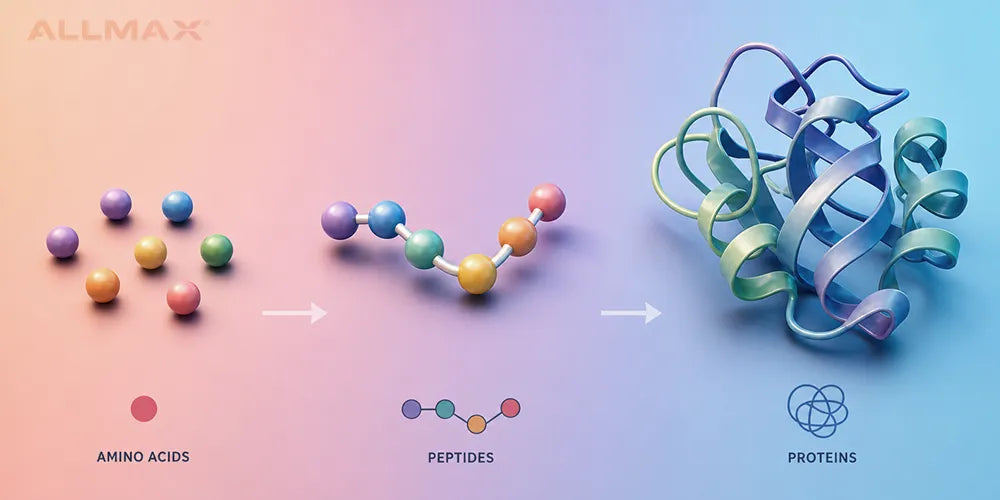
What peptide supplements are (and what they are not)
How ALLMAX IsoLyft combines multiple protein sources and peptides into one formula

What Is Fast-Digesting Protein?
A fast digesting protein produces a rapid rise in blood amino acid levels, typically within 1 to 2 hours after ingestion in liquid form on a relatively empty stomach. This is a continuum, not a hard category; meal composition, processing, and individual physiology all shift the curve.
Whey protein is one of the fastest digesting proteins studied in controlled trials, especially when consumed in liquid form. Common sources of fast-digesting proteins include whey protein isolate (WPI), whey protein concentrate (WPC), and hydrolyzed whey protein, which is pre-broken down into smaller peptides for faster absorption. In older adults, whey produced a muscle protein fractional synthesis rate of roughly 0.15%/h compared to about 0.08%/h for casein, according to tracer-based research [1].
Fast-digesting proteins are absorbed quickly by the body, leading to rapid blood amino acid spikes. Egg whites provide a high-quality source of fast-digesting protein as well. Collagen is also considered a fast digesting protein, though it lacks sufficient essential amino acids for muscle building on its own; collagen peptides primarily support joint health and recovery rather than serving as a primary muscle protein source. Adding fat, fiber, or carbohydrates to a meal slows gastric emptying and shifts even whey toward a more moderate absorption rate.
What Is Slow-Digesting Protein?
Slow digesting protein delivers amino acids gradually over several hours. Casein protein digests in about 4 hours and typically produces a slower, more sustained rise in blood amino acids than whey, often over several hours. Casein is the textbook example: micellar casein forms a clot or curd in the acidic environment of the stomach, slowing gastric emptying and producing a lower but more sustained amino acid elevation [2].
Milk protein naturally contains roughly 80% casein and 20% whey, making whole milk, cottage cheese, and Greek yogurt mixed-speed protein foods. Adding fats or fiber to any meal further slows digestion, which is why a chicken breast with rice and vegetables behaves more like a medium digesting protein source than a standalone fast protein.
Slow does not mean inferior. Casein is a complete protein rich in essential amino acids, and studies show it reduces muscle breakdown over extended periods [3]. For people who eat casein protein before bed or go long stretches between meals, that sustained amino acid supply can be practical.
Fast-Digesting vs. Slow-Digesting Protein: How Do They Compare?
Digestion speed shapes the pattern of amino acid delivery, not necessarily total muscle gained over a training cycle.
Feature |
Fast-Digesting (Whey) |
Slow-Digesting (Casein) |
Example sources |
Whey isolate, hydrolysate, egg white protein |
Micellar casein, milk protein |
Amino acid peak |
Rapid spike within 30–60 min |
Gradual rise, sustained 3–5 h |
Leucine content |
High in dairy whey |
High in dairy casein |
Post workout use |
Convenient, fast amino acid replenishment |
Less common around training |
Between-meal use |
Possible but clears quickly |
Sustained supply between meals |
Muscle-building quality |
High-quality complete protein |
High-quality complete protein |
A meta-analysis of 602 participants found that over five hours, roughly 57% of whey-derived phenylalanine appeared in circulation versus about 45% from casein [4]. Both types stimulate muscle protein synthesis when protein dose and leucine content are adequate. Long-term hypertrophy differences between whey and casein shrink to near zero when daily protein and training volume are matched [5].
Which Protein Is Better for Muscle Growth?
Digestion speed alone does not determine muscle growth. The primary drivers, based on human research and position stands from organizations like the ISSN [6]:
Total daily protein intake of roughly 1.6 to 2.2 g per kg of body weight for resistance training adults
Sufficient essential amino acids per meal, with about 2 to 3 g of leucine to trigger the mTOR signaling pathway
Progressive resistance training and adequate exercise volume
Energy balance and recovery, including sleep and diet quality
Protein supplements can help meet daily protein goals, but the source matters less than the total. Both whey and casein have been shown to support lean mass gains when calories and training are controlled. Acute spikes in protein synthesis after a single fast protein dose do not automatically translate into more muscle over 8 to 12 weeks of training.
Does Fast-Digesting Protein Build Muscle Faster?
Consuming fast-digesting protein post-exercise helps jump-start muscle repair by rapidly flooding the bloodstream with amino acids. Whey protein digests within 1 to 2 hours post workout, and fast proteins support muscle protein synthesis after workouts [7]. But "faster amino acid availability" and "faster muscle growth" are different concepts.
Studies measuring acute muscle protein synthesis consistently show whey outperforms casein in the first few hours [8]. Longitudinal trials lasting 8 to 16 weeks, however, often find similar hypertrophy outcomes when total daily protein is equated [9]. The post workout window is better understood as a several-hour opportunity, not a strict 30-minute deadline, especially if a mixed meal was eaten 1 to 3 hours before training.
Fast digesting protein is convenient and effective around training, but it is not mandatory for muscle growth as long as overall nutrition is covered.
When to Use Fast-, Medium-, and Slow-Digesting Proteins in Real Life
Timing fast-digesting proteins around workouts maximizes their effectiveness, but daily protein distribution across 3 to 5 meals with roughly 20 to 40 g each matters more than perfecting every window.
Post workout, fasted or several hours since last meal: Fast digesting proteins are recommended for post-workout recovery. They are beneficial for post-workout nutrition to replenish amino acids quickly after intense physical activity, particularly if you have not eaten for several hours.
Between meals or before bed: Slow proteins sustain amino acid levels during long gaps. A casein shake or cottage cheese before sleep keeps amino acids elevated for hours.
Regular mixed meals: Chicken with rice, eggs with toast, or Greek yogurt with oats act as medium digesting protein sources because fat, fiber, and carbohydrates modulate absorption rate.
Busy schedules: A quick whey shake takes seconds to prepare; a thicker casein blend can double as a more filling snack.
Can You Combine Fast and Slow Proteins? (Multi-Source Blends)
Many athletes and dietary supplements brands combine fast and slow proteins in a single protein blend. A formula with whey plus casein, for instance, delivers an early amino acid spike from the whey fraction followed by sustained release from the casein fraction. Include a variety of protein sources for optimal health.
Research suggests blends can be effective, but current evidence does not prove every multi-source blend outperforms a single high-quality source when total intake is controlled [10]. When evaluating a blend, check total grams of intact protein, sources listed on the label, essential amino acid completeness, and cost per gram.
What Are Peptide Supplements? (And What They Are Not)
Peptides are short chains of amino acids. In the context of dietary proteins, they form naturally during digestion or are produced intentionally through hydrolysis. Peptide supplements sold as protein powders contain these food-derived peptide fragments.
Three categories to distinguish:
Dietary protein peptides: Whey protein peptides, collagen peptides, glutamine peptides found in protein powders. These are foods.
Bioactive peptides: Specific sequences studied for targeted effects (e.g., certain milk-derived peptides that may influence blood sugar or blood pressure). Research on such benefits is ongoing.
Pharmaceutical/research peptides: Insulin, GLP-1 agonists used to treat diabetes, or gray market injectables like BPC-157. These are medications or unregulated research compounds with safety concerns, not dietary supplements. They should never be confused with the peptides in a protein powder. ALLMAX Nutrition does not promote or sell anabolic steroids or research-only injectable peptides.
How Do Peptides Fit Into Protein Digestion?
Normal digestion breaks dietary proteins into progressively smaller fragments: intact protein is denatured in the stomach, cleaved by enzymes into peptides, then further broken into individual amino acids and small peptides that cross the intestinal wall.
Hydrolyzed protein speeds up part of this process by pre-breaking peptide bonds before consumption [11]. A study comparing different degrees of whey hydrolysis found that all hydrolyzed forms produced faster amino acid rate constants than intact casein [12]. Hydrolysis does not bypass digestion entirely; it shortens one step. Peptide content is one design feature among many, not a stand-alone guarantee of better results.
Are Peptide Supplements Better Than Regular Protein?
Peptide-containing or hydrolyzed protein powders are not inherently better than intact protein for everyone. Potential advantages include slightly faster digestion in some contexts and easier mixing. These effects are modest. Evaluate any protein by total grams per serving, essential amino acid content, leucine per serving, ingredient transparency, taste, and cost per gram. Proven whole-food protein sources and high-quality intact supplements remain effective building blocks of any diet.
Non-dietary "peptide supplements" are not comparable to the food-grade peptides in whey hydrolysate or a protein blend; efficacy and safety concerns differ entirely.
Why Does ALLMAX IsoLyft Use Multiple Protein Sources and Peptides?
Understanding fast and slow digesting protein helps explain IsoLyft's formulation. Rather than relying on a single protein source, IsoLyft™ contains a 6-Protein Matrix:
Milk Protein Isolate (MPI)
Milk Protein Concentrate (MPC)
Whey Protein Concentrate (WPC)
Whey Protein Isolate (WPI)
Micellar Casein
Beef Protein Isolate
The whey components are relatively fast digesting. Micellar casein and the casein fraction of the milk proteins are slower. Beef protein isolate adds another complete protein source with its own digestion characteristics. This creates a diverse protein matrix rather than a single-speed formula. The product also includes a 475 mg 3-Peptide Amino Matrix layered on top of 25 g of intact protein.
Inside IsoLyft's 3-Peptide Amino Matrix
The 475 mg matrix contains:
Whey protein peptides
Glutamine peptides
Leucine HCl
This is included alongside the product’s 25 g of protein per serving. There is no amino spiking; label protein values reflect intact protein content. Leucine is a key trigger for muscle protein synthesis, and the added leucine HCl supports the body's natural processes for initiating that signal.
Isolates vs Concentrates vs Hydrolysates: What's the Difference?
Concentrate (e.g., WPC): Typically 70 to 80% protein by weight, retaining some lactose, fat, and bioactive nutrients. More cost-effective.
Isolate (e.g., WPI, MPI): Further filtered to roughly 85 to 90%+ protein with lower carbohydrate and fat content. Often preferred for leaner diets or lactose sensitivity.
Hydrolysate: Enzymatically broken into smaller peptides. "Hydrolyzed" describes structural breakdown; "isolate" and "concentrate" describe purity. A protein can be both an isolate and hydrolyzed.
Choosing between them depends on lactose tolerance, calorie budgets, texture preferences, and budget. For a deeper comparison, see whey protein isolate vs concentrate.
IsoLyft Nutrition Profile and Practical Use
Per serving:
Nutrition Facts |
Vanilla Ice Cream |
Double Chocolate |
Protein |
25 g |
25 g |
Calories |
120 |
130 |
Carbohydrates |
4 g |
5 g |
Fat |
0.5 g |
1 g |
Added Sugar |
0 g |
0 g |
Available in Vanilla Ice Cream and Double Chocolate. IsoLyft works as a post workout shake, a between-meals protein source, or a convenient way to add both fast and slow digesting protein to breakfast or evening snacks. IsoLyft is Verified for Sport and every lot is tested for banned substances by an ISO 17025-accredited laboratory.
Who Is IsoLyft Best Suited For?
Strength athletes and bodybuilders who need to hit daily protein targets around training and during calorie-controlled phases
Recreationally active adults training 3 to 5 days per week who want to complement whole foods when time or appetite is limited
Fitness enthusiasts focused on body composition who value high protein with low calories and no added sugar
Busy professionals who want predictable macros in seconds
Budget-conscious consumers who prefer one multi-source formula over buying separate fast and slow protein tubs; simply aiming for consistent daily protein is the priority
How to Choose Between Fast and Slow Protein (Plus Blends)
Choose fast digesting protein when: you are training after a long gap without food, you want a lighter shake with minimal fat, or you prefer whey for taste and mixability.
Choose slow proteins when: you are heading into a long stretch without meals, you want a more filling option before bed, or you enjoy thicker, creamier textures.
Choose a multi-source blend like IsoLyft™ when: you want one product covering both fast and slow digestion, you value convenience over managing multiple tubs, or your fitness goals call for a versatile daily protein that fits any meal window.
Consistency matters more than micro-managing digestion speed. Hit your daily protein targets, train hard, maintain an overall balanced diet with adequate vitamins and nutrients, and recover well.
Frequently Asked Questions About Fast-Digesting Protein and Peptides
What is the fastest-digesting protein?
Whey protein is the fastest digesting protein available, especially whey isolate and hydrolysates consumed in liquid form.
Is fast-digesting protein better for muscle growth?
Not automatically. Total daily protein and training are more important than speed alone.
Should you take fast digesting protein after a workout?
It can be convenient and effective, especially if the last meal was several hours ago. Fast digesting proteins are recommended for post-workout recovery to build muscle, but daily totals matter more.
Should you take slow digesting protein before bed?
It can help maintain amino acid levels overnight, but it is optional if daily protein intake is already adequate.
What are peptide supplements?
Dietary protein peptides are short chains of amino acids found in foods and protein powders.
Are peptides better than regular protein?
Not necessarily. Modest digestion differences exist, but total protein and essential amino acid content drive results.
Does IsoLyft™ contain peptides?
Yes. It includes a 475 mg 3-Peptide Amino Matrix on top of 25 g of intact protein.
How much protein is in IsoLyft™?
Each serving provides 25 g of protein from a 6-Protein Matrix, with 125 calories and 4 g of carbohydrates.
References:
Pennings B, Boirie Y, Senden JM, Gijsen AP, Kuipers H, van Loon LJ. Whey protein stimulates postprandial muscle protein accretion more effectively than do casein and casein hydrolysate in older men. Am J Clin Nutr. 2011 May;93(5):997-1005. https://pubmed.ncbi.nlm.nih.gov/21367943/
Boirie Y, Dangin M, Gachon P, Vasson MP, Maubois JL, Beaufrère B. Slow and fast dietary proteins differently modulate postprandial protein accretion. Proc Natl Acad Sci U S A. 1997 Dec 23;94(26):14930-5. https://pubmed.ncbi.nlm.nih.gov/9405716/
Res PT, Groen B, Pennings B, Beelen M, Wallis GA, Gijsen AP, Senden JM, VAN Loon LJ. Protein ingestion before sleep improves postexercise overnight recovery. Med Sci Sports Exerc. 2012 Aug;44(8):1560-9. https://pubmed.ncbi.nlm.nih.gov/22330017/
Gorissen SHM, Trommelen J, Kouw IWK, Holwerda AM, Pennings B, Groen BBL, Wall BT, Churchward-Venne TA, Horstman AMH, Koopman R, Burd NA, Fuchs CJ, Dirks ML, Res PT, Senden JMG, Steijns JMJM, de Groot LCPGM, Verdijk LB, van Loon LJC. Protein Type, Protein Dose, and Age Modulate Dietary Protein Digestion and Phenylalanine Absorption Kinetics and Plasma Phenylalanine Availability in Humans. J Nutr. 2020 Aug 1;150(8):2041-2050. https://pmc.ncbi.nlm.nih.gov/articles/7398787/
Morton RW, Murphy KT, McKellar SR, Schoenfeld BJ, Henselmans M, Helms E, Aragon AA, Devries MC, Banfield L, Krieger JW, Phillips SM. A systematic review, meta-analysis and meta-regression of the effect of protein supplementation on resistance training-induced gains in muscle mass and strength in healthy adults. Br J Sports Med. 2018 Mar;52(6):376-384. doi: 10.1136/bjsports-2017-097608. Epub 2017 Jul 11. Erratum in: Br J Sports Med. 2020 Oct;54(19):e7. https://pmc.ncbi.nlm.nih.gov/articles/PMC5867436/
Jäger R, Kerksick CM, Campbell BI, Cribb PJ, Wells SD, Skwiat TM, Purpura M, Ziegenfuss TN, Ferrando AA, Arent SM, Smith-Ryan AE, Stout JR, Arciero PJ, Ormsbee MJ, Taylor LW, Wilborn CD, Kalman DS, Kreider RB, Willoughby DS, Hoffman JR, Krzykowski JL, Antonio J. International Society of Sports Nutrition Position Stand: protein and exercise. J Int Soc Sports Nutr. 2017 Jun 20;14:20. https://pmc.ncbi.nlm.nih.gov/articles/PMC5477153/
Trommelen J, Betz MW, van Loon LJC. The Muscle Protein Synthetic Response to Meal Ingestion Following Resistance-Type Exercise. Sports Med. 2019 Feb;49(2):185-197. https://pubmed.ncbi.nlm.nih.gov/30659499/
Reitelseder S, Agergaard J, Doessing S, Helmark IC, Lund P, Kristensen NB, Frystyk J, Flyvbjerg A, Schjerling P, van Hall G, Kjaer M, Holm L. Whey and casein labeled with L-[1-13C]leucine and muscle protein synthesis: effect of resistance exercise and protein ingestion. Am J Physiol Endocrinol Metab. 2011 Jan;300(1):E231-42. https://pubmed.ncbi.nlm.nih.gov/21045172/
Reidy PT, Borack MS, Markofski MM, Dickinson JM, Deer RR, Husaini SH, Walker DK, Igbinigie S, Robertson SM, Cope MB, Mukherjea R, Hall-Porter JM, Jennings K, Volpi E, Rasmussen BB. Protein Supplementation Has Minimal Effects on Muscle Adaptations during Resistance Exercise Training in Young Men: A Double-Blind Randomized Clinical Trial. J Nutr. 2016 Sep;146(9):1660-9. https://pmc.ncbi.nlm.nih.gov/articles/PMC4997282/
Reidy PT, Walker DK, Dickinson JM, Gundermann DM, Drummond MJ, Timmerman KL, Fry CS, Borack MS, Cope MB, Mukherjea R, Jennings K, Volpi E, Rasmussen BB. Protein blend ingestion following resistance exercise promotes human muscle protein synthesis. J Nutr. 2013 Apr;143(4):410-6. https://pmc.ncbi.nlm.nih.gov/articles/PMC3738242/
Farup J, Rahbek SK, Storm AC, Klitgaard S, Jørgensen H, Bibby BM, Serena A, Vissing K. Effect of degree of hydrolysis of whey protein on in vivo plasma amino acid appearance in humans. Springerplus. 2016 Mar 31;5:382. https://pmc.ncbi.nlm.nih.gov/articles/PMC4814394/
Farup J, Rahbek SK, Storm AC, Klitgaard S, Jørgensen H, Bibby BM, Serena A, Vissing K. Effect of degree of hydrolysis of whey protein on in vivo plasma amino acid appearance in humans. Springerplus. 2016 Mar 31;5:382. https://pmc.ncbi.nlm.nih.gov/articles/PMC4814394/