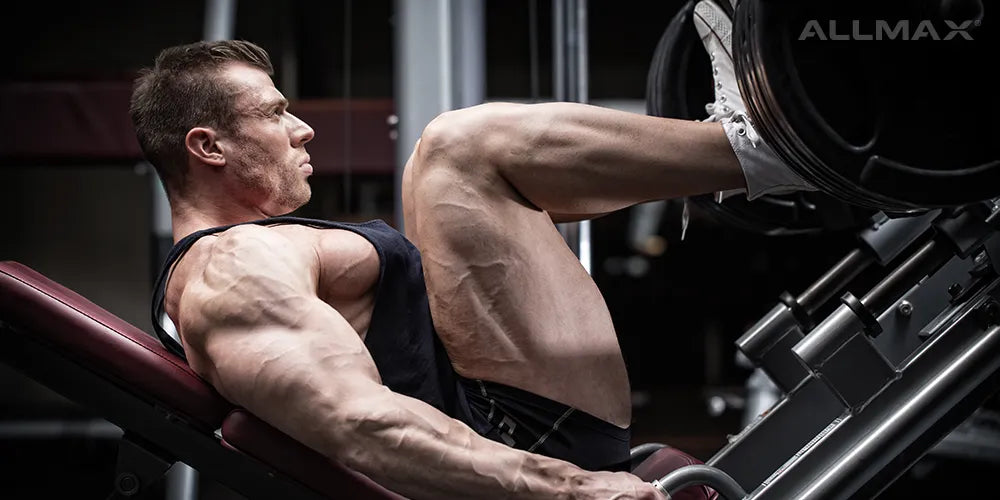
If you’re serious about building stronger, more muscular legs, the hack squat deserves a permanent place in your training rotation. Whether you’re a beginner learning movement patterns or an experienced lifter chasing quad growth, this machine-based squat variation offers a unique blend of stability, safety, and hypertrophy potential. As a compound movement, the hack squat is ideal for heavy lifting and is especially effective for targeted quad development.
Before diving deep, let’s quickly address a common comparison.
Hack squat vs leg press (quick summary):
The hack squat vs leg press debate comes down to body position and muscle emphasis; hack squats keep you in a more upright position and target the quads more directly, while leg press machines allow heavier loads with more posterior chain involvement. Both exercises activate multiple muscles in the lower body, but hack squats primarily target the quadriceps, while also engaging the glutes, hamstrings, calves, and core as secondary leg muscles. The fixed position and back support of the hack squat machine help isolate the quads, and core activation is lower compared to free weight squats due to the machine's support. Incorporating hack squats into your leg day routine can enhance quad development and overall lower body strength, making them a staple for many fitness enthusiasts.
Introduction to Hack Squats
The hack squat is a powerful compound movement designed to build strength and muscle growth in the lower body. Performed on a hack squat machine, this exercise targets multiple muscle groups, including the quadriceps, hamstrings, glutes, and calves, making it a staple for anyone serious about leg development. Unlike traditional free weight squats, the hack squat machine provides a fixed position and solid back support, allowing you to safely handle heavier loads without placing excessive stress on your lower back or knees.
This squat machine variation is especially beneficial for those looking to maximize leg strength and muscle size while minimizing the risk of injury. The guided track ensures proper movement mechanics, making it easier to focus on pushing through your legs and achieving a full range of motion. Whether you’re a beginner learning the basics or an advanced lifter chasing new personal bests, the hack squat offers a unique way to overload the lower body and stimulate muscle growth. By reducing the strain on the spine and joints, the hack squat machine allows you to train hard and heavy, making it an essential tool for building a strong, muscular lower body.
Who Benefits Most From Hack Squats?
Hack squats are ideal for:
Lifters aiming to maximize quad hypertrophy
Beginners who need guided movement patterns
Athletes recovering from injury who require spinal support
Advanced lifters looking to push intensity safely without a spotter
What Are Hack Squats?
Clear Definition
A hack squat is a squat variation performed on a machine where the torso remains supported or angled, reducing spinal load while emphasizing the quadriceps.
Machine Variations
Most gym-goers perform hack squats on a sled-style machine where the lifter leans against a back pad and pushes weight upward along a fixed track. Variations include:
Linear sled machines
Pendulum-style machines (arc motion)
Vertical hack squat machines
Each variation slightly changes resistance curves and muscle engagement.
Free-Weight Variations
The traditional version involves holding a barbell behind your legs and squatting, often called a barbell hack squat. While this version demands more balance and coordination, it is less common due to awkward positioning. Compared to a free weight squat, the barbell hack squat places less emphasis on core stability, balance, and functional strength. Free weight squats are generally preferred for improving athletic performance, movement development, and overall lower-body growth, especially for advanced or performance-oriented goals.
Brief History Note
Hack squats are believed to be named after George Hackenschmidt, an early 20th-century strongman who popularized the movement in its original barbell form.
Hack Squat Machine Overview
Common Hack Squat Machine Types
Plate-loaded machines: You manually add weight plates
Selectorized machines: Use a pin to adjust weight stacks
Pendulum machines: Offer a curved motion path
Plate-Loaded vs Selectorized Differences
Plate-loaded: Greater maximum load, more natural feel, preferred by experienced lifters
Selectorized: Easier adjustments, beginner-friendly, often found in commercial gyms
Hack Squat vs Leg Press: Key Differences
Upright vs Reclined Position
Hack squats place you in a more upright, squat-like posture, while leg press machines position you in a reclined or seated angle.
Quad vs Posterior Chain Emphasis
Hack squat: Quad-dominant
Leg press: More glutes and hamstrings involvement
Achievable Load
Leg press machines allow heavier loading, often significantly more than hack squats.
Progressive Overload Potential
Both support progression, but:
Hack squat: Better for controlled hypertrophy
Leg press: Better for maximal load increases
Range of Motion
Hack squats typically allow a deeper, more natural squat depth, improving muscle activation.
Safety Implications
Hack squats reduce spinal stress and guide movement, making them safer for solo training, while leg press can become risky if range of motion is excessive.

What Does Hack Squat Work?
Primary Muscles
- Quadriceps (main driver)
Secondary Muscles
Glutes
Hamstrings
Calves
Depth and Muscle Recruitment
Deeper hack squats increase glute and hamstring activation, while partial reps emphasize the quads more directly.
Core Engagement Compared to Back Squat
Hack squats involve less core stabilization than barbell back squats due to the supported torso, but the core still plays a stabilizing role.
Targeting Specific Muscle Groups with Hack Squats
One of the standout features of the hack squat machine is its versatility in targeting different muscle groups through simple adjustments in foot position and body alignment. By changing where you place your feet on the platform, you can shift the emphasis from one area of the lower body to another. For example, positioning your feet higher on the footplate increases glute and hamstring activation, while placing them lower brings the focus squarely onto the quadriceps. This ability to fine-tune muscle engagement makes the hack squat an excellent choice for addressing muscular imbalances and achieving balanced leg development.
The upright body position required by the hack squat machine also engages the core muscles, including the abs and obliques, to help stabilize your torso throughout the movement. Proper foot placement and body position are crucial, not only for maximizing muscle activation, but also for maintaining joint health and preventing injury. Always start with a weight that allows you to perform 8–12 reps with perfect form, gradually increasing the load as your strength improves.
To ensure comprehensive lower body development, combine hack squats with other compound movements like the leg press, leg extensions, and lunges, or follow a structured leg-focused workout split that prioritizes quads, hamstrings, and calves. This approach helps target all major muscle groups, prevents plateaus, and promotes overall leg strength and muscle growth. By strategically adjusting your foot placement and maintaining an upright body position, you can customize your leg workout to meet your specific goals and keep your training both effective and engaging while applying effective leg day strategies that emphasize controlled, muscle-focused execution.
Core Engagement and Body Position
Core Activation in Hack Squats
Your core works to maintain neutral spine alignment and control the sled during movement.
Comparison with Back Squat
Back squats demand significantly higher core engagement, as the body must stabilize the load without machine assistance.
Cues to Increase Core Activation
Brace your abs as if preparing for impact
Avoid arching your lower back
Maintain consistent tension throughout the rep
Foot Position and Technique
Low Foot Placement
Placing feet lower on the platform:
Increases quad activation
Requires greater knee flexion
High Foot Placement
Placing feet higher:
Shifts emphasis to glutes and hamstrings
Reduces knee stress
Stance Width Options
Narrow stance: More quad focus
Shoulder-width: Balanced development
Wide stance: Increased inner thigh (adductor) engagement
How To Perform Hack Squat Safely
Setup Checklist
Adjust shoulder pads to fit snugly
Position feet shoulder-width apart
Keep back flat against the pad
Grip handles for stability
Unlock safety handles
Descent and Ascent Tempo
Lower slowly (2–3 seconds)
Pause briefly at the bottom
Drive upward explosively but controlled
Common Mistakes & Fixes
Mistake: Heels lifting
→ Fix: Improve ankle mobility, reposition feet higher
Mistake: Knees collapsing inward
→ Fix: Focus on pushing knees outward
Mistake: Shallow range of motion
→ Fix: Reduce weight and squat deeper
Mistake: Locking knees aggressively
→ Fix: Stop just short of full lockout
Warm-Up Drills
Bodyweight squats
Leg swings
Light sled pushes
Mobility Drills
Ankle dorsiflexion stretches
Hip openers
Foam rolling quads
Programming For Leg Day
Hypertrophy Rep Ranges
8–15 reps
3–5 sets
Strength Rep Ranges
4–8 reps
4–6 sets
Sample Leg Day Workout
Back squat: 4 sets × 6 reps
Hack squat: 4 sets × 10 reps
Romanian deadlift: 3 sets × 8 reps
Leg curl: 3 sets × 12 reps
Calf raises: 4 sets × 15 reps
Pairing Recommendations
You can pair hack squats with:
Back squats for overall strength
Leg press for additional volume (classic hack squat vs leg press combination)
Alternatives And Variations
Barbell Hack Squat
Performed with the barbell behind the legs: challenging but effective for advanced lifters.
Reverse Hack Squat
Facing the machine:
Emphasizes glutes and hamstrings
Great for posterior chain focus
Home-Friendly Substitutes
Goblet squats
Bulgarian split squats
Resistance band squats
Safety Issues, Troubleshooting, And Fixes
Knee Pain Causes
Poor foot placement
Limited ankle mobility
Excessive forward knee travel
Unilateral Strength Imbalances
Incorporate single-leg exercises
Focus on controlled tempo
Ankle Mobility Exercises
Calf stretches
Ankle rocks
Elevated heel squats
Supplements To Support Hack Squat Training
To maximize your performance and recovery, especially if you’re pursuing natural bodybuilding and muscle growth:
Pre-workout: ALLMAX Impact Igniter Xtreme 2.0 can help boost energy and focus
Post-workout: ALLMAX proteins support muscle recovery and growth
Strength support: Creatine monohydrate improves power output and training volume
FAQ
Does hack squat work glutes?
Yes, especially when using deeper ranges of motion or higher foot placement, hack squats engage the glutes significantly.
Is hack squat safe for lower back?
Yes. The supported back position reduces spinal load, making it safer than many free-weight alternatives when performed correctly.
Hack squat vs leg press for home gyms?
For most home setups, the leg press is more common due to versatility and space efficiency, but hack squat machines offer superior quad isolation if space allows.
Conclusion and Key Takeaways
The hack squat is one of the most effective tools for building strong, well-developed legs. It combines stability, safety, and targeted muscle activation, making it suitable for lifters at all levels.
When comparing hack squat vs leg press, choose:
Hack squat for quad focus and range of motion
Leg press for heavier loading and overall leg volume
For best results, incorporate both strategically into your training program.
If you're serious about leveling up your leg day, consider optimizing your performance with high-quality supplements from ALLMAX and explore recommended hack squat equipment to build the ultimate lower-body routine.

Anna Kasztenny, MSc.
Anna holds a Master’s degree in Bio-Pharmaceutical Science and Business Studies and a Bachelor of Medical Science with an Honors Specialization in Pharmacology. Alongside her academic background, she is a competitive bodybuilder and strength athlete who holds three provincial powerlifting records. As a former competitive gymnast and varsity cheerleader, she is passionate about health, performance, and evidence-based wellness.