
Introduction: One of the Most Researched Supplements in Sports Nutrition
Creatine monohydrate is not a trend, a shortcut, or a gimmick. It is one of the most extensively studied and scientifically validated performance supplements in sports nutrition history.
From Olympic athletes and professional bodybuilders to weekend gym-goers and endurance competitors, creatine monohydrate has earned its reputation for improving strength, power, muscle mass, and training capacity.
Despite decades of research and real-world use, creatine is still misunderstood by many. Questions around safety, water retention, and effectiveness continue to surface—often driven by outdated myths rather than science.
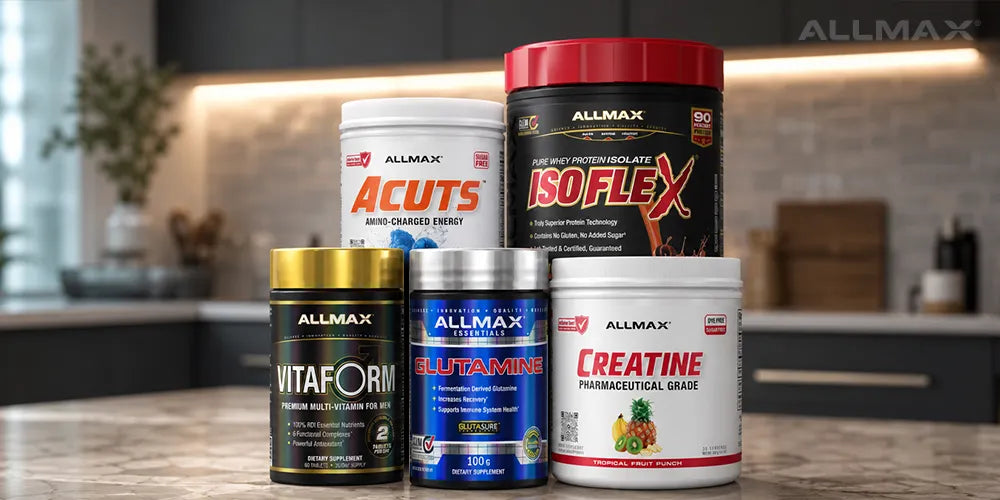
This article breaks down the real science behind creatine monohydrate, how it works in the body, and why Allmax Creatine Monohydrate Powder remains a trusted choice among serious athletes.

What Is Creatine Monohydrate?
Creatine is a naturally occurring compound found in small amounts in foods like red meat and fish. Your body also produces creatine from amino acids (arginine, glycine, and methionine) in the liver and kidneys.
Once produced or consumed, creatine is stored primarily in skeletal muscle as phosphocreatine.
Creatine monohydrate is simply creatine bound to a water molecule. This form is:
- Highly stable
- Highly bioavailable
- Well absorbed
- Extensively researched
It is considered the gold standard form of creatine supplementation.
How Creatine Works at the Cellular Level
Creatine and ATP: The Energy Connection
Every explosive movement—lifting a weight, sprinting, jumping—relies on ATP (adenosine triphosphate) for energy.
However, ATP stores in muscle are extremely limited and deplete within seconds during high-intensity activity.
Creatine helps by:
- Increasing phosphocreatine stores in muscle
- Rapidly regenerating ATP during intense effort
- Delaying fatigue during short bursts of high power
This allows athletes to:
- Lift heavier loads
- Perform more reps
- Maintain power output longer
- Recover faster between sets
In simple terms, creatine helps your muscles produce energy faster when it matters most.
Why Creatine Improves Strength and Power
Creatine supplementation consistently shows improvements in:
- Maximal strength
- Explosive powerSprint performance
- High-intensity repeat efforts
This is why creatine is especially effective for:
- Weightlifting
- Bodybuilding
- Powerlifting
- Cross-training
- Explosive sports (football, basketball, hockey)
By improving ATP availability, creatine enables higher training intensity, which over time leads to greater neuromuscular adaptation and strength gains.
Creatine and Muscle Growth: More Than Just Water Weight
One of the most common misconceptions is that creatine causes “fake” muscle growth due to water retention.
The reality is more nuanced—and far more beneficial.
Cell Volumization and Muscle Signaling
Creatine increases water content inside muscle cells, not under the skin. This cellular hydration:
- Improves muscle cell signaling
- Enhances protein synthesis pathways
- Reduces protein breakdown
- Creates a more anabolic environment
Over time, this leads to real increases in lean muscle mass, not just temporary fullness.
Training Volume = Muscle Growth
Because creatine allows athletes to train harder and longer, it indirectly drives hypertrophy by increasing:
- Total volume
- Mechanical tension
- Training frequency
Creatine doesn’t build muscle by itself—it amplifies the results of proper training and nutrition
Creatine and Recovery
Creatine also plays a role in recovery by:
- Improving cellular energy availability
- Improving glycogen resynthesis
- Supporting cellular repair mechanisms
- Enhancing training consistency
Athletes often report:
- Less fatigue between workouts
- Improved performance across training sessions
- Faster readiness for high-intensity work
This makes creatine valuable not just for strength athletes, but also for those training frequently.
Cognitive and Neuromuscular Benefits
Emerging research shows creatine may also support:
- Cognitive performance under fatigue
- Reaction time
- Mental endurance
- Neuromuscular coordination
Because the brain also uses ATP, creatine’s energy-support role extends beyond muscle tissue—especially during sleep deprivation or intense mental stress.

Is Creatine Safe? What the Science Says
Creatine monohydrate is one of the safest supplements ever studied.
Decades of research show that in healthy individuals:
- Creatine does NOT negatively impact kidney function
- Creatine does NOT adversely affect liver health
- Creatine does NOT increase dehydration risk
- Creatine does NOT increase cramping risk
These myths largely stem from anecdotal reports or misuse, not controlled research.
When taken as directed and combined with proper hydration, creatine is considered safe for long-term use.
Why Creatine Monohydrate Is Still the Best Form
Despite dozens of newer creatine variants on the market (HCl, ethyl ester, buffered creatine), creatine monohydrate remains superior because:
- It has the strongest research backing
- It is cost-effective
- It is stable and well absorbed
- It consistently increases muscle creatine stores
Many alternative forms rely on marketing claims rather than independent data
Why Athletes Choose Allmax Creatine Monohydrate Powder
Not all creatine products are equal.
Allmax Creatine Monohydrate Powder is designed for athletes who prioritize purity, performance, and reliability.
Key reasons athletes trust Allmax:
- Ultra-Pure Creatine Monohydrate - No fillers, no unnecessary additives—just pure creatine monohydrate.
- Micronized for Better Mixing - Improved solubility for easier daily use.
- Clinically Supported Dosage - Provides a simple, standardized daily creatine intake.
- Trusted by Competitive Athletes - Allmax products are widely used in serious training environments where performance matters.
How to Use Creatine Monohydrate Effectively
Daily Consistency Matters
Creatine works through saturation. Taking it daily is more important than timing.
Loading vs Maintenance
A loading phase is optional. Many athletes simply take a consistent daily dose and reach full saturation within a few weeks.
Timing
Creatine can be taken:
- Pre-workout
- Post-workout
- With meals
The key is consistency, not exact timing.
Who Benefits Most from Creatine Monohydrate
Creatine is beneficial for:
- Strength and power athletes
- Bodybuilders
- Cross-training athletes
- Team sport athletes
- Individuals training at high intensity
- Older adults focused on strength retention
It is less impactful for purely low-intensity endurance athletes but still offers recovery and cognitive benefits.
Conclusion: Why Creatine Monohydrate Remains a Performance Staple
Creatine monohydrate has stood the test of time because it works.
It enhances energy production, increases strength, supports muscle growth, improves recovery, and is backed by decades of research.
For athletes who demand proven performance—not hype—Allmax Creatine Monohydrate Powder delivers a clean, effective, science-driven solution to help train harder and perform better.
Frequently Asked Questions
Is creatine only for bodybuilders?
No. Creatine benefits anyone performing high-intensity or explosive movements.
Will creatine make me bulky?
Creatine supports muscle performance and growth, but physique changes depend on training and nutrition.
Do I need to cycle creatine?
No scientific evidence suggests cycling is necessary for healthy individuals.
Is creatine suitable for beginners?
Yes. Creatine is safe and effective for beginners when used responsibly.
References
- Morton, R. W., Murphy, K. T., McKellar, S. R., Schoenfeld, B. J., Henselmans, M., Helms, E., Aragon, A. A., Devries, M. C., Banfield, L., Krieger, J. W., & Phillips, S. M. (2018). A systematic review, meta-analysis and meta-regression of the effect of protein supplementation on resistance training-induced gains in muscle mass and strength in healthy adults.
- British Journal of Sports Medicine, 52(6), 376-384. https://doi.org/10.1136/bjsports-2017-097608 PubMed+1
- Tang, J. E., Moore, D. R., Kujbida, G. W., Tarnopolsky, M. A., & Phillips, S. M. (2009). Ingestion of whey hydrolysate, casein, or soy protein isolate: Effects on mixed muscle protein synthesis at rest and following resistance exercise in young men.
- Applied Physiology, Nutrition, and Metabolism, 32(6), 1132-1138. Doi.org
- Pennings, B., Groen, B. B., de Lange, A., Gijsen, A. P., Zorenc, A. H., Senden, J. M., & van Loon, L. J. (2012). Amino acid absorption and subsequent muscle protein accretion following graded intakes of whey protein in elderly men. American Journal of Physiology-Endocrinology and Metabolism, 302(8), E992–E999. Doi.org
- Reitelseder, S., Agergaard, J., Doessing, S., Helmark, I. C., Lund, P., Kristensen, N. B., … Holm, L. (2011). Whey and casein labeled with L-[1-13C]leucine and muscle protein synthesis: effect of resistance exercise and protein ingestion. American Journal of Physiology-Endocrinology and Metabolism, 300(1), E231–E242. Doi.org