

Anna Kasztenny, MSc.
Anna holds a Master’s degree in Bio-Pharmaceutical Science and Business Studies and a Bachelor of Medical Science with an Honors Specialization in Pharmacology. Alongside her academic background, she is a competitive bodybuilder and strength athlete who holds three provincial powerlifting records. As a former competitive gymnast and varsity cheerleader, she is passionate about health, performance, and evidence-based wellness.
Introduction to Stimulant Free Pre Workouts
Most pre workout supplements on the market contain 200 to 350 mg of caffeine per serving. That caffeine drives the "energy rush" many lifters associate with a pre workout powder, but it is not the only way to support workout performance. Stimulant free pre workout formulas skip the caffeine entirely and rely on ingredients that target muscle pumps, blood flow, training endurance, hydration, and mental focus.
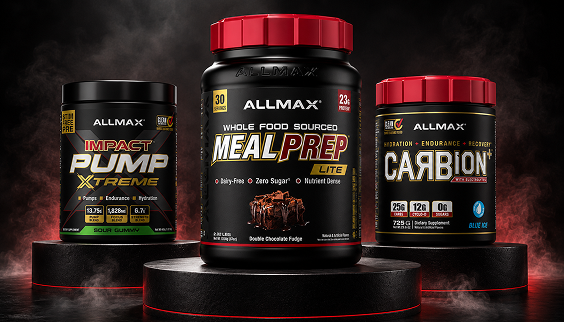
ALLMAX Nutrition offers Impact Pump Xtreme, a stimulant free pre workout designed to deliver pump and performance support without caffeine.
This blog covers what non stim pre workout supplements are, why athletes choose them, which key ingredients to look for (including citrulline and glycerol), and how Impact Pump Xtreme compares to other pre workout options on the market.
What Are Stimulant Free Pre Workout Supplements?
A stimulant free pre workout is a formula that contains zero caffeine and no traditional central nervous system stimulants such as synephrine, yohimbine, DMAA, or other stimulants. Instead of relying on caffeine for a perceived energy boost, these products use performance supporting ingredients like nitric oxide boosters, hydration compounds, buffering agents, and focus-support nootropics to help improve training quality.
The core difference between stim-based and stim free pre workouts comes down to mechanism. Traditional pre-workout formulas typically use caffeine to increase alertness, energy, and perceived readiness for training. Stimulant-free pre-workouts take a different approach by using performance-focused ingredients that support factors such as blood flow, muscular endurance, and exercise capacity without relying on caffeine.
Athletes commonly consume caffeine from dietary sources such as coffee, tea, energy drinks, and supplements, with daily intake varying depending on individual habits and performance goals. Adding another 200+ mg from a pre workout supplement pushes total intake into a range that can cause sleep disruption, elevated resting heart rate, or digestive issues if not taken properly. A caffeine free pre workout lets those athletes keep their caffeine intake where it is while still using a dedicated pre workout powder for performance. Stim free pre workouts can also be stacked with a separate caffeine source for those who want precise control over their daily total.

Why Use a Stim Free Pre Workout?
Athletes across lifting, running, and team sports choose non stim pre workout options for practical reasons: better sleep, reduced caffeine dependence, and the ability to train at any hour without worrying about stimulant timing. The sections below break this down into three specific benefits.
1. Support Workouts Without Caffeine
Caffeine sensitivity varies widely. Genetic differences in the CYP1A2 enzyme can influence how quickly individuals metabolize caffeine, meaning some people may experience sleep disruption even after moderate caffeine intake later in the day. For these individuals, a high-stim pre workout taken before a 7 p.m. session may create a challenge for athletes trying to balance evening training with optimal sleep.
Stimulant-free pre workouts are appealing to users who want the benefits of a pre-workout supplement while avoiding caffeine-related effects such as jitters, restlessness, or sleep disruption, particularly those who are more sensitive to stimulants. Effective stimulant-free alternatives for energy and focus include nutrient dense foods, vitamin and amino acid supplementation, and hydration strategies alongside a properly dosed stim free pre workout. Whole food options like bananas and apples with peanut butter provide sustained energy before training and pairing them with a stim free formula covers both nutrition and performance.
Stim free pre workouts are also the default choice for athletes who want to maintain a caffeine free lifestyle or limit caffeine strictly to morning beverages. You get the pump, hydration, and focus support of a pre-workout supplement while avoiding the additional caffeine found in high-stimulant formulas, making it a suitable option for athletes who train later in the day or prefer to limit stimulant intake.
2. Support Muscle Pumps and Blood Flow
Nitric oxide is a signaling molecule that relaxes the smooth muscle in blood vessel walls, causing vasodilation. When blood vessels widen, blood flow to working muscles may increase, supporting oxygen delivery and exercise performance. This supports oxygen delivery to working muscles and contributes to the noticeable muscle pump that many bodybuilders and strength athletes value during training.
Stim-free pre-workouts may support exercise related blood flow and muscle pumps by including nitric oxide supporting ingredients such as L-citrulline, citrulline malate, and nitrate sources like beetroot, which have been studied for their effects on nitric oxide availability and exercise performance. These ingredients support blood flow through the nitric oxide (NO) pathway, which helps promote vasodilation by relaxing blood vessel walls. Unlike stimulant-based formulas that rely on caffeine to increase alertness and perceived energy, stim-free formulas use performance-focused ingredients that target pathways involved in blood flow and exercise capacity without relying on caffeine.
A muscle pump can be a noticeable part of resistance training, but it should not be presented as evidence of muscle growth. Increased blood flow during resistance exercise contributes to the delivery of oxygen and nutrients to working muscles and is associated with the accumulation of metabolites involved in the exercise response. These effects may contribute to the training experience during higher repetition sets. ALLMAX Impact Pump Xtreme is a stimulant-free pre-workout formulated with L-citrulline, agmatine sulfate, Nitrosigine, and GlycerPump to support exercise-related muscle pumps, blood flow, and hydration without relying on caffeine.
3. Support Training Performance Without Stimulants
Removing caffeine does not mean removing performance support. Stim-free pre-workouts may support endurance and training performance through ingredients that target different performance pathways. Citrulline supports blood flow. Glycerol-based compounds support cellular hydration. Beta alanine buffers acid buildup in muscles during high-intensity efforts lasting 60 to 240 seconds. Taurine contributes to electrolyte balance and neuromuscular function.
Ingredients that support blood flow and hydration may help athletes maintain performance during demanding training sessions. Stim-free pre-workouts may support training quality by improving factors such as blood flow, hydration, and exercise capacity, which are important components of a consistent training routine. Proper hydration helps maintain physical and cognitive performance during activity and may reduce the impact of dehydration-related fatigue. A pre-workout formula that combines hydration focused ingredients with nitric oxide supporting compounds may help support fluid balance, blood flow, and exercise performance.
Athletes who train multiple times per day often prefer a stim free pre for at least one session. A morning lifter might use a high-stim formula at 6 a.m., then switch to a non stim pre workout for evening conditioning. This prevents overstimulation, protects sleep patterns, and still delivers performance-supporting effects for both sessions.
Key Ingredients Found in Stimulant Free Pre Workout Supplements
Citrulline for Nitric Oxide and Pump Support
L citrulline and l citrulline malate are among the most common ingredients in non stim pre workout formulas. Their role centers on the arginine-NO pathway: citrulline is converted into arginine in the kidneys, and arginine is then used by nitric oxide synthase enzymes to generate NO. This process promotes vasodilation and supports nitric oxide production in a way that oral arginine alone does not replicate as effectively, because citrulline bypasses first-pass metabolism in the liver. This means that citrulline is not broken down in the liver before reaching the bloodstream.
Citrulline malate has been studied for its potential to support blood flow, exercise performance, and reduced perceptions of fatigue during high-intensity exercise. Research commonly uses approximately 3–6 g of L-citrulline or 6–8 g of citrulline malate taken about 30–60 minutes before exercise.
ALLMAX Impact Pump Xtreme provides 4 g of citrulline per scoop, which falls within the range used in human performance research. No caffeine is needed to improve blood flow through this pathway.
Glycerol-Based Ingredients for Hydration Support
Glycerol based ingredients, including glycerol powders used in some pre-workout formulas, function as osmotic agents that help increase water retention and support hydration by promoting fluid balance. It draws water into muscle cells and tissues, increasing total body water and contributing to full, dense muscle pumps during training.
Research on glycerol induced hyperhydration has shown that a protocol of 1.2 g glycerol per kg bodyweight with ~26 mL water per kg can increase body water by roughly 1 liter, with fluid retention improving by about 50% compared to water alone. Research suggests glycerol-induced hyperhydration may help support hydration status and cardiovascular function during prolonged exercise, particularly in hot conditions.
Impact Pump Xtreme includes GlycerPump (65% glycerol) as part of its hydration and pump support matrix. Impact Pump Xtreme provides 1 g of GlycerPump® per scoop (2 g per two-scoop serving), alongside other pump- and hydration-focused ingredients.
Focus-Supporting Ingredients Without Caffeine
Mental focus during training can be supported with non-stimulant nootropics instead of caffeine. Some nootropic ingredients may support focus under certain conditions, but results vary by ingredient and individual response. Formulas that combine multiple focus-supporting ingredients may provide broader cognitive support by targeting different pathways.
Common focus supporting ingredients in stim free pre workouts include Alpha-GPC (a choline donor that supports acetylcholine production and cognitive function at doses of 300 to 600 mg), l tyrosine (which supports catecholamine synthesis under stress), and taurine (contributes to neuromuscular function and has been studied for its potential role in exercise performance and fatigue management). Some adaptogenic ingredients have been studied for their potential role in supporting the body’s stress response and perceived fatigue. Ingredients like Rhodiola root extract and Lion’s Mane mushroom extract are included in some formulas designed to support both physical performance and cognitive function.
Impact Pump Xtreme uses Alpha-GPC, L-tyrosine, Rhodiola, Lion’s Mane, and Huperzine-A to provide focus support without adding caffeine. This combination includes ingredients that target different pathways involved in cognitive function and mental performance, making it suitable for training sessions where concentration and focus are important. Betaine anhydrous supports cellular hydration and methylation pathways, adding another non-stimulant performance-supporting ingredient to the formula.
ALLMAX Impact Pump Xtreme: A Stimulant Free Pre Workout Designed for Performance
ALLMAX Impact Pump Xtreme is a stimulant free pre workout designed to deliver muscle pumps, hydration, athletic performance support, and focus without caffeine or other stimulants. The formula targets key areas associated with training performance, including vasodilation, cellular hydration, muscle buffering, and focus support.
Per scoop, Impact Pump Xtreme provides 4 g L-citrulline, 1 g GlycerPump®, 1 g agmatine sulfate, 125 mg Nitrosigine®, 1.6 g beta-alanine, and 1.25 g betaine anhydrous. The formula also includes a hydration blend with magnesium, sodium, potassium, and coconut water to support fluid balance during training. Available in Blue Raspberry, Pineapple Mango, and Sour Gummy, Impact Pump Xtreme mixes easily with cold water 20–30 minutes before training.
Who benefits most from this formula? Evening trainers who want to train harder without the caffeine. Individuals sensitive to caffeine who still want exercise performance support. Athletes who already consume coffee or energy drinks and prefer to keep their pre workout focused on pump and performance ingredients. Anyone looking to separate "energy" from "performance" by managing caffeine independently. Stimulant-free pre-workouts are a popular choice for evening workouts because they provide performance support without adding caffeine that may interfere with sleep for some individuals.
The typical usage is one full scoop mixed in 12 to 16 oz of water, consumed 20 to 30 minutes before training. It can be paired with ALLMAX creatine monohydrate for additional performance support and combined with protein powder as part of a complete training nutrition routine.
Stimulant Free vs Low Stimulant vs High Stimulant Pre Workout
Pre workouts vary by stimulant content, catering to different training times and caffeine tolerance.
Stim free pre workouts like Impact Pump Xtreme contain no caffeine and focus on pumps, blood flow, endurance, and focus support, ideal for evening workouts, caffeine-sensitive users, or those managing stimulant intake. They rely on ingredients such as citrulline, glycerol, beta alanine, and nootropics.
Low stimulant pre workouts like ALLMAX ACuts provide moderate caffeine (127 mg) combined with amino acids and performance-supporting ingredients to deliver clean energy for daytime training sessions without the intensity of higher-stimulant formulas. These formulas offer a balance of energy and focus, making them suitable for athletes who want stimulant support but are sensitive to higher caffeine doses. They may also include ingredients that support muscular endurance, workout performance, and recovery needs, helping athletes maintain training quality during busy schedules.
High-stimulant pre-workouts like ALLMAX Impact Igniter Xtreme provide 186.5 mg of caffeine per scoop, with a two-scoop serving providing 373 mg.These formulas are designed to enhance alertness, perceived energy, and workout intensity, helping athletes push through demanding training sessions. Due to their higher caffeine content, they are generally better avoided later in the day or by individuals who are sensitive to stimulants, as they may experience side effects such as jitters, restlessness, or sleep disruption. Choosing the right stimulant level depends on individual caffeine tolerance, training schedule, and performance goals.
Choose a pre-workout based on your training time, caffeine tolerance, and individual goals.
Who Should Use a Stimulant Free Pre Workout?
The people who benefit most from stimulant-free pre workouts fall into a few distinct groups, each with a practical reason for choosing a formula without caffeine.
Athletes who train at night, after work, or after school are one of the most common groups. A workout starting at 7 or 8 p.m. means caffeine from a high-stimulant pre workout may still be active later in the evening and make it hard to fall asleep. Stimulant-free pre workouts are ideal for evening training sessions where athletes want performance support while minimizing the potential impact of caffeine on sleep quality.
People with higher caffeine sensitivity also often choose non-stim options. Individuals who experience jitters, restlessness, digestive discomfort, or other unwanted reactions from high-stimulant pre workouts may prefer a caffeine-free formula. Athletes who already consume caffeine from coffee or energy drinks may also choose a stimulant-free pre workout to focus on performance ingredients without adding another large caffeine dose.
Bodybuilders and physique athletes often value pump-focused stimulant-free pre workouts during contest preparation, when training schedules may include evening sessions or multiple workouts per day. Ingredients like citrulline and glycerol support nitric oxide production, blood flow, and muscle hydration, aligning with the pump-focused goals of physique training. Many athletes choose stim-free formulas because they want to prioritize training quality and performance support without relying on a stimulant effect.
How to Use a Stimulant Free Pre Workout Effectively
Take Impact Pump Xtreme 20–30 minutes before training by mixing one scoop with 12–16 oz of cold water. New users may start with a smaller serving to assess tolerance, especially because beta-alanine can cause a temporary tingling sensation (paresthesia) that varies between individuals and typically decreases over time. Some ingredients, such as beta-alanine, require consistent daily use over several weeks to reach full effects, while pump-focused ingredients are designed to support performance during individual workouts.
Conclusion: The Benefits of Training With a Stim-Free Pre Workout
Stimulant free pre workouts support muscle pumps, blood flow, endurance, hydration, and focus without adding caffeine. Key ingredients such as L-citrulline, glycerol, beta-alanine, betaine, electrolytes, and focus-supporting ingredients help athletes train effectively without a stimulant rush.
ALLMAX Impact Pump Xtreme offers a pump-focused stim free option ideal for evening workouts and caffeine-sensitive users. For other needs, ALLMAX provides ACuts (low stim, 127 mg caffeine) and Impact Igniter Xtreme (high stim, 300+ mg caffeine), covering all stimulant preferences.
Explore the ALLMAX pre workout lineup to find the formula that fits your training time, caffeine tolerance, and goals—whether early morning or late-night sessions.
Frequently Asked Questions About Stimulant Free Pre Workout Supplements
Does stimulant free pre workout work?
Yes. Performance support comes from ingredients like citrulline, glycerol, beta alanine, and nootropic compounds rather than caffeine. The mechanism is different: instead of stimulating the central nervous system, these ingredients support blood flow, hydration, buffering, and focus. Look for products with transparent labels showing clinically relevant doses, not proprietary blends that could hide underdosed ingredients.
Does stim free pre workout give you energy?
It does not create caffeine stimulation. You will not feel "wired." Instead, better blood flow, improved hydration, and enhanced focus can make sessions feel more productive. A stimulant-free pre-workout does not provide caffeine-driven stimulation. Individual training experiences may vary. Stim-free pre-workouts enhance endurance and improves performance through these mechanisms rather than through CNS activation.
Can you take stimulant free pre workout at night?
Although it contains no caffeine, follow the label directions and avoid taking it within six hours of sleep.
What is the difference between stim free and regular pre workout?
Regular pre workout supplements rely on caffeine (typically 200 to 350 mg) and sometimes other stimulants for acute energy and alertness. Stim free options prioritize pumps, muscle endurance, hydration, and focus support without affecting the central nervous system the same way. The tradeoff is less caffeine-driven stimulation, while avoiding additional caffeine from the pre-workout itself. A pre workout is designed around the user's priorities, and choosing stim free means prioritizing performance variables over stimulant sensation. To delay fatigue and boost strength, the ingredients in a stim free formula do the work without the caffeine.
References:
1: Cleveland Clinic. (2022, September 1). Pre-workout: What does it really do? Cleveland Clinic. https://health.clevelandclinic.org/does-taking-a-pre-workout-actually-work
2: Guest, N. S., VanDusseldorp, T. A., Nelson, M. T., Grgic, J., Schoenfeld, B. J., Jenkins, N. D. M., Arent, S. M., Antonio, J., Stout, J. R., Trexler, E. T., Smith-Ryan, A. E., Goldstein, E. R., Kalman, D. S., & Campbell, B. I. (2021). International society of sports nutrition position stand: Caffeine and exercise performance. Journal of the International Society of Sports Nutrition, 18, 1. https://doi.org/10.1186/s12970-020-00383-4
3: Harty, P. S., Zabriskie, H. A., Erickson, J. L., Molling, P. E., Kerksick, C. M., & Jagim, A. R. (2018). Multi-ingredient pre-workout supplements, safety implications, and performance outcomes: A brief review. Journal of the International Society of Sports Nutrition, 15, 41. https://doi.org/10.1186/s12970-018-0247-6
4: Cornelis, M. C., El-Sohemy, A., Kabagambe, E. K., & Campos, H. (2006). Coffee, CYP1A2 genotype, and risk of myocardial infarction. JAMA, 295(10), 1135–1141. https://doi.org/10.1001/jama.295.10.1135
5: Drake, C. L., Roehrs, T., Shambroom, J. R., & Roth, T. (2013). Caffeine effects on sleep taken 0, 3, or 6 hours before going to bed. Journal of Clinical Sleep Medicine, 9(11), 1195–1200. https://doi.org/10.5664/jcsm.3170
6: Kerksick, C. M., Arent, S., Schoenfeld, B. J., Stout, J. R., Campbell, B., Wilborn, C. D., Taylor, L., Kalman, D., Smith-Ryan, A. E., Kreider, R. B., Willoughby, D., Arciero, P. J., VanDusseldorp, T. A., Ormsbee, M. J., Wildman, R., Greenwood, M., Ziegenfuss, T. N., Aragon, A. A., & Antonio, J. (2017). International society of sports nutrition position stand: Nutrient timing. Journal of the International Society of Sports Nutrition, 14(1), Article 33. https://doi.org/10.1186/s12970-017-0189-4
7: Förstermann, U., & Sessa, W. C. (2012). Nitric oxide synthases: Regulation and function. European Heart Journal, 33(7), 829–837. https://doi.org/10.1093/eurheartj/ehr304
8: Schoenfeld, B. J. (2010). The mechanisms of muscle hypertrophy and their application to resistance training. The Journal of Strength & Conditioning Research, 24(10), 2857–2872. https://doi.org/10.1519/JSC.0b013e3181e840f3
9: Schwedhelm, E., Maas, R., Freese, R., Jung, D., Lukacs, Z., Jambrecina, A., Spickler, W., Schulze, F., & Böger, R. H. (2008). Pharmacokinetic and pharmacodynamic properties of oral L-citrulline and L-arginine: Impact on nitric oxide metabolism. British Journal of Clinical Pharmacology, 65(1), 51–59. https://doi.org/10.1111/j.1365-2125.2007.02990.x
10: van Rosendal, S. P., Osborne, M. A., Fassett, R. G., & Coombes, J. S. (2010). Guidelines for glycerol use in hyperhydration and rehydration associated with exercise. Sports Medicine, 40(2), 113–129. https://doi.org/10.2165/11530760-000000000-00000
11: Trexler, E. T., Smith-Ryan, A. E., Stout, J. R., Hoffman, J. R., Wilborn, C. D., Sale, C., Kreider, R. B., Jäger, R., Earnest, C. P., Bannock, L., Campbell, B., Kalman, D., Ziegenfuss, T. N., & Antonio, J. (2015). International society of sports nutrition position stand: Beta-alanine. Journal of the International Society of Sports Nutrition, 12(1), Article 30. https://doi.org/10.1186/s12970-015-0090-y
12: Schaffer, S. W., Jong, C. J., Kc, R., & Azuma, J. (2010). Physiological roles of taurine in heart and muscle. Journal of Biomedical Science, 17(Suppl. 1), S2. https://doi.org/10.1186/1423-0127-17-S1-S2
13: Cheuvront, S. N., & Kenefick, R. W. (2014). Dehydration: Physiology, assessment, and performance effects. Comprehensive Physiology, 4(1), 257–285. https://doi.org/10.1002/cphy.c130017
14: Baylis, C. (2006). Arginine, arginine analogs and nitric oxide production in chronic kidney disease. Nature Clinical Practice Nephrology, 2(4), 209–220. https://doi.org/10.1038/ncpneph0143
15: Schwedhelm, E., Maas, R., Freese, R., Jung, D., Lukacs, Z., Jambrecina, A., Spickler, W., Schulze, F., & Böger, R. H. (2008). Pharmacokinetic and pharmacodynamic properties of oral L-citrulline and L-arginine: Impact on nitric oxide metabolism. British Journal of Clinical Pharmacology, 65(1), 51–59. https://doi.org/10.1111/j.1365-2125.2007.02990.x
16: National Institutes of Health, Office of Dietary Supplements. (n.d.). Dietary supplements for exercise and athletic performance: Fact sheet for health professionals. https://ods.od.nih.gov/factsheets/ExerciseAndAthleticPerformance-HealthProfessional/
17: Fernstrom, J. D., & Fernstrom, M. H. (2007). Tyrosine, phenylalanine, and catecholamine synthesis and function in the brain. The Journal of Nutrition, 137(6 Suppl), 1539S–1547S. https://doi.org/10.1093/jn/137.6.1539S