

Anna Kasztenny, MSc.
Anna holds a Master’s degree in Bio-Pharmaceutical Science and Business Studies and a Bachelor of Medical Science with an Honors Specialization in Pharmacology. Alongside her academic background, she is a competitive bodybuilder and strength athlete who holds three provincial powerlifting records. As a former competitive gymnast and varsity cheerleader, she is passionate about health, performance, and evidence-based wellness.
Introduction: Why Taurine and Heart Health Are Getting So Much Attention
Taurine is a sulfur-containing amino acid-like compound found in high concentrations throughout the human body, particularly in the heart, brain, retina, and skeletal muscles. Although many people associate taurine with energy drinks, it is not a stimulant. Instead, it functions as a conditionally essential amino acid-like compound involved in cellular osmoregulation, electrolyte balance, calcium handling, bile acid conjugation, and antioxidant defense [1].
So why are researchers paying attention to taurine and heart health? High blood pressure affects nearly half of U.S. adults, and hypertension is diagnosed when blood pressure exceeds 130 mmHg systolic or 80 mmHg diastolic, according to the American Heart Association [2]. Systolic blood pressure (the top number) reflects the force during heartbeats, while diastolic blood pressure (the bottom number) measures pressure between beats. A growing number of human clinical trials suggest that taurine supplementation may modestly support blood pressure and vascular function. However, taurine is not a treatment for hypertension or cardiovascular disease.
Taurine should be viewed as potential nutritional support alongside lifestyle habits and medical care, not as a replacement for blood pressure medications or professional treatment. This article covers the key advantages of taurine for cardiovascular health: mechanisms, research on taurine and blood pressure, potential cardiometabolic health benefits, dosage ranges studied, safety considerations, and who might consider supplementation.
What Is Taurine?
Taurine (2-aminoethanesulfonic acid) is a sulfur-containing amino acid - technically an amino sulfonic acid - that is abundant in the human body but, unlike other amino acids, is not used to build proteins. It acts as a free amino acid involved in cellular volume regulation, neurotransmission in the central nervous system, membrane stability, and electrolyte balance across sodium, potassium, calcium, and magnesium [3].
Taurine is concentrated in tissues with high metabolic or electrical activity: the heart, skeletal muscle, brain, retina, immune cells, and bile [4]. It plays a key role in muscle contraction, immune function, and bile acid conjugation - taurine is essential for conjugating bile acids, which aids in the digestion of fats and the formation of bile salts [5]. It also acts as a neuroprotector by supporting neurotransmitter regulation and reducing oxidative stress in the brain [6].
The body makes taurine in the liver from cysteine and methionine, but human synthesis capacity is limited compared to many animal species. Taurine levels decrease by one-third from age 5 to 60, and higher taurine levels correlate with better health in older adults [7]. Dietary sources include meat, fish, shellfish (scallops, mussels), dark meat poultry, and some dairy. Strict vegans typically have lower taurine levels because plant foods contain negligible amounts [8].
One common misconception: modern taurine in energy drinks and taurine supplements is synthetically produced from amino acid precursors, not extracted from animal organs. And despite its presence in energy drinks, taurine is not a stimulant like caffeine - its roles are more related to cellular balance, nerve signaling, and cardiovascular system support. For a broader look at this compound, see our guide on taurine benefits, dosage, and side effects.

How Does Taurine Support Cardiovascular Function?
Taurine participates in several physiological processes relevant to heart health, blood pressure regulation, and vascular function. Much of what is known comes from mechanistic studies in cells and animals, combined with smaller human trials. It is important to distinguish proposed mechanisms from proven clinical outcomes.
What makes taurine interesting from a cardiovascular perspective is that its potential advantages appear to be "multi-target." Rather than acting through a single pathway, taurine may influence vascular tone, endothelial function, calcium handling in heart muscle, oxidative stress, and cardiometabolic risk markers simultaneously [9]. Taurine acts as a powerful regulator of numerous cellular processes at the cellular level, which gives it broad biological plausibility for cardiovascular effects [10].
Blood Pressure Regulation Mechanisms
Taurine may influence blood pressure by affecting how relaxed or constricted blood vessels are (vascular tone) and by modulating fluid balance [11]. At the cellular level, taurine interacts with electrolyte balance - especially sodium and calcium - and may modulate activity in the renin-angiotensin system and sympathetic nervous system, both of which play central roles in blood pressure regulation.
Two vasodilatory signaling molecules are particularly relevant. Hydrogen sulfide (H₂S) is a gasotransmitter that helps blood vessels relax; research by Sun et al. (2016) found that taurine supplementation upregulated H₂S-producing enzymes and inhibited calcium influx through TRP-C3 channels in resistance arteries [12]. Nitric oxide (NO) is another vasodilator; taurine may help preserve NO availability by reducing oxidative stress [13]. Taurine may decrease blood vessel resistance and improve heart contractions through these combined pathways. These mechanisms provide biological plausibility, but they do not by themselves prove clinical outcomes in humans.
Vascular Endothelial Function
Endothelial function refers to the ability of the inner lining of blood vessels to dilate and constrict appropriately in response to signals. Healthy endothelial function is linked to better long-term cardiovascular outcomes, and its impairment is an early marker of vascular disease.
Human data from the Sun et al. prehypertension trial showed that taurine supplementation (1.6 g/day for 12 weeks) improved both endothelium-dependent and endothelium-independent vasodilation, measured via flow-mediated dilation [12]. Taurine combats oxidative stress by neutralizing free radicals and reducing systemic inflammation, which may partly explain its effects on blood flow and endothelial health. However, improvements in these markers do not prove prevention of heart attacks or strokes - they are surrogate measures, not clinical endpoints.
Calcium Handling and Cardiac Muscle Function
The heart's pumping action depends on precise calcium flux into and out of heart muscle cells. Taurine appears to help stabilize this process by modulating calcium channels and intracellular calcium stores, influencing the strength and rhythm of cardiac contractions [5].
Taurine may improve heart function in heart failure patients, although studies have only been done in small populations and it should only be considered under medical supervision. In some clinical trials, 500 mg of taurine taken thrice daily improved heart function and reduced cholesterol in heart failure patients [14]. The 2024 Tzang et al. meta-analysis reported an increase in left ventricular ejection fraction of approximately 5% in populations with compromised heart function [9]. For healthy individuals, there is not enough evidence to claim that taurine supplementation "improves heart performance," and it should never be used in place of standard heart failure therapies.
Oxidative Stress and Inflammation
Oxidative stress - an imbalance favoring reactive oxygen species over antioxidant defenses - and chronic low-grade inflammation both damage blood vessels over time and contribute to cardiovascular disease. These processes are relevant at the cellular level to understanding why heart health declines with age and metabolic dysfunction.
Taurine can form metabolites such as taurine chloramine in immune cells, which may modulate inflammatory responses. An 8-week randomized trial in 120 people with type 2 diabetes found that taurine supplementation (3 g/day) reduced markers of oxidative stress including malondialdehyde, as well as inflammatory markers like hs-CRP and TNF-α [15]. These findings are encouraging, but they represent changes in surrogate biomarkers - not demonstrated reductions in cardiovascular events.
Cardiometabolic Health and Risk Markers
Cardiometabolic health encompasses the interplay of cardiovascular and metabolic factors - blood pressure, blood lipids, blood glucose, insulin sensitivity, and body composition - that shape long-term heart and vascular risk.
Several randomized trials and meta-analyses have examined taurine's effects on these markers. Taurine supplementation trials have reported modest improvements in fasting blood glucose and triglycerides. Higher taurine levels are associated with lower obesity levels and lower heart disease death rates. Taurine supplementation reduced insulin resistance in mice, and a 2024 meta-analysis of 25 RCTs reported improvements across metabolic syndrome diagnostic components [16]. In animal research, taurine supplementation increased lifespan by 12% in female mice and may suppress age-associated weight gain in mice [7].
These results are promising, but improvements in risk markers do not prove taurine prevents cardiovascular events such as heart attacks, strokes, or heart failure hospitalizations.
What Does the Research Say About Taurine and Blood Pressure?
Clinical trials and meta-analyses suggest that taurine supplementation can produce modest reductions in blood pressure and heart rate, especially in adults with elevated readings. It is not, however, a stand-alone treatment for hypertension.
Here is how the human evidence has developed:
Study |
Design |
Key Blood Pressure Findings |
7 RCTs, ~103 participants |
SBP and DBP both reduced ~3 mmHg; doses 1–6 g/day |
|
12 RCTs, metabolic/liver populations |
SBP −4.67 mmHg; DBP −2.90 mmHg; also reduced total cholesterol and triglycerides |
|
20 RCTs, 808 participants |
SBP −4.0 mmHg; DBP −1.4 mmHg; HR −3.6 bpm; LVEF +5% |
|
25 RCTs, 1,024 participants |
Improvements in SBP, DBP, fasting glucose, triglycerides, HDL-C |
The 2016 randomized controlled trial by Sun et al. is among the most detailed. In 120 adults with prehypertension, 1.6 grams of taurine daily lowered systolic blood pressure by 7.2 mmHg and taurine lowered diastolic blood pressure by 4.7 mmHg over 12 weeks, compared to much smaller changes in the placebo group. Ambulatory blood pressure monitoring confirmed significant reductions of approximately 3.8 mmHg systolic and 3.5 mmHg diastolic, along with improved vascular function. These findings are supportive but not definitive proof that taurine should be used to treat high blood pressure.
Across meta-analyses, the average blood pressure reductions are modest - typically a few mmHg - and responses vary depending on baseline blood pressure, dose (roughly 0.5–6 g/day), and study duration. People with higher baseline readings tend to show greater effects.
Current research suggests taurine supplementation may provide additional benefits under certain circumstances, but more research is needed - particularly large, long-term trials tracking clinical outcomes like stroke and myocardial infarction - before strong conclusions can be drawn.
Can Taurine Be Considered a Blood Pressure Supplement?
Taurine can reasonably be described as a nutritional compound with emerging evidence for supporting healthy blood pressure, but it should not be used as a drug-like blood pressure supplement for treating hypertension. The distinction between "supporting healthy blood pressure" and "treating high blood pressure" matters for both safety and realistic expectations.
Most successful blood pressure management includes diet (such as DASH-style eating with adequate dietary fiber, potassium, and the essential mineral magnesium), regular physical activity, adequate sleep, stress management, weight management, and prescribed blood pressure medications when indicated. Nutritional supplements like taurine - as well as other dietary supplements such as omega-3 fatty acids, vitamin D supplementation, or vitamin C (ascorbic acid) - should be considered adjuncts to, not substitutes for, these strategies. The National Institutes of Health and the American Heart Association consistently emphasize that no single supplement replaces comprehensive lifestyle and medical management [20].
Typical dietary intake may be sufficient for healthy individuals to meet their taurine needs without supplementation. Anyone with high blood pressure or cardiovascular disease should discuss taurine with a healthcare professional before use, especially if taking ACE inhibitors, ARBs, beta-blockers, calcium-channel blockers, diuretics, or other blood pressure medications.
Other Potential Cardiovascular Advantages of Taurine
Beyond blood pressure and vascular function, taurine has been studied for its potential effects on lipid profiles, glucose metabolism, inflammation, and heart function - mostly measured as changes in biomarkers rather than clinical events.
Taurine and Lipid Metabolism (Cholesterol and Triglycerides)
Some randomized trials and meta-analyses have shown that taurine supplementation modestly lowered triglycerides and total cholesterol. The Guan & Miao (2020) pooled analysis found reductions of approximately 13 mg/dL in triglycerides and 11 mg/dL in total cholesterol, though effects on HDL and LDL were less consistent. Lowering elevated triglycerides and non-HDL cholesterol is considered beneficial for heart health because these lipids contribute to atherosclerosis. Taurine should not be viewed as a replacement for statins or other lipid-lowering therapies when medically indicated. For complementary cardiovascular nutrition, omega-3 fatty acids are another well-studied option.
Taurine and Glucose Metabolism
People with diabetes have ~25% lower taurine levels compared to healthy controls, though this association does not prove cause and effect [21]. Taurine is being studied for its role in regulating blood sugar levels and improving insulin sensitivity, and small trials in people with insulin resistance or metabolic syndrome suggest it may modestly improve fasting blood glucose or HbA1c [22]. Higher taurine levels are associated with reduced risk of metabolic dysfunction, and taurine may play a role in diabetes management as an adjunct to standard care. These possible effects on glucose regulation could indirectly support cardiovascular health because chronic hyperglycemia damages blood vessels over time [23]. Taurine is not an approved treatment for diabetes and should not be used to adjust or replace diabetes medications without medical supervision.
Taurine, Inflammation, and Vascular Health
Human studies where taurine was given alongside standard therapy have reported reductions in C-reactive protein, TNF-α, and endothelial dysfunction markers like ICAM-1 and VCAM [15]. These changes may partly explain taurine's observed effects on vascular health and blood pressure. However, biomarker improvements are not equivalent to proven reductions in cardiovascular events - longer-term trials tracking clinical practice outcomes are needed. Similarly, while taurine may help the immune system manage inflammatory responses, it is not a standalone anti-inflammatory therapy.
Taurine and Heart Function in Clinical Populations
Small clinical trials in heart failure patients have reported improvements in ejection fraction, exercise tolerance, and NYHA functional class when taurine was added to standard therapy [14]. Higher taurine levels are linked to lower heart disease death rates in observational research. These results should be clearly separated from data in healthy adults or athletes - the clinical context, potential risks, and overall health needs are very different. Individuals with heart failure, heart or kidney failure, or other serious cardiac conditions should never replace prescribed therapies with taurine; any use should be supervised by a cardiologist or qualified healthcare professional.
How Much Taurine Has Been Studied in Humans?
Human clinical trials have used taurine doses ranging from approximately 500 mg to 6,000 mg (0.5–6 g) per day, with many cardiovascular and cardiometabolic studies clustering between 1.5 and 3 g per day. The prehypertension RCT (Sun et al., 2016) used 1.6 g/day for 12 weeks, while the 2024 meta-analysis included varied doses and durations (often 4–16 weeks). The typical taurine dosage for athletic performance is 1–3 grams before workouts, based on a review that noted taurine benefits athletic performance across 19 studies, however no universally effective performance dose has been established. [24].
No universally accepted "optimal dose" exists. Appropriate intake depends on individual factors (body size, diet, baseline taurine levels), health status, and the outcome being studied. Taurine supplementation is rarely studied in isolation - many trials combine it with dietary changes or other interventions - so isolating its independent contribution requires careful interpretation. Many commercial taurine supplements provide 1–3 g per day, typically divided around meals or taken pre-workout. For a deeper dive into pre-workout ingredients, see our ingredient guide.
Higher intakes or therapeutic dosing for high blood pressure, heart failure, or diabetes should only be considered under medical supervision.
ALLMAX Taurine: A Convenient Pure Taurine Option
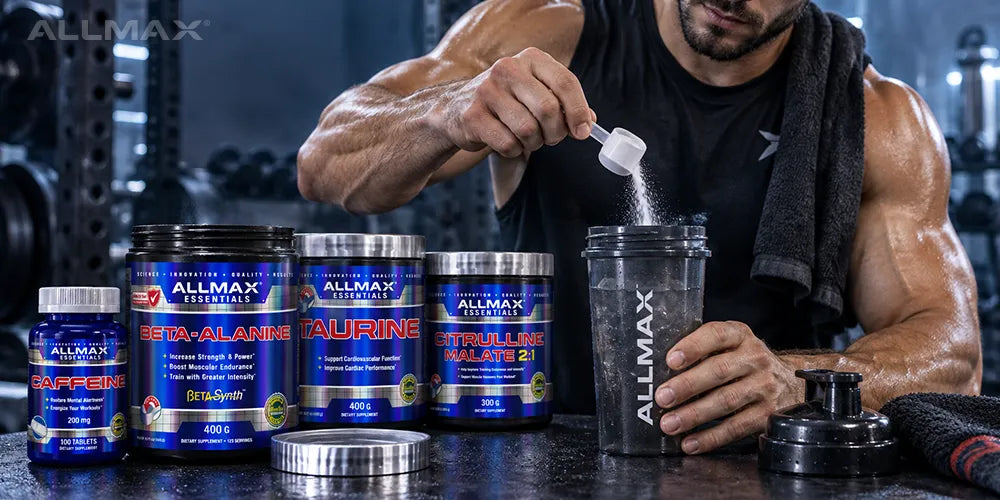
ALLMAX Taurine provides pure taurine powder - 3 g per serving in a 400 g container (approximately 133 servings), unflavored and unsweetened.
The suggested use is to mix 1 scoop (3 g) in 6–8 oz (180–240 mL) of water or juice and drink 30 minutes before workouts, aligning with dosing ranges commonly explored in human research on cardiometabolic health. The powder format allows flexible dosing (you can scoop more or less under professional guidance), mixes easily in water or a pre-workout stack, and contains no caffeine or sugar - unlike many energy drinks containing taurine.
Is Taurine Safe? What We Know So Far
Human trials generally report good tolerability of taurine at doses up to about 3 g/day for several months. The safe daily dosage of taurine is up to 6 grams based on available research, though long-term data beyond one year are limited, and users should seek medical advice before using higher doses or using taurine for a health condition [25].
Commonly reported side effects at higher doses include:
Nausea, vomiting, and stomach pain
Headache
Rarely, sleep disturbances
Most people in studies tolerate taurine well, and serious adverse events are uncommon across published trials.
Regarding potential interactions, taurine acts as a cytochrome P-450 enzyme inhibitor, which means it could theoretically affect how the body can metabolize drugs, although evidence for clinically meaningful interactions. Taurine may not be appropriate for everyone, so people taking prescription medication, including blood-pressure medication, should consult a healthcare professional before use. Unlike some harmful substances that accumulate with chronic use, taurine is water-soluble and excreted by the kidneys, but people with kidney disease, kidney failure, liver disease, or those who are pregnant or breastfeeding should consult their provider before supplementation.
Always consult a healthcare provider before taking taurine supplements, especially if you have high blood pressure, take cardiovascular or blood pressure medications, or manage chronic conditions.
Who Might Consider Taurine Supplementation?
For active adults, strength athletes, and endurance athletes interested in cardiovascular support and recovery, taurine is worth discussing with a healthcare professional. A few groups may have particular reason to consider it:
People with lower taurine levels due to vegan or low-animal-protein diets
Active individuals seeking nutritional support for heart and vascular health alongside a nutrient-dense diet
Adults with cardiometabolic risk factors looking for evidence-informed adjuncts to their care plan (without replacing prescribed treatment)
Taurine enhances physical endurance by reducing lactic acid accumulation and muscle damage, and it supports cellular hydration and energy metabolism to reduce exercise-related muscle fatigue [26]. That said, taurine's effects on exercise performance are small and inconsistent, as noted across the broader literature. Taurine improved muscle endurance and strength in aging mice as well, though animal findings require human confirmation [7].
For related amino acid and creatine supplementation options, explore the full ALLMAX lineup. And for overall health benefits of cardiovascular exercise, see our guide on how much cardio per week you should aim for.
Individuals with diagnosed high blood pressure, heart disease, diabetes, or kidney problems should not self-prescribe taurine and should always involve their healthcare team. Consider taurine as one piece of an overall heart-healthy lifestyle: a nutrient-dense diet, regular physical activity, adequate sleep, stress management, and evidence-based medications when necessary.
FAQs About Taurine and Cardiovascular Health
What are the main advantages of taurine for cardiovascular health?
Taurine's best-supported cardiovascular roles include modest support for blood pressure, vascular function, heart rate, and certain cardiometabolic markers. These potential benefits are based on human clinical trials and multiple meta-analyses, though long-term outcome data are still needed.
Can taurine help lower blood pressure?
Clinical trials show modest average reductions in systolic and diastolic blood pressure, particularly in people with elevated readings. Taurine should not replace blood pressure medications, lifestyle therapy, or medical supervision for lowering blood pressure.
Is taurine good for your heart?
Taurine is naturally concentrated in the heart, participates in calcium handling and antioxidant defenses, and some trials suggest improvements in heart function markers. However, more research is needed to confirm long-term benefits for overall health.
Is taurine a blood pressure supplement?
Taurine is better described as nutritional support for blood pressure and vascular health rather than a stand-alone blood pressure supplement or treatment. It belongs alongside - not in place of - diet, exercise, and medical care.
How much taurine should you take?
Many cardiovascular studies use 1.5–3 g/day, but appropriate intake depends on individual factors. Follow product directions and consult a healthcare professional, especially if managing a health condition.
Is taurine safe to take every day?
Short- to medium-term use up to about 3 g/day appears well tolerated in healthy adults. Long-term safety data beyond several months are limited. People on medications or with medical conditions should seek medical advice. Vitamin D and other dietary supplements should also be discussed with your provider to manage an increased risk of interactions.
Can taurine replace blood pressure medication?
No. Taurine should never be used as a substitute for prescribed drugs or medical supervision. Any changes to medications must be guided by a healthcare professional. The general function of nutritional supplements is to complement, not replace, clinical practice and evidence-based treatment.
The Bottom Line: What Are the Advantages of Taurine for Heart and Vascular Health?
Taurine appears to offer several potential benefits for cardiovascular and cardiometabolic health - especially modest support for blood pressure, vascular function, and heart rate - based on a growing body of human evidence published in journals including the American Journal of Hypertension and Nutrition Journal. Research from 2016 through 2024 suggests beneficial shifts in blood pressure, lipid profiles, glucose regulation, and inflammatory markers, supported by mechanisms involving vascular tone, endothelial function, calcium handling, and oxidative stress modulation.
While results are promising, current evidence does not prove that taurine prevents cardiovascular disease, treats hypertension, or replaces established medical therapies. More research - particularly large, long-term outcome trials - is needed before definitive conclusions can be drawn. Other benefits of taurine, including support for the immune system, general function of bile acid metabolism, and athletic performance, add to its profile as a versatile nutritional compound.
If you are interested in the advantages of taurine, focus first on foundational habits for blood pressure and heart health: a nutrient-rich diet, regular activity, quality sleep, stress management, and smoking cessation. Then consider discussing taurine supplements with your healthcare professional as an adjunct. For those who decide taurine fits their cardiovascular and performance goals, ALLMAX Taurine offers a clean, convenient, and flexible way to add taurine to your daily routine.
References:
Lambert IH, Kristensen DM, Holm JB, Mortensen OH. Physiological role of taurine--from organism to organelle. Acta Physiol (Oxf). 2015 Jan;213(1):191-212. https://pubmed.ncbi.nlm.nih.gov/25142161/
https://newsroom.heart.org/facts/blood-pressure-life-s-essential-8-health-factor
Wu G. Important roles of dietary taurine, creatine, carnosine, anserine and 4-hydroxyproline in human nutrition and health. Amino Acids. 2020 Mar;52(3):329-360. https://pmc.ncbi.nlm.nih.gov/articles/PMC7088015/
Schuller-Levis GB, Park E. Taurine: new implications for an old amino acid. FEMS Microbiol Lett. 2003 Sep 26;226(2):195-202. https://pubmed.ncbi.nlm.nih.gov/14553911/
Schaffer SW, Jong CJ, Ramila KC, Azuma J. Physiological roles of taurine in heart and muscle. J Biomed Sci. 2010 Aug 24;17 Suppl 1(Suppl 1):S2. https://pmc.ncbi.nlm.nih.gov/articles/PMC2994395/
Wu JY, Prentice H. Role of taurine in the central nervous system. J Biomed Sci. 2010 Aug 24;17 Suppl 1(Suppl 1):S1. https://pmc.ncbi.nlm.nih.gov/articles/PMC2994408/
Singh P, et al. Taurine deficiency as a driver of aging. Science. 2023 Jun 9;380(6649):eabn9257. https://pubmed.ncbi.nlm.nih.gov/37289866/
Laidlaw SA, Grosvenor M, Kopple JD. The taurine content of common foodstuffs. JPEN J Parenter Enteral Nutr. 1990 Mar-Apr;14(2):183-8. https://pubmed.ncbi.nlm.nih.gov/2352336/
Tzang CC, Lin WC, Lin LH, Lin TY, Chang KV, Wu WT, Özçakar L. Insights into the cardiovascular benefits of taurine: a systematic review and meta-analysis. Nutr J. 2024 Aug 15;23(1):93. https://pmc.ncbi.nlm.nih.gov/articles/PMC11325608/
Yildiz O, Ulusoy KG. Effects of taurine on vascular tone. Amino Acids. 2022 Dec;54(12):1527-1540. https://pubmed.ncbi.nlm.nih.gov/35986125/
Nie Z, Liu Y, Zhang M, Wu C, Cao Q, Xu J, Zheng Y, Min Z, Zhang W, Han S. Effects of Oral Taurine Supplementation on Cardiometabolic Risk Factors: A Meta-analysis and Systematic Review of Randomized Clinical Trials. Nutr Rev. 2025 Nov 23:nuaf220. https://pubmed.ncbi.nlm.nih.gov/41275513/
Sun Q, Wang B, Li Y, Sun F, Li P, Xia W, Zhou X, Li Q, Wang X, Chen J, Zeng X, Zhao Z, He H, Liu D, Zhu Z. Taurine Supplementation Lowers Blood Pressure and Improves Vascular Function in Prehypertension: Randomized, Double-Blind, Placebo-Controlled Study. Hypertension. 2016 Mar;67(3):541-9. https://pubmed.ncbi.nlm.nih.gov/26781281/
Abebe W, Mozaffari MS. Role of taurine in the vasculature: an overview of experimental and human studies. Am J Cardiovasc Dis. 2011;1(3):293-311. Epub 2011 Sep 10. https://pubmed.ncbi.nlm.nih.gov/22254206/
Beyranvand MR, Khalafi MK, Roshan VD, Choobineh S, Parsa SA, Piranfar MA. Effect of taurine supplementation on exercise capacity of patients with heart failure. J Cardiol. 2011 May;57(3):333-7. https://pubmed.ncbi.nlm.nih.gov/21334852/
Moludi J, Qaisar SA, Kadhim MM, Ahmadi Y, Davari M. Protective and therapeutic effectiveness of taurine supplementation plus low calorie diet on metabolic parameters and endothelial markers in patients with diabetes mellitus: a randomized, clinical trial. Nutr Metab (Lond). 2022 Jul 23;19(1):49. https://pmc.ncbi.nlm.nih.gov/articles/PMC9308194/
Tzang CC, Chi LY, Lin LH, Lin TY, Chang KV, Wu WT, Özçakar L. Taurine reduces the risk for metabolic syndrome: a systematic review and meta-analysis of randomized controlled trials. Nutr Diabetes. 2024 May 16;14(1):29. https://pubmed.ncbi.nlm.nih.gov/38755142/
Waldron M, Patterson SD, Tallent J, Jeffries O. The Effects of Oral Taurine on Resting Blood Pressure in Humans: a Meta-Analysis. Curr Hypertens Rep. 2018 Jul 13;20(9):81. https://pubmed.ncbi.nlm.nih.gov/30006901/
Guan L, Miao P. The effects of taurine supplementation on obesity, blood pressure and lipid profile: A meta-analysis of randomized controlled trials. Eur J Pharmacol. 2020 Oct 15;885:173533. https://pubmed.ncbi.nlm.nih.gov/32871172/
Tzang CC, Lin WC, Lin LH, Lin TY, Chang KV, Wu WT, Özçakar L. Insights into the cardiovascular benefits of taurine: a systematic review and meta-analysis. Nutr J. 2024 Aug 15;23(1):93. https://pubmed.ncbi.nlm.nih.gov/39148075/
https://professional.heart.org/en/science-news/2025-high-blood-pressure-guideline/top-things-to-know
Franconi F, Bennardini F, Mattana A, Miceli M, Ciuti M, Mian M, Gironi A, Anichini R, Seghieri G. Plasma and platelet taurine are reduced in subjects with insulin-dependent diabetes mellitus: effects of taurine supplementation. Am J Clin Nutr. 1995 May;61(5):1115-9. https://pubmed.ncbi.nlm.nih.gov/7733037/
Tao X, Zhang Z, Yang Z, Rao B. The effects of taurine supplementation on diabetes mellitus in humans: A systematic review and meta-analysis. Food Chem (Oxf). 2022 Mar 21;4:100106. https://pubmed.ncbi.nlm.nih.gov/35769396/
Paul S, Ali A, Katare R. Molecular complexities underlying the vascular complications of diabetes mellitus - A comprehensive review. J Diabetes Complications. 2020 Aug;34(8):107613. https://pubmed.ncbi.nlm.nih.gov/32505477/
Kurtz JA, VanDusseldorp TA, Doyle JA, Otis JS. Taurine in sports and exercise. J Int Soc Sports Nutr. 2021 May 26;18(1):39. https://pubmed.ncbi.nlm.nih.gov/34039357/
Shao A, Hathcock JN. Risk assessment for the amino acids taurine, L-glutamine and L-arginine. Regul Toxicol Pharmacol. 2008 Apr;50(3):376-99. https://pubmed.ncbi.nlm.nih.gov/18325648/
Chen Q, Li Z, Pinho RA, Gupta RC, Ugbolue UC, Thirupathi A, Gu Y. The Dose Response of Taurine on Aerobic and Strength Exercises: A Systematic Review. Front Physiol. 2021 Aug 18;12:700352. https://pubmed.ncbi.nlm.nih.gov/34497536/