

Anna Kasztenny, MSc.
Anna holds a Master’s degree in Bio-Pharmaceutical Science and Business Studies and a Bachelor of Medical Science with an Honors Specialization in Pharmacology. Alongside her academic background, she is a competitive bodybuilder and strength athlete who holds three provincial powerlifting records. As a former competitive gymnast and varsity cheerleader, she is passionate about health, performance, and evidence-based wellness.
Caffeine is the world's most widely used central nervous system stimulant, and whether you're sipping a cup of coffee or downing a pre-workout tablet, one question comes up constantly: how long does caffeine take to kick in? The answer depends on several factors, but the science gives us reliable ranges that any athlete or lifter can use to plan smarter training sessions.
ALLMAX Nutrition focuses on evidence-based timing guidance for athletes and lifters using caffeine strategically around training, so let's break down exactly what happens from the moment you consume caffeine to the moment it kicks in.
Quick Answer: How Long Does Caffeine Take to Kick In?
Caffeine commonly begins to have noticeable effects within roughly 15–45 minutes, depending on dose, product format, food intake, and the individual. Peak blood levels often occur within about 30–120 minutes, which is when you'll typically experience the strongest caffeine effects, including increased energy, sharper focus, and reduced perception of fatigue [1].
Here's a simple timeline for a typical 200 mg dose (about one strong cup of coffee or a standard pre-workout serving)[2]:
0–15 minutes: The absorption process begins as caffeine moves through the digestive system into the small intestine. Some people may notice subtle changes in alertness.
15–45 minutes: Noticeable effects emerge. Most people feel increased alertness and reduced fatigue during this window.
30–60 minutes: Peak caffeine level in the blood occurs. This is when caffeine's stimulating effects are generally strongest.
Several hours: Effects gradually decline as the body processes caffeine through the liver. The half life determines how long residual effects linger.
Three concepts matter here. Onset is when caffeine begins producing noticeable effects. Peak is when caffeine levels in the blood and central nervous system are highest. Half life is how long it takes your body to eliminate half the caffeine, which determines how long caffeine stays in your system.
These ranges apply broadly whether your caffeine source is a cup of coffee, an energy drink, or a tablet, but food intake, dose, body weight, and caffeine sensitivity can shift the timing.

What Happens in Your Body After You Take Caffeine?
After you swallow a caffeinated beverage or tablet, the absorption process follows a predictable path. Caffeine passes through the stomach into the small intestine, where most absorption into the bloodstream occurs. From there, it distributes throughout body water and crosses the blood-brain barrier quickly to block adenosine, promoting wakefulness.
To understand how your body processes caffeine, it helps to separate two ideas:
Pharmacokinetics - what the body does to caffeine: absorption, distribution, caffeine metabolism in the liver, and excretion through urine.
Pharmacodynamics - what caffeine does to the body: blocking adenosine receptors, triggering catecholamine release, and altering perceived fatigue.
Research shows that caffeine absorption is 99% complete within 45 minutes in most adults, with peak blood concentration typically occurring around 30–60 minutes depending on dose and physiology [2]. The liver metabolizes caffeine mainly via the CYP1A2 enzyme into paraxanthine, theobromine, and theophylline, metabolites that contribute additional mild effects like smooth muscle relaxation and a subtle diuretic action [3,4].
One important distinction: caffeine does not create energy or restore depleted ATP. It alters neurological signaling that changes how awake or fatigued you feel [5].
How Does Caffeine Work in the Brain and Body?
Caffeine acts on the central nervous system primarily through two pathways: adenosine receptor blockade and catecholamine release. These mechanisms explain why caffeine to kick in can feel like sharper focus, reduced perception of fatigue, and higher readiness for physical activity.
Adenosine Receptor Blockade
Over the course of wakefulness, adenosine accumulates in the brain and binds to A1 and A2A adenosine receptors, promoting sleepiness [6]. Caffeine is structurally similar enough to adenosine to sit on these receptors without activating them, acting as a competitive antagonist.
By blocking adenosine, caffeine can enhance cognitive function and alertness without actually erasing physical tiredness or generating new energy. This blockade improves reaction time, vigilance, and perceived focus, especially during monotonous tasks or when you haven't gotten enough sleep [7].
Variations in adenosine receptor sensitivity (linked to the ADORA2A gene) help explain why some people feel jittery or experience sleep disruption from modest caffeine intake while others barely notice the same amount [8].
Catecholamine Release & Sympathetic Activation
Caffeine also increases sympathetic nervous system activity, influencing catecholamines such as adrenaline (epinephrine) and norepinephrine [9]. This sympathetic activation can raise heart rate, slightly increase blood pressure, and contribute to feelings of heightened arousal.
For exercise, this translates to increased neural drive, improved perceived energy levels and readiness for exercise, and support for fat mobilization during training. Note that fat loss still depends primarily on overall energy balance, i.e. a calorie deficit. Doses of roughly 3–6 mg per kg body weight are typical in performance research [10].
However, more caffeine intake is not always better. Higher doses may produce caffeine induced jitters, anxiety, or an irregular heartbeat in sensitive individuals. Regular caffeine users may develop a tolerance over time, which can blunt some of these catecholamine responses. These effects are reversible as caffeine levels decline.
Does the Type of Caffeine Affect How Fast It Works?
Caffeine is the same molecule whether synthetic (caffeine anhydrous) or plant-derived (coffee, tea, guarana). Differences in how fast caffeine kicks in mostly come from formulation, dose, liquid vs. solid delivery, co-ingredients, and stomach contents, not from the molecule being inherently "stronger" or "weaker."
Three common forms worth understanding: caffeine anhydrous (like ALLMAX Caffeine), natural-source caffeine (like green coffee extract in ALLMAX ACuts), and dicaffeine malate. Timing differences between these are usually modest and individualized rather than dramatic.
Caffeine Anhydrous in Tablets & Pre-Workouts
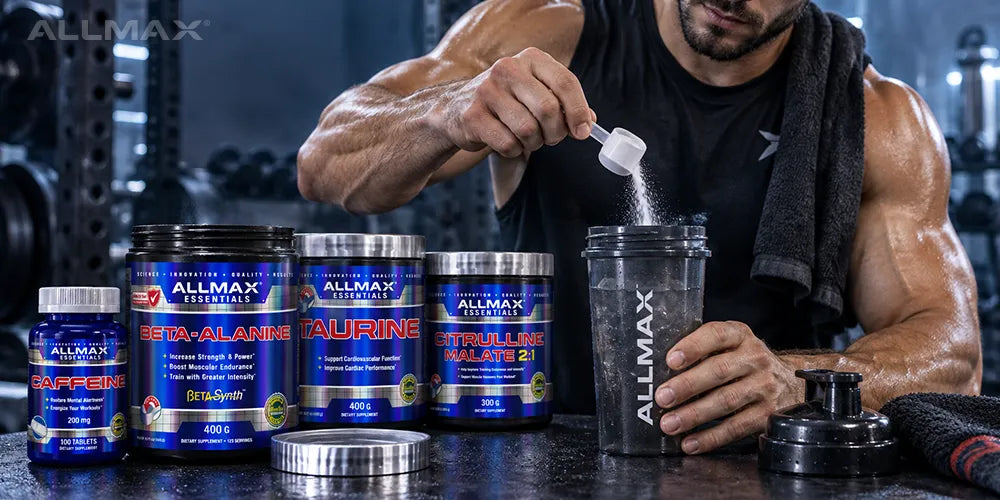
Caffeine anhydrous is dehydrated, purified caffeine commonly used in tablets, capsules, and pre-workout formulas. ALLMAX Caffeine provides 200 mg caffeine anhydrous per tablet, giving athletes a standardized dose to precisely manage total daily caffeine levels.
Because tablets are typically taken with a small amount of water and minimal food matrix, many users perceive a relatively quick onset (within 15–30 minutes), though pharmacokinetic ranges overlap with coffee [11]. Benefits for the fitness audience include predictable dosing, easy tracking, and no need to drink a large volume of liquid. That said, anhydrous is not inherently "faster" in all users; it's often perceived as fast and predictable, especially on an empty or lightly fed stomach.
Natural-Source Caffeine From Coffee, Tea & Green Coffee Extract
Common natural caffeine sources include brewed coffee, black and green tea, yerba mate, green coffee extract, and guarana. The caffeine molecule is identical, but the plant matrix (fibers, polyphenols, fats, L-theanine in tea) and beverage volume can slightly alter absorption rate and subjective feel.
ALLMAX ACuts Amino-Charged Energy delivers 127 mg caffeine per serving from Coffea canephora ingredients, including natural caffeine and green coffee extract, combined with amino acids, taurine, and L-carnitine. It's for gym-goers who want a flavored, low-calorie drink that delivers moderate caffeine plus amino support during cardio or lighter training sessions.
A 2017 double-blind crossover trial comparing 200 mg caffeine from green coffee extract, guayusa, and synthetic caffeine found no statistically significant difference in absorption curves [10]. Liquids like coffee or ACuts typically begin working in the same 15–45 minute window, with peak effects around 30–60 minutes.
Dicaffeine Malate
Dicaffeine malate is a compound where caffeine molecules are associated with malic acid, used in some energy and pre-workout products. Manufacturers market it with claims about gastrointestinal comfort or a "smoother" feel.
However, rigorous human pharmacokinetic data on dicaffeine malate are limited. Current evidence does not conclusively prove a consistently slower onset, longer half life, or dramatically different caffeine effects compared with standard caffeine forms. The total caffeine dose still largely determines onset, peak, and duration. Until high-quality research confirms otherwise, claims about crash prevention or unique absorption curves should be treated cautiously.
Caffeine Onset, Peak & Half-Life: Does Formulation Matter?
Onset and duration ranges overlap significantly across most caffeine products, but formulation can fine-tune how people perceive the curve of effects. Here's a comparison:
Caffeine Form |
Example |
Typical Onset |
Typical Peak |
Approx. Half-Life |
Key Considerations |
|---|---|---|---|---|---|
Caffeine anhydrous |
ALLMAX Caffeine (200 mg tablet) |
~15–30 min |
~30–60 min |
~3–7 hours |
Precise, standardized dose; fast on empty stomach |
Natural-source caffeine |
Coffee, ACuts (green coffee) |
~15–45 min |
~30–60 min |
~3–7 hours |
Beverage volume and food may shift timing slightly |
Dicaffeine malate |
Various pre-workouts |
Likely similar |
Likely similar |
Likely similar |
Limited human PK data; claims not strongly established |
Individual variability in genetics, liver function, age, certain medications, smoking status, and pregnancy usually matters more than whether your caffeine source is synthetic or plant-sourced.
6 Natural Sources of Caffeine
Most dietary caffeine intake worldwide comes from a handful of plants, all delivering the same core molecule in different doses and sensory experiences. Here's how many milligrams you can expect from the most common sources.
Coffee
Brewed coffee is the most common caffeine source. An 8 oz cup can range roughly 80–150 mg depending on bean type, roast level, and brewing method. Espresso shots deliver about 60–80 mg per 1–1.5 oz, while cold brew can exceed 200 mg in larger servings. If you drink coffee regularly, be aware that caffeine content varies significantly between brands, so the same cup from two different cafés may deliver a very different dose.
Tea
Black, green tea, and white tea are moderate sources, generally delivering 20–60 mg per 8 oz cup. Tea also contains L-theanine and polyphenols, which may subtly shape the subjective experience. Some people describe tea as producing a "calmer" alertness. It's a solid option for caffeine-sensitive individuals wanting a milder, longer-sipping source.
Guarana
Guarana seeds from the Amazon are naturally rich in caffeine and are often used in energy drinks and capsule supplements. Extracts can deliver 40–100+ mg per serving depending on standardization [12]. For labeling and safety, guarana caffeine should count toward total caffeine daily intake just like coffee or tablets.
Yerba Mate
Yerba mate is a traditional South American infusion providing roughly 30–80 mg caffeine per 8 oz. It also contains other xanthines and polyphenols [13]. Its growing popularity among fitness enthusiasts makes it a viable alternative to coffee for those who want a change of flavor.
Cacao
Cacao and dark chocolate contain modest caffeine amounts, roughly 15–40 mg per 1.5 oz of high-cacao chocolate, plus theobromine, a milder methylxanthine with more cardiovascular than central nervous system action [14]. For very caffeine-sensitive people, even dark chocolate at night can be enough to impact sleep quality.
Kola Nut
Kola nut is a traditional West African plant source of caffeine historically used in cola beverages. Extracts vary widely in caffeine content and are less common as standalone supplements today. Consider it a legacy botanical source rather than a primary everyday option.
Why Does Caffeine Affect People So Differently?
Two people can drink the same cup of coffee and have vastly different experiences. The FDA notes that caffeine sensitivity varies considerably between individuals. Individual factors like metabolism and body weight influence caffeine effects, along with genetics, age, liver health, hormonal status, habitual caffeine consumption, and personal factors like sleep debt and overall health.
Understanding your personal response helps you time caffeine intake more effectively for workouts, study, and daily energy levels.
Fast vs. Slow Caffeine Metabolizers (CYP1A2)
CYP1A2 is the main liver enzyme responsible for breaking down caffeine. Genetic variations create "fast" versus "slow" caffeine metabolizers, influencing how long caffeine depends on your liver to clear [15].
Fast metabolizers clear caffeine more quickly than slow metabolizers but tend to, meaning shorter duration of stimulation and potentially less sleep disruption from an afternoon dose. Slow metabolizers may feel a given dose for longer, and may need to avoid consuming caffeine earlier in the day [16]. Body weight also influences caffeine's effects on individuals, as body mass affects distribution and concentration.
CYP1A2 isn't the only determinant. Smoking can speed caffeine metabolism, while liver conditions and certain medications can slow it. People with slower metabolisms of caffeine should be especially cautious with evening dosing.
Adenosine Receptor Sensitivity (ADORA2A)
ADORA2A encodes the adenosine A2A receptor, one of caffeine's main targets. Some ADORA2A variants are associated with stronger subjective responses, including anxiety, sleep disruption, or jitteriness from modest doses [17]. This explains why some people struggle with a single afternoon espresso while others handle higher evening intake without sleep issues.
Caffeine sensitivity varies due to genetic differences, but genetics are probabilistic, not destiny. Personal experimentation remains critical for setting individual caffeine intake limits.
Why Does Caffeine Sometimes Feel Like It Works Immediately?
Many people report feeling caffeine "instantly," but actual absorption takes minutes. The ritual of making coffee or mixing a pre-workout can trigger a conditioned alertness response before caffeine levels truly rise, a well-documented expectancy and placebo effect.
Several factors make onset feel faster: a large single dose, high caffeine sensitivity, consuming caffeine on an empty stomach (which allows faster absorption through the digestive system), and simply being very fatigued before dosing. Improved mood from knowing "help is on the way" can also be misinterpreted as immediate pharmacological action.
Physiologically, caffeine still follows the same absorption process regardless of how quickly it feels like it works.
Does Taking Caffeine With Food Change How Fast It Works?
Food intake slows gastric emptying, which can delay caffeine absorption. Caffeine absorbs faster on an empty stomach, often making effects noticeable closer to 15 minutes. Drinking caffeine on an empty stomach speeds up absorption, but it can also mean more pronounced jitters or stomach discomfort for some people.
Food can delay caffeine absorption and peak effects, particularly high-fat or high-fiber meals. However, food tends to change the rate of absorption more than the total amount absorbed. Overall caffeine exposure is usually similar; it's just spread over more time. For pre-workout timing, taking caffeine with a large meal may require a longer lead time. A light snack is often the practical middle ground.
If you tend to feel jittery when you take too much caffeine on an empty stomach, a small snack before your dose may smooth things out. Regardless, drink water alongside caffeine to support hydration during training.
How Long Does Caffeine Stay in Your System?
The half life of caffeine is the time it takes for blood caffeine levels to drop by about 50%, or to eliminate half of the dose. Caffeine has a half-life of 4 to 9 hours in healthy adults, with most research centering around 5 hours as a common average [2].
Here's a concrete example: after a 200 mg dose, about 100 mg may remain after one half-life (~5 hours), 50 mg after two half-lives (~10 hours), and so on. Caffeine can remain active in the system long after initial effects fade; clearance varies substantially by individual.
Caffeine effects last about 4 to 6 hours for most people, though caffeine effects can last up to 12 hours for some individuals. The exact duration depends on metabolism and dose. Pregnancy can alter caffeine metabolism and sensitivity, sometimes extending the half life to 15+ hours. Late-afternoon doses can still affect your ability to fall asleep even if you no longer feel noticeably energized. This connection between caffeine and sleep quality is critical for anyone prioritizing recovery.
When Is the Best Time to Take Caffeine Before a Workout?
Most lifters and athletes do best taking caffeine roughly 30–60 minutes before training to coincide with the window when caffeine typically peaks in the bloodstream within 30–60 minutes. Since caffeine levels peak around this window, your physical activity aligns with maximum stimulation.
Ideal timing varies by caffeine form, stomach contents, and individual metabolism. Experiment during training, not on competition day. Common pre-workout caffeine intake ranges in research are roughly 3–6 mg per kg body weight, but start conservatively and follow the product label. Caffeine tolerance varies considerably, and people who are sensitive to caffeine may need a lower-dose option or may choose to avoid it.
Stacking multiple caffeine sources (coffee, energy drinks, a pre-workout) can easily push daily intake over 400 mg, increasing risk of side effects including jitters, elevated blood pressure, and other symptoms like high blood pressure or GI discomfort. If you train in the evening, consider lower caffeine doses to protect sleep. Many people benefit from avoiding caffeine for at least several hours before bedtime; the appropriate cutoff depends on personal sensitivity, dose, and sleep schedule.
Both caffeine tablets and ACuts can be timed pre-workout, with dosage adjusted based on body weight, sensitivity, and how much caffeine you've already consumed that day.
ALLMAX Caffeine vs. ACuts: Which Option Fits Your Routine?
Both products serve different situations. Think of them as complementary tools rather than competitors on your supplement shelf.
ALLMAX Caffeine: Precise, High-Potency Tablets
ALLMAX Caffeine delivers a 200 mg caffeine anhydrous per tablet for precise dosing. It's ideal for users who want to track exact caffeine intake, whether for a heavy lifting session, study block, or shift work. Take 1 tablet every 3–4 hours, up to a maximum of 1,000 mg (5 tablets) in 24 hours. No sugar, no flavoring, and ultra-portable.
Note: Caffeine is not advisable in cases of high blood pressure or pregnancy, is not a substitute for sleep, and is not for people under 18.
ALLMAX ACuts: Amino-Charged Natural Caffeine Drink
ACuts delivers 127 mg natural-source caffeine from green coffee extract per serving alongside 2 g taurine, 500 mg L-carnitine L-tartrate (providing 335 mg L-carnitine), and 725 mg BCAAs in a zero-sugar, 10 calorie formula. It's a great option for fasted cardio, lighter training sessions, or daytime increased energy when you want moderate stimulation plus amino support. Time 1 scoop (7 g) with 180–240 mL of water 2–4 hours before exercise, and monitor total caffeine daily if combining with other sources.
Note: ACuts is for adult, occasional use only. Do not combine with other caffeine-containing products or products that increase blood pressure, and consult a healthcare professional before use if you have medical conditions, including high blood pressure, glaucoma, seizure disorder, or overactive bladder.
Frequently Asked Questions About Caffeine Timing & Effects
How long does caffeine take to kick in?
Caffeine usually starts to work within 15–45 minutes after a typical dose. Most people feel noticeable effects in that window after a cup of coffee or 100–200 mg supplement dose. Whether caffeine begins affecting you closer to 15 or 45 minutes depends on dose, empty stomach status, and caffeine sensitivity.
Does caffeine work faster on an empty stomach?
Yes, generally. Less food means faster gastric emptying and quicker absorption, often making effects noticeable in 15–30 minutes. The downside: you may feel jittery or experience stomach discomfort without food.
What type of caffeine works fastest?
No form is universally fastest. Liquids (coffee, energy drinks, ACuts) and tablets (ALLMAX Caffeine) all typically fall within a similar 15–45 minute onset window. Formulation, dose, and individual physiology matter far more than whether caffeine is labeled "natural" or "synthetic."
Is natural caffeine better than synthetic caffeine?
Natural and synthetic caffeine are chemically the same molecule and caffeine acts on the same receptors regardless of origin. "Better" depends on your goals: some prefer natural-source options, others prefer precise synthetic doses. Neither is inherently safer or more effective at the same amount of caffeine.
Does caffeine anhydrous kick in faster than coffee?
ALLMAX Caffeine tablets and a cup of coffee have overlapping onset ranges. Some users perceive tablets as more predictable due to known dosing and smaller fluid volume, enabling faster absorption. But actual absorption windows are broadly similar.
How long does caffeine stay in your system?
Caffeine's half life averages around 3–7 hours, so how long caffeine takes to fully clear can be 12–24 hours. Disappearance of the "buzz" does not mean caffeine is fully gone; residual caffeine levels may still affect sleep or subtle alertness.
How long does caffeine last?
The stimulating effects of caffeine often last about 3–6 hours depending on dose, tolerance, and metabolism. Many people cap their caffeine intake by early afternoon to protect nighttime sleep quality.
What is the half-life of caffeine?
The typical adult range is roughly 3–7 hours, with research documenting broader ranges (about 1.5–9.5 hours) across individuals. Pregnancy, liver conditions, certain medications, and smoking status can significantly shift this number.
How long before a workout should you take caffeine?
Aim for roughly 30–60 minutes pre-workout with most oral caffeine products to line up with peak levels. Test timing and dose during training sessions before any important competition.
Does caffeine affect everyone the same way?
No. Responses vary widely due to genetics, lifestyle, body mass, health status, and habitual caffeine consumption. This variation covers onset speed, intensity of the same effects, and how long caffeine impacts sleep and mood.
Why does caffeine make some people tired?
Possible causes include adenosine rebound after caffeine wears off, sleep debt that caffeine only masks temporarily, blood sugar swings from sugary drinks, and dehydration. If you routinely feel sleepy after caffeine, review your overall sleep, diet, hydration, and total caffeine daily intake.
Can genetics affect caffeine sensitivity?
Yes. Both CYP1A2 (metabolism speed) and ADORA2A (receptor sensitivity) gene variants contribute to how strongly and how long caffeine affects an individual. But genes are one part of the picture; environment, habits, and other personal factors matter too.
Does caffeine affect sleep?
Even moderate caffeine consumption can delay sleep onset, reduce total sleep time, and alter sleep architecture if taken too close to bedtime. A general guideline: avoid consuming caffeine at least 6–8 hours before planned bedtime. Slow metabolizers may need even more conservative cutoffs. For anyone focused on recovery and muscle growth, treating sleep and caffeine timing as critical parts of a performance plan is essential.
References:
Cappelletti S, Piacentino D, Sani G, Aromatario M. Caffeine: cognitive and physical performance enhancer or psychoactive drug? Curr Neuropharmacol. 2015 Jan;13(1):71-88. https://pubmed.ncbi.nlm.nih.gov/26074744/
Institute of Medicine (US) Committee on Military Nutrition Research. Caffeine for the Sustainment of Mental Task Performance: Formulations for Military Operations. Washington (DC): National Academies Press (US); 2001. 2, Pharmacology of Caffeine. Available from: https://ncbi.nlm.nih.gov/books/NBK223808/
Willson C. The clinical toxicology of caffeine: A review and case study. Toxicol Rep. 2018 Nov 3;5:1140-1152. https://pubmed.ncbi.nlm.nih.gov/30505695/
Guest NS, VanDusseldorp TA, Nelson MT, Grgic J, Schoenfeld BJ, Jenkins NDM, Arent SM, Antonio J, Stout JR, Trexler ET, Smith-Ryan AE, Goldstein ER, Kalman DS, Campbell BI. International society of sports nutrition position stand: caffeine and exercise performance. J Int Soc Sports Nutr. 2021 Jan 2;18(1):1. https://pubmed.ncbi.nlm.nih.gov/33388079/
Leng J, Yu J, Li Z, Zhang Y, Cui J. Caffeine and human performance: from molecular mechanisms to exercise and recovery. Front Physiol. 2026 Jul 9;17:1871149. https://pubmed.ncbi.nlm.nih.gov/42495705/
Reichert CF, Deboer T, Landolt HP. Adenosine, caffeine, and sleep-wake regulation: state of the science and perspectives. J Sleep Res. 2022 Aug;31(4):e13597. https://pubmed.ncbi.nlm.nih.gov/35575450/
Irwin C, Khalesi S, Desbrow B, McCartney D. Effects of acute caffeine consumption following sleep loss on cognitive, physical, occupational and driving performance: A systematic review and meta-analysis. Neurosci Biobehav Rev. 2020 Jan;108:877-888. https://pubmed.ncbi.nlm.nih.gov/31837359/
Fulton JL, Dinas PC, Carrillo AE, Edsall JR, Ryan EJ, Ryan EJ. Impact of Genetic Variability on Physiological Responses to Caffeine in Humans: A Systematic Review. Nutrients. 2018 Sep 25;10(10):1373. https://pubmed.ncbi.nlm.nih.gov/30257492/
Robertson D, Wade D, Workman R, Woosley RL, Oates JA. Tolerance to the humoral and hemodynamic effects of caffeine in man. J Clin Invest. 1981 Apr;67(4):1111-7. https://pubmed.ncbi.nlm.nih.gov/7009653/
Krieger DR, Kalman DS, Feldman S, Arnillas L, Goldberg D, Gisbert O, Nader S. The Safety, Pharmacokinetics, and Nervous System Effects of Two Natural Sources of Caffeine in Healthy Adult Males. Clin Transl Sci. 2016 Oct;9(5):246-251. https://pmc.ncbi.nlm.nih.gov/articles/PMC5350996/
Liguori A, Hughes JR, Grass JA. Absorption and subjective effects of caffeine from coffee, cola and capsules. Pharmacol Biochem Behav. 1997 Nov;58(3):721-6. https://pubmed.ncbi.nlm.nih.gov/9329065/
Schimpl FC, da Silva JF, Gonçalves JF, Mazzafera P. Guarana: revisiting a highly caffeinated plant from the Amazon. J Ethnopharmacol. 2013 Oct 28;150(1):14-31. https://pubmed.ncbi.nlm.nih.gov/23981847/
Gawron-Gzella A, Chanaj-Kaczmarek J, Cielecka-Piontek J. Yerba Mate-A Long but Current History. Nutrients. 2021 Oct 21;13(11):3706. https://pmc.ncbi.nlm.nih.gov/articles/PMC8622869/
Franco R, Oñatibia-Astibia A, Martínez-Pinilla E. Health benefits of methylxanthines in cacao and chocolate. Nutrients. 2013 Oct 18;5(10):4159-73. https://pmc.ncbi.nlm.nih.gov/articles/PMC3820066/
Yang A, Palmer AA, de Wit H. Genetics of caffeine consumption and responses to caffeine. Psychopharmacology (Berl). 2010 Aug;211(3):245-57. https://pmc.ncbi.nlm.nih.gov/articles/PMC4242593/
Levy M, Zylber-Katz E. Caffeine metabolism and coffee-attributed sleep disturbances. Clin Pharmacol Ther. 1983 Jun;33(6):770-5. https://pubmed.ncbi.nlm.nih.gov/6851408/
Landolt HP. "No thanks, coffee keeps me awake": individual caffeine sensitivity depends on ADORA2A genotype. Sleep. 2012 Jul 1;35(7):899-900. https://pmc.ncbi.nlm.nih.gov/articles/PMC3368971/