

Author: Dr. Trevor Kouritzin
Dr. Trevor Kouritzin holds a Doctorate in Medicine, a Master’s degree in Human Nutrition, and a Bachelor’s degree in Chemical Engineering. During his academic career, Trevor actively pursued competitive bodybuilding, ultimately earning a pro card, while also participating in various team sports. He is deeply passionate about the clinical and therapeutic applications of dietary supplements for enhancing health, performance, and overall quality of life.
If you want to build stronger, more defined arms without spending hours at the gym, an arm workout for women can be a simple addition to your fitness routine. You can train your biceps, triceps, shoulders, and upper body with dumbbells, resistance bands, or bodyweight exercises.
An at home workout can make strength training easier to fit into a busy schedule. You don't need a full home gym to get started. With enough space to move comfortably and a pair of dumbbells or resistance bands, you can create an effective arm workout at home.
In this guide, you'll find eight effective arm exercises for women, including exercises for the biceps, triceps, shoulders, and upper body. You'll also learn how to build an arm workout at home, how often to train your arms, how to exercise without weights, and how to progress as you get stronger.
What Muscles Does an Arm Workout for Women Target?
An effective arm workout for women can target more than just the biceps. Training the major muscles of the upper body can help create a balanced resistance-training routine.
The main muscles targeted during arm exercises include:
Biceps: Located at the front of the upper arm, the biceps help bend the elbow and contribute to pulling movements.
Triceps: Located at the back of the upper arm, the triceps help extend the elbow.
Shoulders: The deltoid muscles contribute to lifting and pressing movements.
Forearms: The muscles of the forearms contribute to grip strength and wrist movement.
Combining isolation exercises, such as bicep curls and lateral raises, with compound exercises, such as pushups and rows, allows you to train multiple upper-body muscles during the same workout.

8 Best Arm Exercises for Women at Home
The following exercises can be combined to create an effective arm workout at home. Some exercises require dumbbells or another form of resistance, while others use body weight alone.
1. Side Lateral Raises
Muscles worked: Shoulders
Side lateral raises are a simple shoulder exercise to include in an arm workout for women. They primarily target the lateral deltoids and can be performed with a pair of light dumbbells.
How to do side lateral raises:
Stand with your feet approximately hip-width apart.
Hold a dumbbell in each hand with your arms at your sides.
Keep a slight bend in your elbows.
Raise your arms out to the sides until they reach approximately shoulder height.
Pause briefly at the top.
Slowly lower the weights back to your sides.
Form tips:
Avoid swinging the weights.
Keep your shoulders relaxed and away from your ears.
Choose a weight that feels challenging while allowing you to maintain control.
2. Bicep Curls
Muscles worked: Biceps
Bicep curls are one of the most common arm exercises for women and require minimal equipment. They directly target the muscles at the front of the upper arms.
How to do bicep curls:
Stand tall with your feet hip-width apart and hold a dumbbell in each hand.
Start with your palms facing forward and keep your elbows close to your sides.
Curl the weights toward your shoulders.
Pause briefly at the top.
Slowly lower the weights to the starting position.
Form tips:
Keep your elbows stationary.
Avoid using momentum to lift the weights.
Control the lowering portion of each repetition.
3. Bicep Curl to Shoulder Press
Muscles worked: Biceps and shoulders
The bicep curl to shoulder press combines two upper-body movements into one exercise, making it a convenient addition to an at home workout.
How to do a bicep curl to shoulder press:
Stand with a dumbbell in each hand and your arms at your sides.
Curl both dumbbells toward your shoulders.
From the curl position, press the weights overhead.
Lower the weights back to shoulder height.
Slowly return your arms to the starting position.
Keep your core engaged and use controlled movements throughout the exercise.
4. Close-Grip Pushups
Muscles worked: Triceps, chest, and shoulders
Close-grip pushups are a useful bodyweight exercise for an arm workout at home without weights. A narrower hand position emphasizes the triceps while also working the chest and shoulders.
How to do close-grip pushups:
Start in a high-plank position with your hands positioned relatively close together.
Keep your body in a straight line from your head to your heels.
Brace your core.
Bend your elbows and lower your chest toward the floor.
Keep your elbows relatively close to your sides.
Press through your hands to return to the starting position.
Beginner modification: Perform the movement from your knees or place your hands on a stable elevated surface.
5. Renegade Rows
Muscles worked: Back, biceps, shoulders, and core
Renegade rows combine a rowing movement, similar to a bent over row pattern performed from a plank, with a plank position, making them a challenging addition to a full at home workout. They train several upper-body muscles while also challenging your core stability. Rows train the back, biceps, and muscles that support pulling movements.
How to do renegade rows:
Start in a high-plank position with a dumbbell in each hand.
Brace your core and keep your hips as stable as possible.
Pull one dumbbell toward your hip.
Lower the dumbbell with control.
Repeat the movement with the opposite arm.
If you're new to renegade rows, start with lighter weights and focus on maintaining a stable plank position.
6. Triceps Dips
Muscles worked: Triceps
A triceps dip can be performed using a sturdy bench, chair, or other stable elevated surface. They are a useful addition to an arm workout for women because they directly train the triceps. Skip this exercise or choose another triceps movement if it causes shoulder discomfort.
How to do triceps dips:
Sit on the edge of a sturdy, stable surface.
Place your hands beside your hips with your fingers facing forward.
Move your hips forward while supporting your weight with your hands.
Bend your elbows to lower your body.
Press through your hands to return to the starting position.
Safety tip: Make sure the surface is stable and secure before performing the exercise.
7. Shoulder Press
Muscles worked: Shoulders and triceps
The shoulder press is an effective upper-body exercise that can be incorporated into an arm workout for women at home. It primarily trains the shoulders while also involving the triceps, making it one of the routine’s compound movements.
How to do a shoulder press:
Hold a dumbbell in each hand at shoulder height.
Brace your core and maintain an upright posture.
Press the weights overhead.
Pause briefly at the top.
Slowly lower the weights back to shoulder height.
Choose a resistance level that allows you to maintain proper form throughout the exercise.
8. Pushup to Shoulder Tap
Muscles worked: Chest, shoulders, triceps, and core
The pushup to shoulder tap combines a pushup with a shoulder-tap movement. It can add an extra challenge to a bodyweight at home workout while training several upper-body muscles.
How to do pushups to shoulder taps:
Start in a high-plank position.
Brace your core and keep your body stable.
Perform one pushup.
At the top of the movement, lift one hand and tap the opposite shoulder.
Return your hand to the floor.
Repeat on the opposite side.
Beginner modification: Perform the pushup portion from your knees while maintaining a stable position during the shoulder taps.
How to Build an Arm Workout for Women at Home
You don't need to perform all eight exercises during every workout. Instead, choose several exercises that target different upper-body muscles and movement patterns. Adjust the number of sets, repetitions, and resistance based on your fitness level.
Beginner Arm Workout
Try the following routine:
Bicep curls: 10–12 repetitions
Side lateral raises: 10–12 repetitions
Close-grip pushups: 6–10 repetitions
Triceps dips: 8–12 repetitions
Complete 2–3 rounds, resting as needed between exercises.
If you're new to resistance training, start with lighter resistance and focus on learning proper exercise technique.
Intermediate Arm Workout
For a more challenging routine, try:
Bicep curls: 10–15 repetitions
Bicep curl to shoulder press: 8–12 repetitions
Renegade rows: 8–10 repetitions per side
Close-grip pushups: 8–12 repetitions
Shoulder presses: 10–12 repetitions
Complete approximately 3 rounds, adjusting the number of repetitions and resistance to match your fitness level.
Can You Do an Arm Workout at Home Without Weights?
Yes. Several effective arm exercises for women can be performed without traditional weights.
Bodyweight exercises such as close-grip pushups, modified pushups, and shoulder taps can be incorporated into an at home workout with little or no equipment.
However, dumbbells and resistance bands can make it easier to progressively increase resistance as you become stronger. If you're training without weights, you can increase the challenge by performing more repetitions, adding sets, slowing the movement, or progressing to a more difficult exercise variation.
How Often Should Women Do an Arm Workout?
Most people can train their arms 2–3 times per week, depending on total training volume, intensity, and recovery. Leave adequate recovery between sessions that train the same muscles.
For most people, training the major upper-body muscle groups at least twice per week can be an effective starting point. Adjust frequency based on your experience, total training volume, and recovery.
How to Get More From Your At Home Workout
Focus on Progressive Overload
As your strength improves, gradually increase the resistance, repetitions, sets, or exercise difficulty. This gradual increase in training demand is known as progressive overload and is essential for building muscle and achieving toned arms. Progressive overload ensures that your muscles are continually challenged, which promotes muscle growth and strength gains. Remember to increase the weight or intensity slowly to avoid injury and allow your body to adapt effectively. Additionally, focusing on proper form and controlled movements during each exercise will maximize results and reduce the risk of strain or injury.
Incorporating progressive overload into your arm workout for women is key to targeting the main muscle groups such as the biceps brachii, triceps, and shoulders. Whether you are performing bicep curls with your arms resting by your sides or doing a military press with weights straight overhead, gradually increasing the challenge helps stimulate muscle growth. Keep your knees slightly bent and maintain a stable stance with feet shoulder width apart to support proper posture and balance during exercises. This approach can help build upper-body strength and support muscle development over time.
Your muscles adapt to training over time. As an exercise becomes easier, gradually increase the resistance, repetitions, sets, or difficulty to continue challenging yourself.
For example, you might start with a lighter pair of dumbbells and gradually move to heavier weights as you become stronger, provided you can maintain proper form while lifting weights. If you can complete all sets easily with solid form, increase the weight or make the exercise more challenging. Choose a resistance level that feels challenging while allowing controlled, pain-free repetitions with good form.
Prioritize Proper Form
Good exercise technique helps you maintain control throughout each movement, train the intended muscles effectively, and lower injury risk during upper-body training. Avoid using excessive momentum simply to lift a heavier weight, since upper body strength and proper preparation help reduce the chance of getting hurt during physical activities.
If you're unsure about your technique, consider working with a certified personal trainer who can help you learn proper form.
Train Your Whole Upper Body
Don’t focus exclusively on your biceps. Include exercises for your triceps, shoulders, chest, and back to make upper body training more balanced in your upper-body workout for women.
Training multiple muscle groups can also add variety to your routine, help build upper body strength, and support improved posture while contributing to full body benefits like better functional strength.
Choose the Right Resistance
The appropriate resistance depends on your fitness level, the exercise you're performing, and which upper-body and arm muscles you're training. Start with a manageable weight and increase resistance gradually as your strength improves.
Your final repetitions should feel challenging, but still controlled enough to maintain proper technique.
Stay Consistent
Consistency is an important part of any fitness routine. Think of it as part of your broader fitness journey, especially if you're starting an arm toning journey. A manageable at home workout that you can perform regularly may be easier to maintain than an overly complicated program.
Build a routine that fits your schedule and gradually increase the challenge as your fitness level improves.
Support Your Training With Proper Nutrition
Resistance training works alongside proper nutrition and recovery to support your training goals. Resistance training can support muscle strength, physical function, and overall training goals when paired with sufficient nutrition and recovery. Adequate protein, carbohydrates, fats, and overall calorie intake can help provide the nutrients and energy your body needs.
Supplements may be a convenient addition to a balanced diet, but they should complement and not replace a nutritious diet and consistent training routine.
Supplements to Support Your Workout Routine
A consistent resistance-training routine is the foundation for building strength and supporting muscle development. Alongside a balanced diet, some people may choose supplements as a convenient way to support their training and nutrition goals.
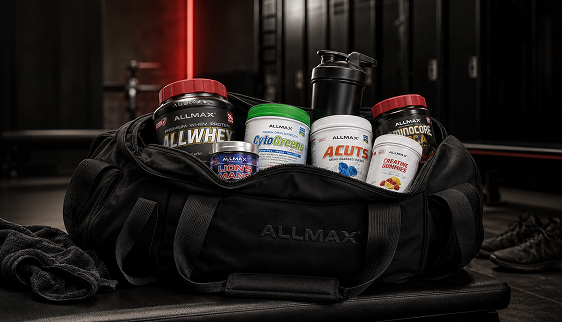
Creatine is one of the most researched sports supplements and supports the body's ability to produce ATP, which provides energy for short, high-intensity efforts such as resistance training. ALLMAX offers several creatine options, including ALLMAX Creatine Monohydrate and ALLMAX Creatine Gummies, which may be convenient options for people who choose to supplement with creatine.
ALLMAX Protein supplements can also be a convenient way to help meet daily protein needs when it is difficult to get enough protein from food alone. For example, ALLMAX Isoflex provides whey protein isolate and can be incorporated into a balanced nutrition plan alongside regular resistance training.
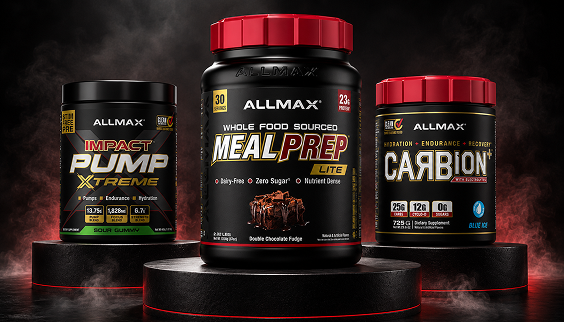
For people looking to support workout performance, ALLMAX Impact Pump Xtreme is a stimulant-free pre-workout containing ingredients such as L-citrulline, beta-alanine, betaine, and glycerol. It may be a convenient option for people who prefer a pre-workout without caffeine.
Supplements aren't required to perform an effective arm workout for women, but they can complement a consistent training program, balanced diet, and adequate recovery.
Can an Arm Workout Help Define Your Arms?
Strength training can help build and maintain muscle in the arms and upper body, which may contribute to a more defined appearance over time. Research in women supports this connection. A systematic review and meta-analysis of 24 studies found that resistance training significantly improved muscular strength and muscle hypertrophy in healthy adult women.
However, you cannot selectively reduce body fat from one specific area by training that area. Arm exercises alone will not burn fat specifically from the arms.
If improving overall body composition is a goal, reducing body fat comes from an overall approach that includes resistance training, regular physical activity, appropriate nutrition, and adequate recovery rather than spot reduction or relying on arm exercises alone.
Final Takeaway
An effective arm workout for women can be performed at home with minimal equipment. By combining exercises that target the biceps, triceps, shoulders, and other upper-body muscles, you can create a balanced routine that fits your schedule and fitness level.
Start with manageable resistance, focus on proper form, and gradually increase the challenge as your strength improves. Most importantly, choose an at home workout you can perform consistently as part of a broader fitness and nutrition routine.
Arm Workout for Women FAQs
What is the best arm workout for women?
The best arm workout for women is one that consistently trains the major upper-body muscles and can be progressed over time. The most effective arm workouts usually include some of the same fundamental resistance-training movements used by anyone. Bicep curls, close-grip pushups, shoulder presses, lateral raises, and rows can all be incorporated into an effective routine.
Can I do an arm workout at home?
Yes. Many arm exercises can be performed at home with body weight, dumbbells, or resistance bands. An at home workout can be adapted to your available space, equipment, and fitness level.
How can women tone their arms at home?
Arm toning exercises can help women build and maintain muscle strength in the arms and upper body, and consistent resistance training may support more defined-looking arms over time. Consistent resistance training combined with appropriate nutrition can support changes in muscle definition.
How often should I do an arm workout?
Many people can incorporate arm-focused resistance training into their routine 2–3 times per week, depending on their overall training volume, workout intensity, and recovery.
What are the best arm exercises without equipment?
Close-grip pushups, modified pushups, shoulder taps, and other bodyweight movements can be incorporated into an arm workout without weights. These exercises can be performed at home with little or no equipment.
If you do have equipment, weighted triceps work can add variety: overhead tricep extensions target the triceps by lowering the weight behind the head, tricep kickbacks strengthen the backs of your arms, and skull crushers effectively target all three heads of the triceps.
Can I build stronger arms with an at home workout?
Yes. An at home workout can help you build strength, which can also make everyday tasks like lifting children feel safer and easier, when the exercises provide an appropriate challenge and you progressively increase the difficulty over time. Regular resistance training can support bone health as part of an overall healthy lifestyle. Dumbbells, resistance bands, and bodyweight exercises can all be used for progressive resistance training.
References:
1: American College of Sports Medicine. (2026, March 17). ACSM publishes updated resistance training guidelines. https://acsm.org/resistance-training-guidelines-update-2026/
2: Gentil, P., Fisher, J., & Steele, J. (2017). A review of the acute effects and long-term adaptations of single- and multi-joint exercises during resistance training. Sports Medicine, 47(5), 843–855. https://doi.org/10.1007/s40279-016-0627-5
3: Currier, B. S., D’Souza, A. C., Fiatarone Singh, M. A., Lowisz, C. V., Rawson, E. S., Schoenfeld, B. J., Smith-Ryan, A. E., Steen, J. P., Thomas, G. A., Triplett, N. T., Washington, T. A., Werner, T. J., & Phillips, S. M. (2026). American College of Sports Medicine position stand. Resistance training prescription for muscle function, hypertrophy, and physical performance in healthy adults: An overview of reviews. Medicine & Science in Sports & Exercise, 58(4), 851–872. https://doi.org/10.1249/MSS.0000000000003897
4: Kassiano, W., Santos-Melo, V., Manske, I., Lisboa, F., Miguel, A., Gomes, F., Prado, A., Stavinski, N., Costa, B., & Cyrino, E. S. (2026). Progressive overload affects the magnitude of muscle hypertrophy. Medicine & Science in Sports & Exercise, 58(7), 1556–1565. https://doi.org/10.1249/MSS.0000000000003968
5: Thomas, D. T., Erdman, K. A., & Burke, L. M. (2016). American College of Sports Medicine joint position statement. Nutrition and athletic performance. Medicine & Science in Sports & Exercise, 48(3), 543–568. https://doi.org/10.1249/MSS.0000000000000852
6: Forbes, S. C., Candow, D. G., Neto, J. H. F., Kennedy, M. D., Forbes, J. L., Machado, M., Bustillo, E., Gomez-Lopez, J., Zapata, A., & Antonio, J. (2023). Creatine supplementation and endurance performance: Surges and sprints to win the race. Journal of the International Society of Sports Nutrition, 20(1), 2204071. https://doi.org/10.1080/15502783.2023.2204071
7: Hagstrom, A. D., Marshall, P. W., Halaki, M., & Hackett, D. A. (2020). The effect of resistance training in women on dynamic strength and muscular hypertrophy: A systematic review with meta-analysis. Sports Medicine, 50(6), 1075–1093. https://doi.org/10.1007/s40279-019-01247-x