
Why the Science of Whey Isolate Matters
Most people know whey protein helps build muscle — but very few understand why.
Even fewer understand the difference between ordinary whey protein and true whey protein isolate, which is the purest, cleanest form available.
And among isolates, Allmax Isoflex stands in a category of its own.
To understand why Isoflex is an industry benchmark, we need to explore:
- How whey isolate is made
- Why filtration methods matter
- The role of amino acids and bioavailability
- What makes a protein faster-absorbing
- The science behind muscle protein synthesis (MPS)
- Why Isoflex’s filtration system delivers superior purity

When consumers search for “best whey isolate,” they’re not just looking for protein — they’re looking for science-backed performance.
This article breaks down the complete scientific foundation behind whey isolate and shows exactly why Allmax Isoflex is built for athletes who demand the highest standard in purity, absorption, and results.
1. What Makes Whey Protein Isolate Different From Regular Whey?
Whey protein starts as liquid whey derived from milk during cheese production.
From there, it undergoes filtration to remove:
- Fats
- Carbohydrates
- Lactose
- Impurities
Whey Concentrate is typically 70–80% protein. Whey Isolate is 90%+ protein.
Why does this matter?
- Cleaner macronutrient profile
- Faster digestion
- Lower lactose
- Higher amino acid percentage
- Better for calorie-controlled diets
- Better for muscle recovery
Isolate is ideal for people who want the purest, fastest, and most efficient protein source.
Whey Protein Isolate: The Ultimate Guide to Clean, Fast-Absorbing Protein
2. Purity Begins With Filtration — and this Method Makes a Measurable Difference
Whey isolate can be extracted using several filtration technologies:
- Microfiltration: Uses membrane filters to reduce fats and carbs with minimal heat exposure.
- Ultrafiltration: Finer filtration that isolates proteins based on molecular size.
- Ion Exchange: Uses charges to separate protein fractions, creating extremely high purity.
- Cold Temperature Processing: Prevents denaturation of sensitive protein fractions.
- Hybrid Filtration Systems (like Isoflex’s HRI method): Combine multiple technologies to precisely target impurities while preserving bioactive protein structures.
This matters because:
- Too much heat destroys beneficial proteins
- Improper filtration leaves lactose and fat behind
- Harsh processing reduces amino acid availability
Isoflex uses a Hybrid-Ratio Ion Filtration (HRI) method — a carefully controlled multi-step process engineered for:
- Maximum protein yield
- Minimum impurities
- Optimal amino acid retention
- Enhanced bioavailability
This is one of the reasons Isoflex achieves exceptional purity levels compared to standard isolates.
3. The Role of Amino Acids — Why Whey Isolate Works So Fast
Whey isolate is rich in:
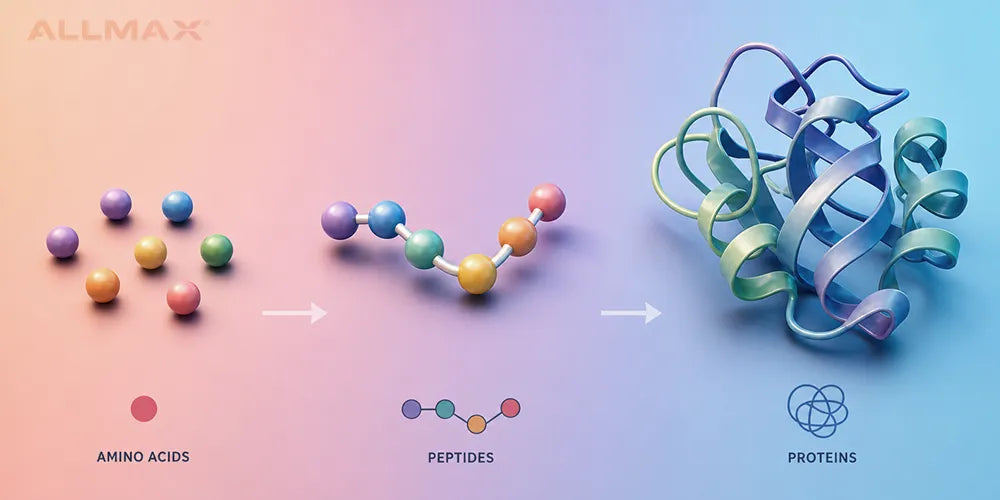
- Essential Amino Acids (EAAs)
- Branched-Chain Amino Acids (BCAAs)
- Leucine — the master switch for MPS
- Cysteine — a precursor to glutathione
- Bioactive peptides — support immunity & recovery
Amino acids are absorbed quickly because whey isolate is rapidly digested and enters the bloodstream faster than any other complete protein.
A study published in the American Journal of Clinical Nutrition shows that whey protein isolate (or just whey?)increases muscle protein synthesis more quickly than other proteins due to its high leucine content and rapid absorption.
Isoflex contains a high concentration of these aminos due to its superior filtration.
4. The Leucine Trigger: How Isoflex Activates MPS Faster
Muscle Protein Synthesis (MPS) is triggered when leucine reaches a sufficient blood concentration known as the leucine threshold.
Whey isolate naturally contains more leucine per gram of protein than whey concentrate.
Why does this matter?
- Faster MPS activation
- Improved recovery rate
- Better stimulus for strength and size
- Increased muscle retention during calorie deficits
Isoflex, being a high-purity isolate, delivers one of the strongest leucine hits per scoop — giving it a competitive advantage over regular whey.
Post-Workout Nutrition: How Isoflex Maximizes Muscle Protein Synthesis
5. Faster Absorption = Faster Results
Whey isolate digests significantly faster than other proteins due to:
- Low fat
- Low carbohydrate
- Low lactose
- Smaller protein fractions
- Minimal digestive burden
Fast digestion is essential:
- After workouts
- In the morning
- During weight cuts
- When minimizing calories
Isoflex’s ultra-clean filtration and low impurity content make it one of the fastest-absorbing proteins in the category.
6. Bioavailability: Why the Body Uses Isoflex More Efficiently
Bioavailability refers to how much of a nutrient your body can actually absorb and use.
Whey isolate has one of the highest bioavailability scores of any protein source.
With Isoflex, bioavailability is enhanced through:
- Cold-temperature processing
- Minimal denaturation
- High-quality whey input
- Preservation of microfractions like lactoferrin and glycomacropeptides
- Lower lactose = easier digestion
A peer-reviewed analysis in Nutrients notes that whey isolate outperforms other proteins in both digestibility and amino acid usability.
Isoflex’s clean formulation allows the body to extract and utilize amino acids more efficiently.

7. Isoflex’s HRI Filtration: What Makes It Different?
Most brands use standard microfiltration. Isoflex uses a Hybrid-Ratio Ion Filtration system designed to:
- Remove impurities with pinpoint precision
- Preserve delicate protein fractions
- Maintain structural integrity
- Optimize amino acid ratios
- Deliver ultra-high purity without excess processing
This hybrid method ensures Isoflex achieves:
- Extremely low carbohydrate contentVery low fat
- Virtually no lactose
- Exceptionally high protein yield
- Clean taste and mixability
This is why Isoflex stands out among isolates.
8. Why Isoflex Is Ideal for Lactose-Sensitive Athletes
Whey concentrate often causes:
- Bloating
- Gas
- Stomach discomfort
…because it still contains significant lactose.
Isoflex’s filtration removes nearly all lactose, making it a top choice for:
- Lactose sensitivity
- Cutting/low-carb diets
- Body recomposition
- Fasted training
- Post-workout digestion without discomfort
Isoflex vs. Regular Whey: Which Is Better for Muscle Recovery?
9. Clean Label Matters: Isoflex’s Ingredient Transparency
Athletes care about what’s not in their protein.
Isoflex avoids:
- Fillers
- Added sugar
- Amino spiking
- Excess gums
- Unnecessary additives
- Artificial filtration chemicals
Instead, it prioritizes:
- Clean protein
- Transparent labeling
- High purity
- Athlete-trusted quality standards
10. The Bottom Line: Why Isoflex Stands Apart
Isoflex distinguishes itself through:
- Advanced HRI Filtration - Superior purity and amino retention.
- High Protein Yield (90%+) - More usable protein per scoop.
- Fastest Absorption Profile - Ideal for post-workout and morning routines.
- High Leucine Content - Better MPS activation.
- Low Lactose, Low Carb, Low Fat - Easier digestion, cleaner macros.
- Uncompromised Quality - Created for athletes who demand elite performance.
Frequently Asked Questions
What makes whey protein isolate scientifically superior?
Its higher purity, faster absorption, and higher leucine content make it more efficient for muscle recovery and protein synthesis.
How does Isoflex differ from regular whey isolate?
Isoflex uses advanced multi-step filtration, yielding exceptional purity and amino acid preservation.
Is Isoflex good for people with lactose sensitivity?
Yes — Isoflex undergoes filtration that removes virtually all lactose.
Does filtration really affect protein quality?
Absolutely. Filtration determines amino retention, digestion speed, purity, and overall effectiveness.
References
- Bojsen-Møller, K. N., Jacobsen, S. H., Dirksen, C., Jørgensen, N. B., Reitelseder, S., Jensen, J.-E. B., Kristiansen, V. B., Holst, J. J., van Hall, G., & Madsbad, S. (2015). Accelerated protein digestion and amino acid absorption after Roux-en-Y gastric bypass. The American Journal of Clinical Nutrition, 102(3), 600-607. https://doi.org/10.3945/ajcn.115.109298
- Zhang, H., et al. (2025). The effect of enzymatic hydrolysis–assisted glycosylation on allergy reduction of α-lactalbumin (α-LA). Food Research International. Advance online publication. https://doi.org/10.1016/j.foodres.2025.114944
- Gwin, J. A., Church, D. D., Wolfe, R. R., Ferrando, A. A., & Pasiakos, S. M. (2020). Muscle protein synthesis and whole-body protein turnover responses to ingesting essential amino acids, intact protein, and protein-containing mixed meals with considerations for energy deficit. Nutrients, 12(8), 2457. https://doi.org/10.3390/nu12082457